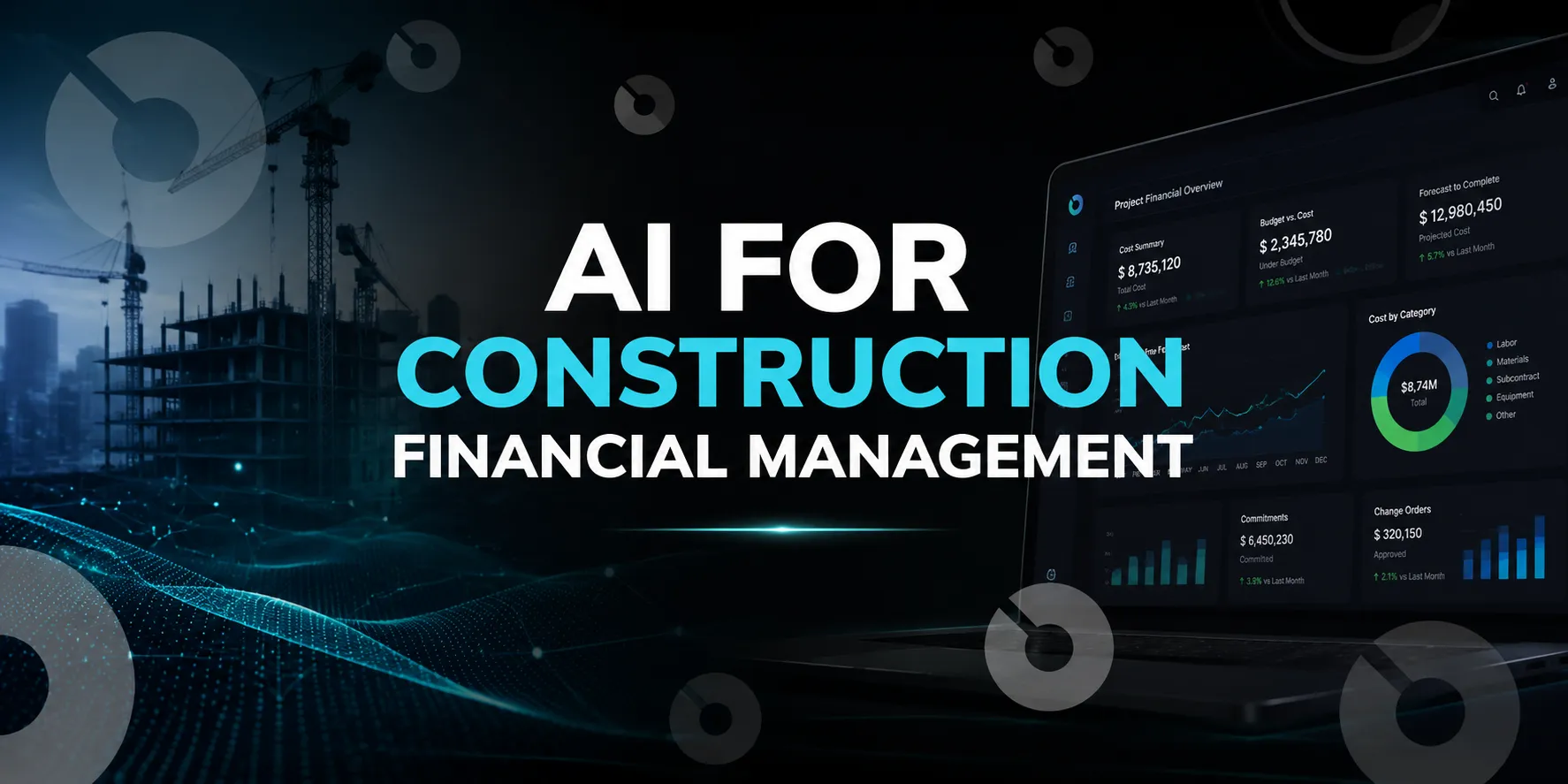
Informative
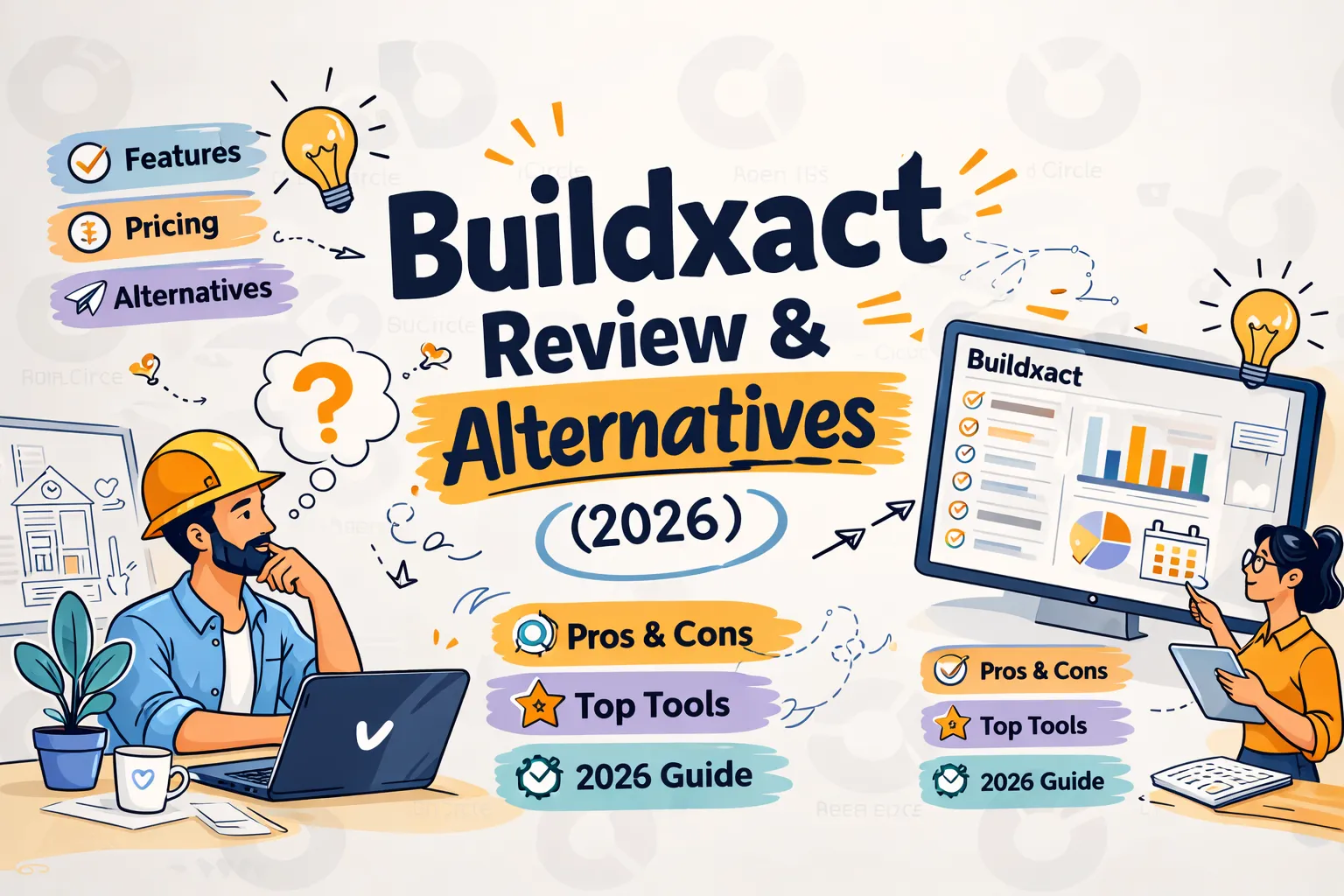
Buildxact Review & Alternatives (2026)
Buildxact review covering features, pricing, pros, cons, and top alternatives for 2026—helping builders decide if it fits their workflow or if it’s time to upgrade.
If you’re researching Buildxact construction software, you’re likely trying to answer a simple question - Is this the right tool for how I actually run my projects?
Buildxact is widely used by small builders and residential contractors for estimating, quoting and basic project management. It’s especially popular for teams that want to move away from spreadsheets without jumping into complex enterprise tools.
But like most construction software, it comes with trade-offs.
In this guide, we’ll break down:
- what Buildxact is and how it works
- key features (estimating, takeoff, project management)
- pricing and integrations (including Xero)
- real Buildxact reviews and limitations
- best Buildxact alternatives in 2026
What Is Buildxact?
Buildxact is a cloud-based construction software designed for residential builders and contractors. It focuses on estimating, takeoffs, quoting and basic project management to help teams manage small to mid-sized construction projects.
What Does Buildxact Do?
Buildxact combines several core workflows into one platform:
- construction estimating and takeoff
- quoting and proposal generation
- scheduling and basic project tracking
- cost tracking and budgeting
- supplier price integration
It’s primarily positioned as an estimating-first platform that extends into project management.
Buildxact Features (What You Actually Get)
Estimating and takeoff
Buildxact construction estimating software allows contractors to:
- create detailed cost estimates
- perform digital takeoffs from plans
- generate quotes quickly
This is one of its strongest areas.
Quoting and client proposals
The platform simplifies:
- creating professional quotes
- sending proposals to clients
- converting estimates into active jobs
Project management (basic)
Buildxact construction project management features include:
- scheduling tools
- task tracking
- job progress monitoring
However, these features are lighter compared to full PM platforms.
Cost tracking and budgeting
Buildxact includes basic construction cost tracking software features, such as:
- tracking project budgets
- monitoring expenses
- comparing estimates vs actuals
Mobile app
The Buildxact mobile app allows teams to:
- access project data on-site
- track progress
- update job information
Buildxact Integrations
Buildxact integrates with several tools to extend functionality.
Xero integration
The most notable integration is Buildxact Xero integration, which allows:
- syncing invoices and financial data
- reducing manual accounting work
Other integrations
- supplier pricing tools
- limited third-party integrations
Compared to larger platforms, integration depth is more limited.
Buildxact Pricing: What to Expect
Buildxact pricing is subscription-based and varies depending on:
- number of users
- features included
- region
Compared to competitors, Buildxact is:
- more affordable than enterprise tools like Procore
- competitive with tools like Buildertrend and JobTread
However, costs can increase as:
- your team grows
- you need additional tools outside the platform
Buildxact Reviews: Pros and Cons
What users like
- easy to use and quick to learn
- strong estimating and takeoff tools
- good for small residential builders
- saves time compared to spreadsheets
Common limitations
- limited scalability for larger projects
- basic project management features
- fewer advanced workflows (RFIs, submittals)
- reliance on integrations for full functionality
Summary: Buildxact is highly effective for estimating and quoting, but less so for full project execution.
Buildxact vs Buildertrend
This is one of the most common comparisons.
Buildxact
- stronger estimating and takeoff
- simpler and faster to adopt
- focused on preconstruction
Buildertrend
- broader project management features
- stronger client communication tools
- more complete workflow coverage
Buildxact is better for cost-focused workflows, Buildertrend for project coordination.
Buildxact vs Other Estimating Software
Compared to tools like Sage Estimating or JobTread:
- Buildxact - easier to use, better for small teams
- Sage Estimating - more powerful but more complex
- JobTread - stronger connection between estimating and project tracking
Best Buildxact Alternatives (2026)
If you’re starting to outgrow Buildxact or need more than estimating and basic project tracking, there are several strong alternatives depending on your workflow and project complexity.
INGENIOUS.BUILD
Best for: full project visibility and structured workflows
INGENIOUS.BUILD is designed for teams that need to move beyond estimating into full project control. It connects financial data with real project execution in one system.
Key strengths:
- budget and commitment tracking in real time
- RFIs, submittals, and structured workflows
- centralized document management
- portfolio-level reporting across projects
When to choose it:
If you’re managing multiple projects and need clarity, control and scalability, not just tracking
JobTread
Best for: estimating + budgeting connection
JobTread is a natural step up from Buildxact for teams that want a stronger link between proposals and project budgets.
Key strengths:
- estimating tied directly to budgets
- simple and intuitive interface
- good fit for small to mid-sized contractors
Considerations:
- limited advanced workflows (RFIs, submittals)
- less suited for complex or multi-project environments
Buildertrend
Best for: residential project management and client communication
Buildertrend offers a broader feature set for managing residential construction projects end-to-end.
Key strengths:
- client communication and portals
- scheduling and project coordination
- more complete workflow coverage
Considerations:
- can feel heavier and more complex
- setup and onboarding may take longer
Sage (Estimating / ERP)
Best for: financial control and large-scale operations
Sage provides deep accounting and job costing capabilities, often used by larger contractors.
Key strengths:
- advanced financial reporting and job costing
- payroll and compliance tools
- strong ERP-level control
Considerations:
- complex implementation
- requires training and internal resources
- less intuitive for day-to-day project teams
How to Choose the Right Alternative
- Choose JobTread if you want a smoother transition from estimating to budgeting
- Choose Buildertrend if you need stronger project coordination and client-facing tools
- Choose Sage if financial control and reporting are your top priorities
- Choose INGENIOUS.BUILD if you need full visibility across projects and structured workflows
When Buildxact Is the Right Choice
Buildxact works best if you:
- are a small residential builder or contractor
- need strong estimating and quoting tools
- want fast onboarding and simplicity
- don’t need complex workflows
Who Buildxact Is Not For
Buildxact is not the right fit for every construction team. It tends to fall short if you:
- manage multiple large or complex projects at once
- need structured workflows like RFIs, submittals or approvals
- require real-time collaboration across many stakeholders
- want full visibility across a portfolio of projects
- rely heavily on integrations or custom workflows
In these cases, teams often outgrow Buildxact and look for more structured platforms.
When to Consider Buildxact Alternatives
You may need an alternative if:
- you manage multiple or complex projects
- you need RFIs, submittals, or document workflows
- cost tracking needs to be more advanced
- you’re using multiple tools to fill gaps
Key Takeaways
- Buildxact is strong for estimating and takeoffs
- It’s best suited for small residential contractors
- Project management features are relatively basic
- Integration depth is limited
- Growing teams often need more structured platforms
Final Thoughts
Buildxact solves a real problem - it makes estimating and quoting faster and easier for builders.
But construction doesn’t stop at estimates. As projects grow, the challenge shifts from creating quotes to managing execution, budgets and coordination across teams.
If you’re starting to feel those gaps, it may be time to look at platforms designed for full project visibility - like INGENIOUS.BUILD. Book a demo to see how it works in practice.
FAQ
What is Buildxact?
Buildxact is construction estimating and project management software designed for residential builders and contractors.
How much does Buildxact cost?
Pricing varies based on users and features, but it is generally positioned as an affordable option for small construction businesses.
Does Buildxact integrate with Xero?
Yes, Buildxact integrates with Xero to sync financial data and streamline accounting workflows.
What are the best Buildxact alternatives?
INGENIOUS.BUILD, JobTread, Buildertrend, and Sage are common alternatives depending on project complexity.
Is Buildxact good for large construction companies?
Not typically. It is better suited for small to mid-sized residential contractors.