Real Estate Development Budget Tracking: Best Practices, Key Metrics and Top Software for 2026
Learn how real estate developers track budgets, forecast costs, manage changes and improve financial visibility across projects in 2026.
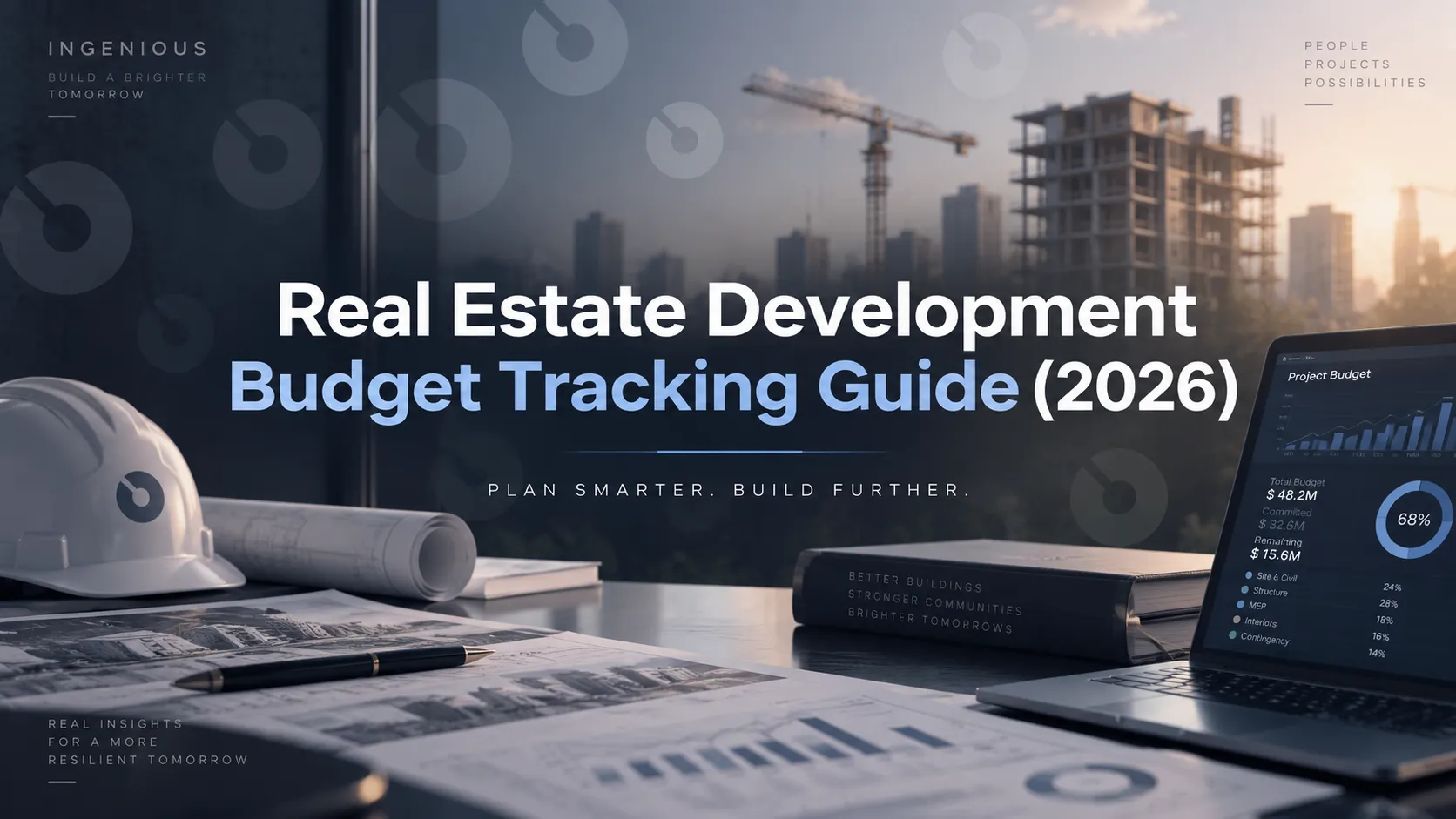
Construction budgets rarely stay static. Material prices fluctuate, design changes occur, procurement timelines shift and change orders accumulate throughout the project lifecycle. For commercial real estate developers, effective budget tracking is essential for maintaining financial control, protecting project profitability and delivering projects on schedule.
Yet many development teams still rely on disconnected spreadsheets, manual reports and multiple software systems to monitor project costs. As projects become larger and portfolios become more complex, these processes make it increasingly difficult to understand where projects stand financially.
Modern budget tracking goes beyond comparing actual costs against an original estimate. It provides continuous visibility into commitments, forecasts, contingencies and financial risks so stakeholders can make informed decisions before problems become budget overruns.
This guide explains how real estate development budget tracking works, what metrics developers should monitor, common challenges and the best construction budget tracking software for commercial real estate developers.
What Is Real Estate Development Budget Tracking?
Real estate development budget tracking is the process of monitoring project costs throughout the development lifecycle, from pre-construction budgeting through project closeout.
Unlike traditional accounting, budget tracking focuses on current and future project performance rather than historical transactions. Developers continuously compare approved budgets, committed costs, actual spending, forecasts and contingency usage to understand whether projects remain financially on track.
Effective budget tracking supports:
- project budgeting
- cost forecasting
- commitment tracking
- change order management
- contingency management
- portfolio reporting
- executive decision-making
The objective is to identify financial issues early enough to take corrective action.
Why Budget Tracking Matters for CRE Developers
Construction projects involve hundreds or thousands of financial transactions over several months or years.
Without accurate budget tracking, developers often experience:
- delayed visibility into cost overruns
- inconsistent reporting across projects
- inaccurate forecasting
- uncontrolled contingency usage
- change order surprises
- manual reconciliation between project teams and finance
For owners, investors and lenders, timely financial reporting is equally important. Budget tracking helps ensure stakeholders understand project performance throughout the development lifecycle rather than waiting until project closeout.
Why Construction Budgets Go Over Budget
Most overruns result from a combination of factors rather than a single issue. Common causes include:
- incomplete early estimates
- scope changes
- design revisions
- procurement delays
- labor shortages
- material price increases
- uncontrolled change orders
- delayed decision-making
Effective budget tracking helps teams identify these risks before they significantly impact project performance.
Who Uses Construction Budget Tracking Software?
Budget tracking is important across multiple stakeholders.
Developers monitor project performance and investment returns.
Owner's Representatives oversee budgets across multiple projects and coordinate reporting.
Project Managers manage commitments, forecasts, and change orders.
Finance Teams reconcile project costs with accounting systems.
Executives rely on portfolio dashboards and forecasting to support investment decisions.
What Should a Construction Budget Tracking System Include?
An effective budget tracking process should provide visibility into the complete financial picture rather than focusing only on actual costs.
Key components typically include:
Approved Budget
The current approved project budget, including all revisions.
Commitments
Executed contracts, purchase orders and subcontract agreements that represent future financial obligations.
Actual Costs
Invoices and payments recorded against project budgets.
Forecasted Final Cost
Projected total project cost based on current performance, commitments, pending changes and remaining work.
Change Orders
Approved and pending changes that affect overall project cost.
Contingency Usage
Remaining contingency balances and anticipated future allocations.
Cash Flow
Projected spending over time to support funding and financing decisions.
Together, these metrics provide developers with a complete view of project financial health.
Common Construction Budget Tracking Challenges
Budget tracking becomes significantly more difficult as projects and portfolios grow.
Spreadsheet-Based Reporting
Many organizations still manage budgets through spreadsheets. While spreadsheets are flexible, they often create:
- duplicate data entry
- inconsistent reporting
- version control issues
- manual reconciliation
- delayed reporting
Fragmented Financial Data
Budgets, commitments, invoices, schedules and contracts frequently live across different systems.
Without connected project data, financial reporting becomes slower and less reliable.
Limited Forecasting
Many organizations monitor historical spending but spend less time forecasting future costs.
Forecast-driven budget tracking helps identify financial risks before they impact project outcomes.
Inconsistent Reporting Across Projects
Portfolio managers often struggle to compare project performance because each project reports financial information differently.
Standardized budget tracking improves executive visibility and portfolio oversight.
Budget Tracking Throughout the Project Lifecycle
Budget tracking evolves as projects progress.
Pre-Construction
During planning, teams establish baseline budgets, evaluate feasibility, estimate costs and develop contingency strategies.
Design
As designs mature, developers validate estimates, update forecasts and monitor procurement risks.
Construction
Active budget management focuses on commitments, invoices, change orders, contingency usage and forecasted completion costs.
Closeout
Final reporting compares approved budgets with actual project costs while documenting lessons learned for future developments.
Maintaining consistent financial visibility throughout each phase improves forecasting accuracy and supports better investment decisions.
Key Budget Tracking Metrics Every Developer Should Monitor
Successful developers monitor more than total project spending. Important metrics include:
Budget Variance
The difference between approved budgets and actual costs.
Forecast Variance
The difference between the current forecast and the original project budget.
Cost to Complete
Estimated remaining cost required to complete the project.
Commitment Coverage
The percentage of the project budget represented by executed contracts and purchase orders.
Change Order Exposure
Approved and pending changes that could affect final project costs.
Contingency Remaining
The amount of contingency still available to manage future risks.
Portfolio Budget Performance
Financial performance across multiple projects rather than individual developments alone.
Best Construction Budget Tracking Software for Real Estate Developers
The best construction budget tracking software helps developers manage far more than project expenses. Modern platforms connect budgeting, commitments, change orders, forecasting, reporting, and project controls to provide real-time financial visibility throughout the development lifecycle.
1. INGENIOUS.BUILD
Best for: Owners, developers, owner's representatives and capital program managers seeking connected project financial management.
INGENIOUS.BUILD combines project financials, construction administration, project management and portfolio reporting in a single platform. By connecting budgets, commitments, change orders, and forecasts with day-to-day project workflows, it helps teams maintain accurate financial visibility throughout every stage of a project.
Strengths
- Connected budget, cost and project management workflows
- Portfolio-level financial reporting and dashboards
- Strong construction administration capabilities
- AI-powered reporting and project insights
- Transparent pricing and modern user experience
Potential limitations
- More comprehensive than organizations looking only for basic accounting or job costing software
2. Procore
Best for: Large contractors and enterprise organizations.
Procore provides comprehensive project financial management alongside project controls, field collaboration and document management. It is widely used on large commercial construction projects that require robust financial oversight.
Strengths
- Mature project financial management capabilities
- Strong budget, commitment, and change order tracking
- Broad integration ecosystem
- Well suited for enterprise-scale projects
Potential limitations
- Higher pricing than many alternatives
- Longer implementation and onboarding process
3. Kahua
Best for: Owner-side capital programs and complex commercial developments.
Kahua offers configurable financial workflows designed for owners and program managers overseeing multiple projects. Its flexibility makes it well suited to organizations with customized governance and reporting requirements.
Strengths
- Configurable budgeting and approval workflows
- Strong owner-focused reporting
- Portfolio and capital program management
- Flexible workflow automation
Potential limitations
- Requires more implementation and configuration than some modern cloud platforms
4. Oracle
Best for: Large enterprise capital projects.
Oracle Primavera Unifier focuses on capital planning, cost management, governance, and portfolio oversight for complex programs. It is commonly used by large enterprises, infrastructure organizations, and public agencies.
Strengths
- Advanced cost controls and forecasting
- Strong governance and compliance capabilities
- Comprehensive capital program reporting
- Enterprise-grade portfolio management
Potential limitations
- Steeper learning curve
- Better suited for large organizations than small or mid-sized developers
5. Autodesk Construction Cloud
Best for: Organizations managing design and construction workflows within the Autodesk ecosystem.
Autodesk Construction Cloud combines project management, document management, collaboration, and financial visibility. It is particularly popular among teams already using Autodesk products such as Revit and AutoCAD.
Strengths
- Strong integration with Autodesk design tools
- Good document management and collaboration
- Connected project and financial workflows
- Mobile-friendly field experience
Potential limitations
- Best value for organizations already invested in Autodesk products
- Can become expensive as teams and modules grow
Construction Budget Tracking Software vs Spreadsheets
Many developers begin with spreadsheet-based budget tracking because it is inexpensive and familiar. As project complexity increases, spreadsheets often become difficult to maintain.
Dedicated construction budget tracking software provides:
- real-time budget visibility
- centralized project financials
- automated reporting
- workflow approvals
- audit trails
- portfolio dashboards
- connected project information
Rather than replacing financial expertise, these platforms reduce manual work and improve reporting consistency.
Budget Tracking vs Cost Tracking
Although the terms are often used interchangeably, they serve different purposes.
Budget tracking compares approved budgets, commitments, actual costs, forecasts and contingency usage to understand overall financial performance.
Cost tracking focuses on recording and monitoring project expenses as work progresses.
Successful real estate developers use both. Cost tracking captures what has happened, while budget tracking helps predict where the project is headed financially.
How AI Is Changing Construction Budget Tracking
Artificial intelligence is becoming increasingly valuable for construction financial management.
AI can help teams:
- generate financial reports
- summarize budget performance
- identify unusual spending patterns
- monitor forecast changes
- highlight contingency risks
- support executive reporting
The greatest value comes when AI operates on connected project and financial data rather than disconnected spreadsheets.
How to Choose Budget Tracking Software
When evaluating software, consider the following questions:
- Does it support project budgeting and forecasting?
- Can it track commitments and change orders?
- Does it provide portfolio-level reporting?
- How well does it integrate with accounting systems?
- Can owners, contractors, and consultants collaborate within the same platform?
- Does it support AI-powered reporting and financial insights?
- Can it scale across multiple developments?
The right platform should improve visibility, reduce manual reporting and support better financial decision-making throughout the project lifecycle.
Final Thoughts
Budget tracking is no longer just a finance function. It has become a critical part of successful project delivery.
Commercial real estate developers need timely visibility into budgets, commitments, forecasts, change orders and contingency usage to make informed decisions throughout the development lifecycle.
As projects become more complex and portfolios continue to grow, organizations increasingly benefit from connected construction management platforms that combine project financial management, reporting and portfolio oversight within a single system. The result is greater financial transparency, stronger forecasting and better control over project outcomes.
Frequently asked questions
What is real estate development budget tracking?
Real estate development budget tracking is the process of monitoring project budgets, commitments, actual costs, forecasts and change orders throughout the construction lifecycle to maintain financial control.
What is the difference between budget tracking and construction accounting?
Construction accounting records financial transactions after they occur. Budget tracking focuses on monitoring current performance and forecasting future costs to support project decision-making.
What should construction budget tracking software include?
The best software includes budget management, commitment tracking, change order management, forecasting, reporting, contingency tracking, portfolio dashboards and integrations with accounting systems.
Why do developers use construction budget tracking software?
Developers use budget tracking software to improve financial visibility, reduce manual reporting, identify budget risks earlier and manage multiple projects more efficiently.
What is the best construction budget tracking software for real estate developers?
The best solution depends on project complexity and organizational requirements. Many owners and developers evaluate platforms such as INGENIOUS.BUILD, Procore, Kahua, Oracle Primavera Unifier and Autodesk Construction Cloud based on their financial management, reporting and portfolio capabilities.