10 Stages of Building Construction (Step-by-Step Guide)
A clear, step-by-step guide to the 10 stages of building construction—what happens in each phase, common pitfalls, and how to keep projects on time and on budget.
Every construction project - whether residential, commercial or infrastructure - follows a structured process.
But in reality, most delays, cost overruns and coordination issues happen between these stages, not within them.
This guide breaks down the stages of building construction step by step, so you understand:
- how projects actually move from idea to completion
- where things typically go wrong
- how modern construction teams manage each phase more effectively
What Are the Stages of Building Construction?
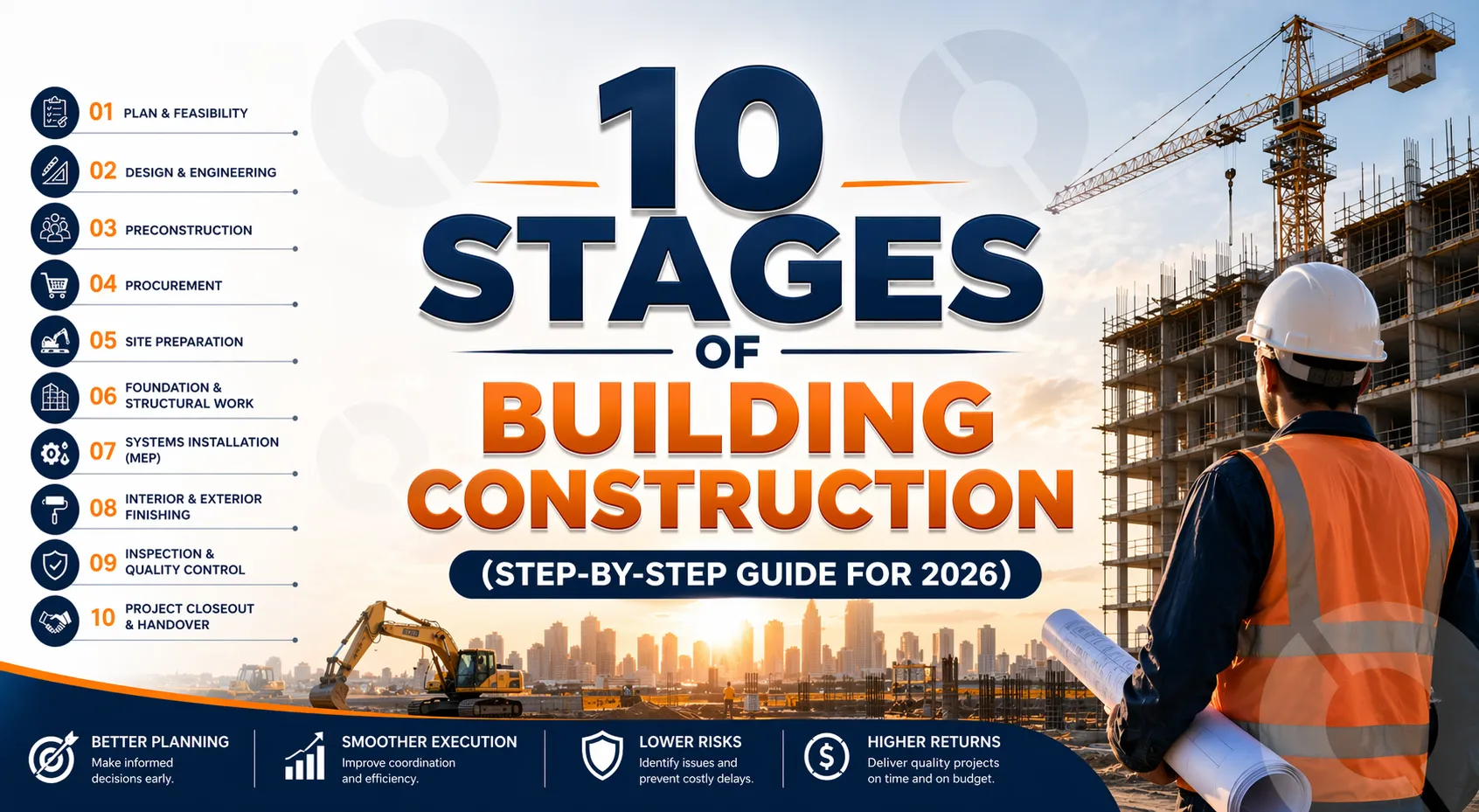
The stages of building construction typically include planning, design, preconstruction, procurement, site preparation, structural work, systems installation, finishing, inspection and project closeout.
In simple terms, a construction project moves through three core phases:
- planning (defining scope, budget, and design)
- construction (building the structure and systems)
- delivery (inspection, handover, and completion)
Each stage builds on the previous one - so gaps or delays early in the process often impact everything that follows.
The 10 Stages of Building Construction
Understanding the stages is one thing. Managing them effectively is what determines whether a project stays on time and on budget.
Below is a practical, real-world breakdown of each stage - what actually happens, what to watch for and where projects typically go wrong.
1. Planning & Feasibility
This is where the project is defined and where many long-term issues originate.
What happens:
- defining project scope, goals and requirements
- feasibility studies (financial, technical, environmental)
- site selection and due diligence
- early budget and timeline estimation
What to watch for:
- unrealistic budgets or timelines
- incomplete site analysis
- unclear project scope
Why it matters: Decisions made here shape every stage that follows.
2. Design & Engineering
The project moves from concept to detailed plans.
What happens:
- architectural design and layouts
- structural engineering
- MEP (mechanical, electrical, plumbing) systems design
- permitting and regulatory approvals
What to watch for:
- design changes late in the process
- lack of coordination between disciplines
- incomplete documentation
Why it matters: Design errors or gaps often lead to costly change orders during construction.
3. Preconstruction
This is the alignment phase, where planning turns into an executable plan.
What happens:
- detailed cost estimation and budgeting
- contractor and subcontractor selection
- project scheduling and sequencing
- risk assessment and planning
What to watch for:
- inaccurate cost estimates
- unclear responsibilities between teams
- poor schedule planning
Why it matters: Strong preconstruction reduces delays, rework and budget overruns.
4. Procurement
Everything needed to build the project is sourced and secured.
What happens:
- subcontractor contracts and agreements
- material purchasing and supplier coordination
- equipment planning and logistics
What to watch for:
- material shortages or delays
- price fluctuations
- supplier coordination issues
Why it matters: Procurement delays often create cascading delays across the entire project.
5. Site Preparation
Construction officially begins on-site.
What happens:
- site clearing and demolition (if needed)
- excavation and grading
- utility setup and groundwork
- foundation preparation
What to watch for:
- unforeseen site conditions
- environmental or regulatory issues
- delays in utility connections
Why it matters: Problems here can delay structural work and increase costs early.
6. Foundation & Structural Work
The building starts taking physical form.
What happens:
- foundation pouring and curing
- structural framework (steel, concrete, or wood)
- load-bearing systems and core structure
What to watch for:
- structural inaccuracies
- weather-related delays
- safety risks
Why it matters: This stage determines the building’s strength, safety and long-term durability.
7. Systems Installation (MEP)
Critical building systems are installed.
What happens:
- electrical systems and wiring
- plumbing systems
- HVAC installation
What to watch for:
- clashes between systems (common issue)
- coordination between trades
- incomplete documentation
Why it matters: Poor coordination here leads to rework, delays and hidden costs.
8. Interior & Exterior Finishing
The project becomes functional and visually complete.
What happens:
- drywall, flooring, painting
- windows, roofing, and façade work
- interior fixtures and finishes
What to watch for:
- sequencing issues with other trades
- quality inconsistencies
- delays due to design changes
Why it matters: This stage directly impacts client satisfaction and final quality perception.
9. Inspection & Quality Control
Everything is verified before handover.
What happens:
- safety and compliance inspections
- system testing and commissioning
- punch list creation and corrections
What to watch for:
- missed defects
- incomplete documentation
- rushed inspections
Why it matters: Issues missed here often turn into post-handover problems and liability risks.
10. Project Closeout & Handover
The project is finalized and delivered.
What happens:
- final approvals and certifications
- documentation handover (drawings, warranties, manuals)
- client walkthrough and sign-off
- project completion and turnover
What to watch for:
- missing documentation
- unresolved punch list items
- unclear ownership transfer
Why it matters: A smooth closeout ensures client satisfaction and reduces future disputes.
What Most Guides Don’t Tell You
Projects don’t fail because teams don’t understand the stages.
They fail because:
- information doesn’t flow between stages
- budgets aren’t updated in real time
- teams work in disconnected systems
The biggest risk isn’t within a stage - it’s between stages.
How High-Performing Teams Manage These Stages
Top construction teams don’t just follow stages, they connect them.
They:
- link estimating to budgets to execution
- track costs and commitments in real time
- centralize documentation and communication
- maintain visibility across all projects
This is where platforms like INGENIOUS.BUILD come in - helping teams manage not just individual stages, but the entire project lifecycle in one connected system.
The 5 Main Stages of Building Construction
For a high-level understanding, the construction process is often grouped into five main stages:
- Planning – defining project scope, feasibility, budget and goals
- Design – creating architectural, structural and engineering plans
- Preconstruction – aligning budgets, schedules, teams and risks
- Construction – executing the build, from site work to finishing
- Closeout – inspections, documentation and project handover
This simplified model is useful for understanding the overall flow. However, in real-world projects:
- each stage includes multiple sub-phases
- many activities overlap (especially during construction)
- coordination between teams becomes critical
Stages of Commercial vs Residential Construction
While both residential and commercial projects follow the same core stages, the complexity, coordination and risk level differ significantly.
Residential Construction
Typically more straightforward and faster-moving.
What to expect:
- simpler workflows and project structure
- fewer stakeholders involved (builder, homeowner, small team)
- shorter timelines and faster decision-making
- less formal reporting and compliance requirements
Residential projects are usually easier to manage but still require coordination to avoid delays.
Commercial Construction
Significantly more complex and structured.
What to expect:
- multiple contractors, consultants, and stakeholders
- layered approvals and regulatory requirements
- detailed reporting, compliance, and documentation
- longer timelines with more dependencies between stages
Commercial projects require strong coordination, financial tracking and communication systems to stay on schedule and within budget.
Key takeaway
Both follow the same stages but:
- Residential = simpler execution
- Commercial = higher complexity and risk
As project size and complexity increase, structured workflows and real-time visibility become critical for success.
Where Construction Projects Usually Break Down
Most issues don’t happen within a stage, but between stages.
Common problems:
- poor handoffs between design and construction
- disconnected financial and project data
- delayed approvals and change orders
- lack of real-time visibility
This is why many teams struggle with delays and budget overruns.
How Modern Teams Manage Construction Stages More Effectively
Today, construction companies rarely rely on a single tool.
Instead, they use connected systems:
- estimating tools - for preconstruction
- project management software - for execution
- accounting/ERP - for financial tracking
Increasingly, teams also use platforms like INGENIOUS.BUILD to:
- connect budgets with project execution
- track commitments and costs in real time
- maintain visibility across multiple projects
- reduce miscommunication between teams
The goal isn’t just managing stages, it’s connecting them.
Key Takeaways
- Construction projects follow a structured multi-stage process
- Most issues happen between stages, not within them
- Commercial projects require more coordination than residential ones
- Visibility and communication are critical at every phase
- Modern teams rely on connected systems, not isolated tools
Final Thoughts
Understanding the stages of building construction is important. But managing them effectively is what determines success.
As projects grow more complex, spreadsheets and disconnected tools stop working. The real advantage comes from visibility across the entire project lifecycle.
Frequently asked questions
What are the stages of building construction?
The main stages are planning, design, preconstruction, procurement, site preparation, structural work, systems installation, finishing, inspection and project closeout.
What are the 5 stages of construction?
Planning, design, preconstruction, construction and closeout.
What is the most important stage of construction?
Preconstruction is often the most critical, as it defines budget, schedule and risk before work begins.
How long does each construction stage take?
It depends on project size, but planning and design can take months, while construction can take several months to years.