Informative
Managing Multi-Location Construction Projects in Retail: Complete Guide (2026)
Explore how retail teams can manage multi-location construction projects at scale with better visibility, standardized workflows, real-time cost tracking and coordinated execution across every site.
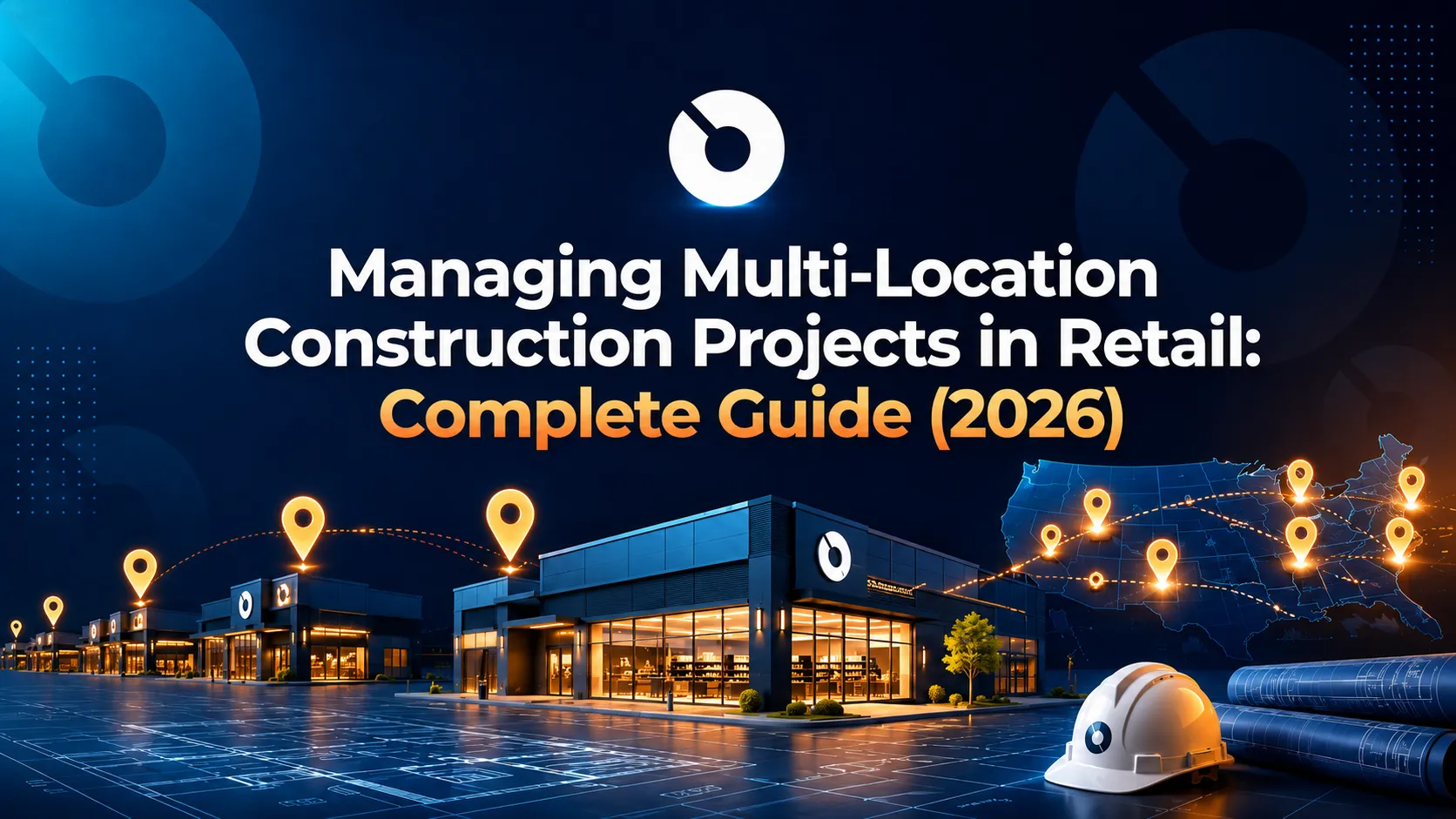
Retail construction rarely happens one project at a time.
Brands expanding into new markets or renovating existing stores often manage dozens, or hundreds, of locations simultaneously. These rollout programs are fast-paced, cost-sensitive and highly standardized, but also vulnerable to delays and inconsistencies.
Managing multi-location construction projects in retail requires more than traditional project management. It requires program-level coordination, repeatable processes and real-time visibility across sites.
This guide explains how retail construction teams manage multi-site projects, what challenges to expect and how to improve execution at scale.
What Is Multi-Location Retail Construction Project Management?
Managing multi-location construction projects in retail is the process of planning, coordinating and delivering multiple store builds, renovations or rollouts across different locations - while maintaining consistency, controlling costs and meeting aggressive timelines.
In practice, it means managing a portfolio of projects as a unified program, not as separate jobs.
Why Multi-Location Retail Projects Are Different
Retail construction projects operate under unique constraints compared to traditional commercial builds.
1. Speed and scale
Retail rollouts often involve:
- opening multiple stores within tight deadlines
- coordinating parallel construction across regions
- aligning with marketing or seasonal launch timelines
Delays in one location can impact entire rollout strategies.
2. Standardization vs local variation
Retail brands require:
- consistent layouts and branding
- standardized materials and specifications
But also need to adapt to:
- local regulations
- site-specific conditions
- regional contractors
Balancing standardization with flexibility is a key challenge.
3. High coordination complexity
Multi-site construction involves:
- multiple contractors and vendors
- distributed teams across regions
- centralized decision-making with local execution
Without strong coordination, misalignment happens quickly.
4. Tight cost control requirements
Margins in retail construction are often strict.
Teams must track:
- costs across multiple projects
- budget variances by location
- cumulative financial exposure across the rollout
Key Challenges in Managing Multi-Location Retail Construction
Lack of visibility across projects
Many teams manage each location separately.
The result:
- no clear overview of progress
- delayed identification of issues
- inconsistent reporting
Inconsistent execution
Without standardized processes:
- store builds vary in quality
- timelines differ across locations
- rework becomes common
Communication gaps
Information often lives across:
- emails
- spreadsheets
- local teams
This leads to:
- delays in decision-making
- misalignment between headquarters and field teams
Difficulty tracking budgets at scale
Tracking costs across multiple sites manually creates:
- delayed updates
- inaccurate forecasts
- hidden overruns
Best Practices for Managing Multi-Location Construction Projects
1. Treat it as a program, not separate projects
Instead of managing each store individually, structure your rollout as a capital program.
This allows:
- centralized oversight
- consistent reporting
- better decision-making
2. Standardize workflows across locations
Create repeatable processes for:
- RFIs and approvals
- change orders
- reporting and documentation
Consistency reduces errors and speeds up execution.
3. Centralize project data
Use one system for:
- schedules
- budgets
- documents
- communication
This ensures all stakeholders work from the same information.
4. Track progress and costs in real time
Real-time tracking helps teams:
- identify delays early
- control costs across locations
- adjust plans proactively
5. Align central and local teams
Headquarters sets strategy, but local teams execute.
Clear communication and shared systems are critical to keep both aligned.
How Retail Construction Rollouts Typically Work
A typical multi-location retail construction program includes:
Planning phase
- defining rollout strategy
- budgeting across locations
- selecting sites
Design standardization
- creating store templates
- defining materials and layouts
- ensuring brand consistency
Procurement and contractor selection
- selecting regional contractors
- sourcing materials at scale
Construction execution
- running multiple projects in parallel
- coordinating timelines and dependencies
Reporting and optimization
- tracking performance across sites
- identifying issues and improving processes
Tools for Managing Multi-Location Retail Construction
Traditional tools often fail at scale. Retail teams need platforms that support:
- multi-project visibility
- standardized workflows
- centralized document management
- real-time cost tracking
- reporting across locations or in the field
The goal is to move from project-level tracking to program-level visibility.
How Technology Improves Multi-Site Construction Management
Modern construction management platforms help retail teams:
- monitor all projects in one dashboard
- standardize processes across locations
- automate reporting and approvals
- track budgets and performance in real time
This reduces manual coordination and improves decision-making.
Signs Your Multi-Location Construction Process Needs Improvement
You may need a better system if:
- you rely heavily on spreadsheets
- project updates are inconsistent
- budgets are not updated in real time
- communication is fragmented
- delays are discovered too late
These are indicators of system limitations, not team performance issues.
What Better Management Delivers
With the right processes and tools, retail construction teams can achieve:
- faster store openings
- more consistent execution across locations
- improved cost control
- better visibility for leadership
- reduced risk across the entire rollout
How to Choose the Right Approach
When managing multi-location construction projects, focus on:
- visibility across all sites
- consistency of workflows
- real-time financial tracking
- ease of use for distributed teams
- scalability for future rollouts
The best approach is one that supports both centralized control and local execution.
Final Thoughts
Managing multi-location construction projects in retail is fundamentally different from managing single-site builds. Success depends on:
- standardization
- visibility
- coordination at scale
Teams that treat these projects as isolated efforts struggle. Teams that manage them as connected programs gain a significant advantage.
If your organization is scaling retail construction and needs better visibility, coordination, and cost control, it may be time to rethink how your projects are managed. Platforms like INGENIOUS.BUILD help retail teams manage multi-site construction with real-time data, structured workflows, and full program visibility.
Book a demo to see how your rollout projects can run more efficiently.
FAQ
How do you manage multi-location construction projects?
By standardizing workflows, centralizing data and tracking progress and costs across all locations in real time.
What is a retail construction rollout?
A rollout is a program where multiple stores are built or renovated simultaneously using standardized designs and processes.
What are the biggest challenges in multi-site construction?
Lack of visibility, inconsistent execution, communication gaps and difficulty tracking budgets across locations.
What software is used for multi-location construction projects?
Construction management platforms that support multi-project tracking, cost control and centralized reporting.
How do you keep retail construction projects on schedule?
By using real-time scheduling tools, standardizing processes and ensuring all teams have access to up-to-date information.