Informative
Construction Cost Tracking: How to Track Project Costs and Improve Profitability
Track construction costs before they erode margins. Learn step-by-step methods, tools, and best practices to improve visibility, control budgets, and boost profitability.
Construction projects rarely go over budget all at once. It happens gradually with small delays, minor scope changes, missed costs or misaligned data. By the time it’s visible in reports, the margin is already gone.
That’s why construction cost tracking isn’t just an accounting task - it’s a core part of project management.
In this guide, we’ll cover:
- how construction companies track job costs and progress
- how to track construction project costs step by step
- best practices for cost tracking and change order control
- tools and software used for real-time cost tracking
- how better cost tracking improves profitability
What Is Construction Cost Tracking?
Construction cost tracking is the process of monitoring and managing all project expenses throughout the lifecycle of a construction project.
This typically includes:
- labor costs
- materials and equipment
- subcontractor payments
- change orders
- indirect and overhead costs
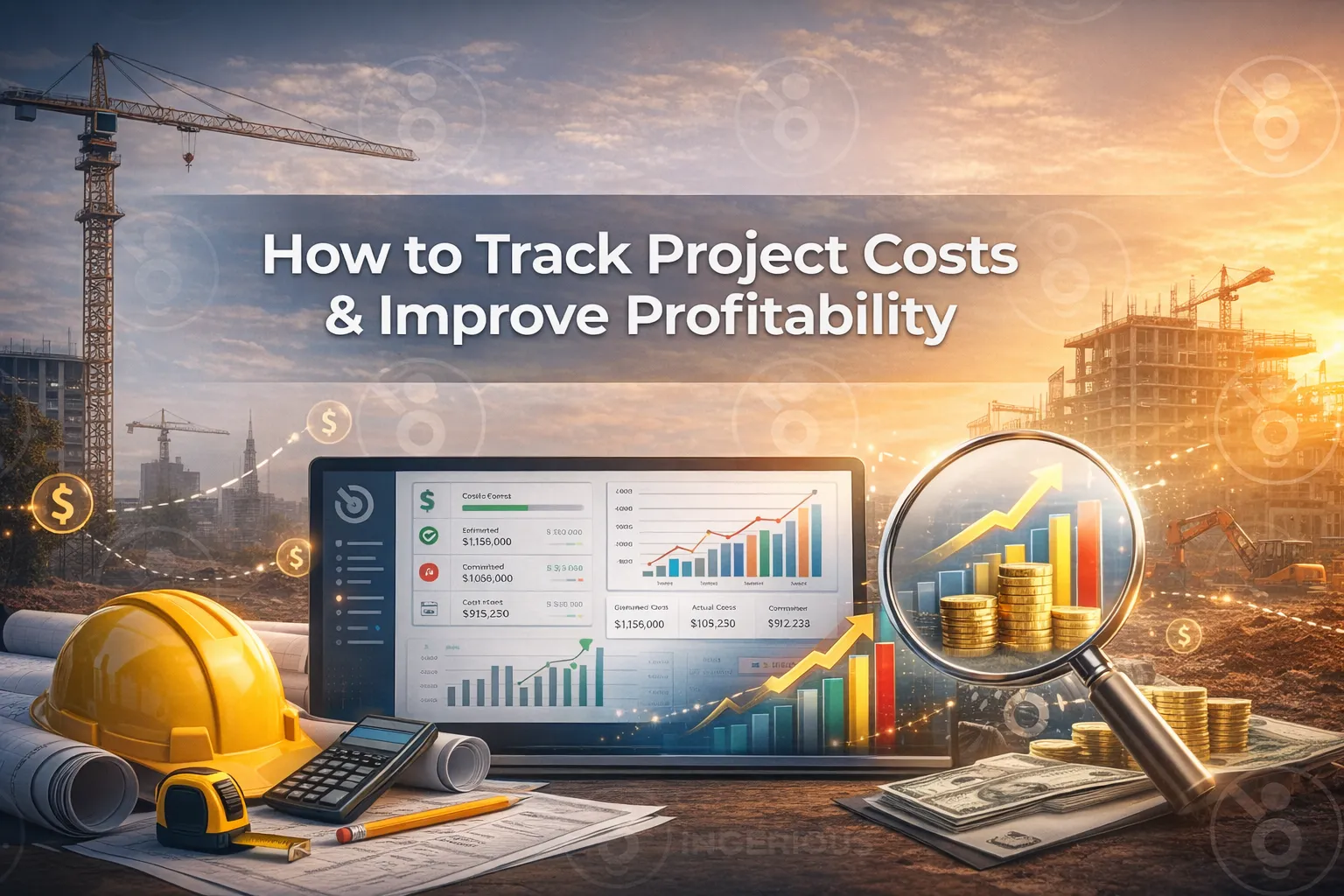
A construction project cost tracking system helps teams compare three key metrics:
- estimated costs (what you planned to spend)
- committed costs (what you’ve agreed to spend)
- actual costs (what you’ve already spent)
By keeping these aligned and up to date, project managers can spot budget risks early, adjust decisions in real time and protect overall project profitability.
How Construction Companies Track Job Costs and Progress
Most construction companies use a combination of systems to track costs and project progress.
Job costing systems
Costs are assigned to specific projects and cost codes (labor, materials, subcontractors).
Progress tracking
Teams track how much work has been completed relative to budget and schedule.
Change order tracking
Scope changes are recorded and reflected in updated budgets.
Reporting and dashboards
Project managers review cost reports regularly to monitor performance.
In many cases, these workflows are split across spreadsheets, accounting tools and project management platforms, which can lead to delays and inconsistencies.
How to Track Construction Project Costs (Step-by-Step)
Effective construction cost tracking follows a structured process.
1. Start with a detailed project budget
Break down the project into cost categories:
- labor
- materials
- equipment
- subcontractors
This becomes your baseline.
2. Assign cost codes
Cost codes help standardize tracking across projects and ensure consistency in reporting.
3. Track commitments early
Capture committed costs such as:
- purchase orders
- subcontract agreements
This helps forecast future spending, not just past expenses.
4. Monitor actual costs in real time
Track invoices, payroll and expenses as they happen, not weeks later.
5. Manage change orders
Construction cost tracking and change order control go hand in hand.
Every change should be:
- documented
- approved
- reflected in the budget
6. Compare budget vs actual vs forecast
This is where real insight comes from:
- Are you overspending?
- Are margins shrinking?
- Where are risks building?
How Construction Cost Tracking Improves Profitability
Better cost tracking directly impacts project outcomes.
Earlier problem detection
Teams can identify cost overruns before they escalate.
More accurate forecasting
Better data leads to better planning for future projects.
Reduced financial surprises
Real-time visibility eliminates last-minute surprises.
Improved decision-making
Project managers can act on data, not assumptions.
In short: You don’t improve profitability by cutting costs, you improve it by understanding them earlier.
Construction Cost Tracking Tools: Spreadsheets vs Software
Many teams start with spreadsheets.
Construction cost tracking spreadsheets (Excel)
Tools like a construction cost tracker Excel sheet can help with:
- simple budgets
- basic cost tracking
- small projects
But they have limitations:
- manual updates
- risk of errors
- lack of real-time collaboration
Construction cost tracking software
Modern construction software offers:
- real-time cost tracking
- automated reporting
- integration with accounting systems
- centralized data across projects
Examples include:
- Sage Intacct construction cost tracking
- ERP systems for job costing
- project management platforms
Key Features of Construction Cost Tracking Software
The best construction cost tracking software goes beyond basic expense logging, it gives teams real-time visibility and control over project financials.
Key features typically include:
- real-time budget tracking to monitor spend as it happens
- cost code management for consistent tracking across projects
- change order tracking to keep budgets aligned with scope changes
- integration with accounting systems for accurate financial data
- reporting and dashboards for quick insights into performance and risks
- document management linked to costs (invoices, contracts, approvals)
Together, these features help teams move from reactive tracking after the fact to proactive cost control during the project.
Best Practices for Cost Tracking in Construction
Accurate cost tracking isn’t just about recording expenses, it’s about building a system that keeps your projects financially under control from start to finish.
Here are the practices that make the biggest difference:
Track costs frequently (daily or weekly)
Waiting until the end of the month is one of the fastest ways to lose visibility. Regular tracking helps you catch issues early, while there’s still time to act.
Standardize cost codes across all projects
Consistent cost codes allow you to compare performance across jobs, improve reporting accuracy and avoid confusion between teams.
Align finance and project teams
Cost tracking breaks down when accounting and project teams work in silos. Shared workflows and regular check-ins ensure everyone is working with the same data.
Use a single source of truth
Managing costs across spreadsheets, emails and multiple tools leads to errors and duplication. Centralizing your data improves accuracy and saves time.
Track commitments, not just actual costs
Many teams only track what’s already been spent. The best teams also track committed costs (contracts, POs) to understand future financial exposure.
Monitor change orders closely
Change orders are one of the biggest drivers of cost overruns. Every change should be documented, approved and reflected in the budget immediately.
Review budget vs actual vs forecast regularly
Don’t just track costs, analyze them. Comparing planned, committed and actual costs helps you identify trends and adjust before margins are impacted.
When these practices are applied consistently, cost tracking shifts from a reporting exercise to a real decision-making tool, helping teams stay on budget and protect profitability.
Real-Time Cost Tracking: Why It Matters
Many construction companies still track costs after the fact. But real-time tracking changes everything.
With services that track construction costs in real time, teams can:
- identify issues immediately
- adjust plans proactively
- maintain control over budgets
This is especially important for large or multi-phase projects.
The Role of Technology in Construction Cost Tracking
Modern construction companies no longer rely on a single tool to manage costs. Instead, they operate with connected systems, each responsible for a different part of the project lifecycle.
Typically, this includes:
- accounting software to manage financial records, invoices, and payroll
- project management tools to coordinate workflows, schedules, and teams
- ERP systems to handle job costing, forecasting and financial reporting
The challenge isn’t just collecting data, it’s keeping it aligned across systems.
That’s why many companies are moving toward more connected technology stacks. Platforms help bridge the gap between finance and project execution by bringing together budgets, commitments and real-time project data in one place.
The result is not just better tracking but clearer visibility, faster decisions, and stronger control over project performance.
How GPS Tracking Reduces Costs in Construction
While not a core cost tracking tool, GPS tracking can support cost control by:
- optimizing equipment usage
- reducing idle time
- improving fleet management
- lowering fuel and maintenance costs
This indirectly contributes to more accurate project cost tracking.
When Cost Tracking Systems Break Down
Cost tracking doesn’t usually fail because of one big mistake, it breaks down gradually when systems and processes aren’t aligned.
Common issues include:
- data scattered across multiple tools, making it hard to get a clear picture
- delayed updates, so decisions are based on outdated information
- manual reporting, which increases the risk of errors and slows everything down
- budgets disconnected from project execution, leaving teams without real-time visibility
Over time, these gaps compound and the impact becomes visible:
- cost overruns go unnoticed until it’s too late
- decisions are delayed or made on incomplete data
- profitability erodes across projects
The core problem isn’t a lack of data - it’s a lack of connected, reliable visibility across the project lifecycle.
Key Takeaways
- Construction cost tracking is essential for profitability
- Spreadsheets work early but don’t scale
- Real-time tracking improves decision-making
- Change order control is critical
- Integrated systems provide the best visibility
Final Thoughts
Tracking construction costs isn’t just about recording numbers, it’s about staying in control of your projects. The earlier you see what’s happening financially, the easier it is to adjust, adapt and protect your margins.
For small teams, simple tools may be enough. But as projects grow, most companies need systems that connect costs, workflows, and project data in one place.
If you’re looking to move beyond spreadsheets and disconnected tools, it’s worth exploring platforms like INGENIOUS.BUILD, designed to give you real-time visibility across your projects. Book a demo to see how it works in practice.
FAQ: Construction Cost Tracking
How do you track construction project costs?
By monitoring budgets, commitments, actual expenses and change orders across a project using software or structured systems.
What is construction cost tracking software?
It’s software that helps contractors track project expenses, compare budgets vs actuals, and manage financial performance in real time.
Can you track construction costs in Excel?
Yes, but spreadsheets are limited for complex projects and don’t provide real-time visibility or automation.
Why is cost tracking important in construction?
It helps prevent overruns, improve profitability and support better decision-making throughout the project lifecycle.