Informative
How Owners Use AI to Monitor Construction Projects
Learn how owners use AI to monitor construction project health, identify risks earlier, improve reporting, and gain real-time portfolio visibility.
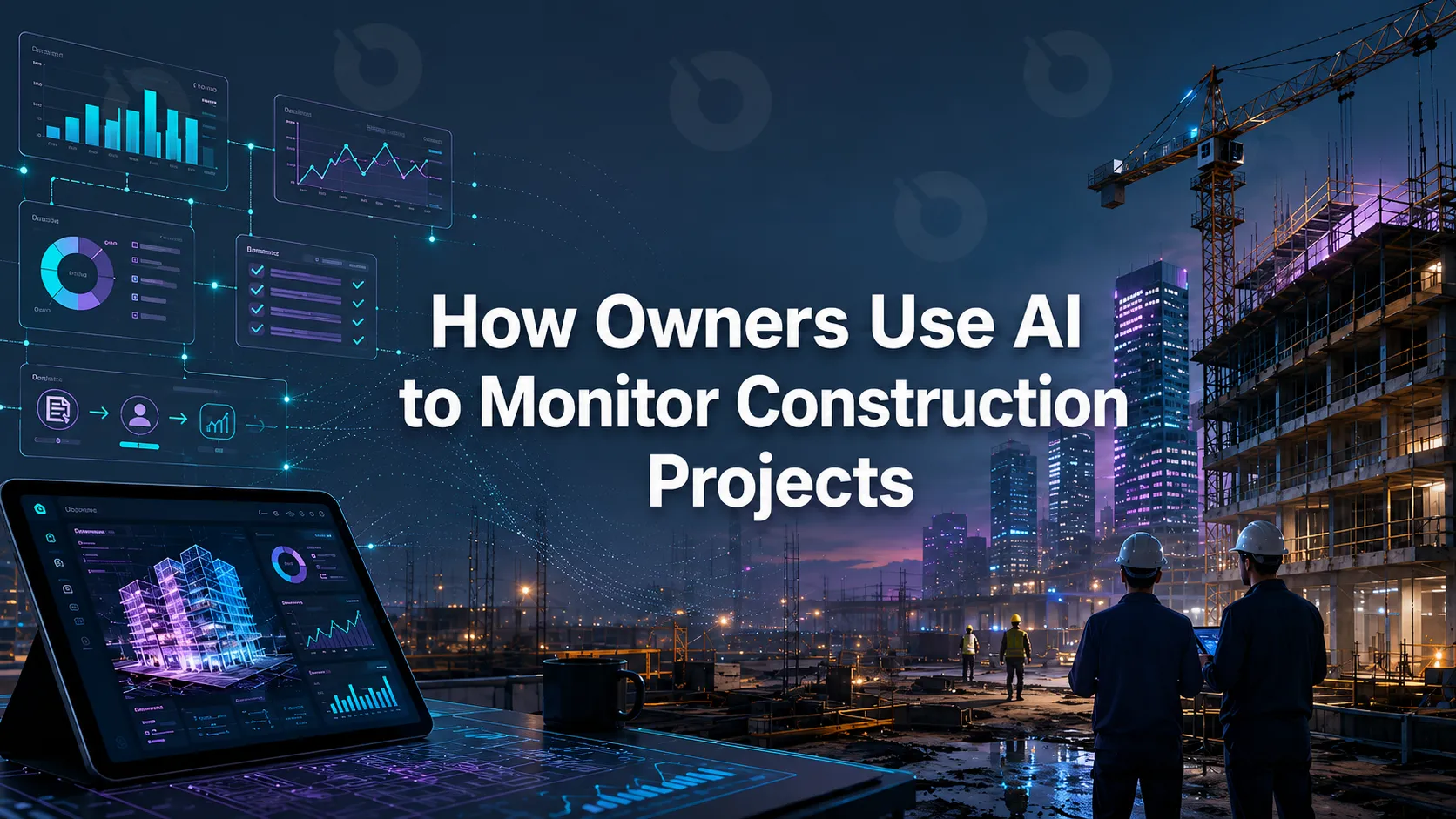
Every project generates a constant flow of information through schedules, budgets, RFIs, submittals, change orders, procurement updates, meeting minutes and field reports. Yet many owners still rely on periodic updates, manually assembled reports, and disconnected systems to understand project performance.
This creates a common problem: by the time an issue appears in a monthly report, it may have already affected the project schedule, budget, or delivery timeline.
Artificial intelligence is beginning to change that.
Instead of waiting for information to be collected, organized and reported manually, owners can use AI to monitor project health, identify risks earlier, track progress across multiple projects and gain faster access to the information that matters most.
The goal isn't replacing project teams or owner's representatives. It's giving decision-makers better visibility into project performance so they can act sooner and with greater confidence.
In this guide, we'll explore how owners, developers and capital program managers are using AI to monitor construction projects, improve reporting and gain real-time visibility across budgets, schedules, risks and portfolio performance.
How Do Owners Use AI to Monitor Construction Projects?
Owners use AI to monitor construction projects by analyzing project data across budgets, schedules, RFIs, submittals, procurement workflows, reports and project documentation. AI helps identify risks, improve reporting, track project performance and provide real-time visibility into construction projects and capital programs.
Why Owners Need Better Construction Visibility
Most owners are not involved in the day-to-day management of construction projects.
Instead, they rely on updates from:
- general contractors
- owner's representatives
- project managers
- consultants
- development teams
This creates a common challenge.
When a project starts falling behind schedule, exceeds budget or encounters procurement issues, owners often learn about it after the problem has already become significant.
The issue is not necessarily a lack of information.
Modern construction projects generate enormous amounts of data through:
- schedules
- RFIs
- submittals
- meeting minutes
- change orders
- field reports
- procurement workflows
- financial reports
The challenge is turning that information into actionable insight.
This is where AI is beginning to change how owners monitor construction projects.
What Is AI Construction Monitoring?
AI construction monitoring refers to the use of artificial intelligence to analyze project information and improve visibility into project performance, risks and progress.
Rather than replacing project managers or construction teams, AI helps owners answer critical questions faster:
- Are we on budget?
- Are we on schedule?
- What risks require attention?
- Which approvals are delayed?
- What procurement issues could impact delivery?
- Which projects need intervention?
The goal is not more reporting. The goal is better decision-making.
How Owners Use AI to Monitor Construction Projects
The most successful owner organizations focus on practical AI use cases that improve visibility across the project lifecycle.
AI for Project Health Monitoring
One of the biggest challenges for owners is understanding overall project health.
AI can help analyze information across:
- budgets
- schedules
- RFIs
- submittals
- procurement activities
- field updates
to provide a clearer picture of project performance.
Rather than reviewing dozens of reports, owners can focus on the projects and issues that require attention.
AI for Construction Reporting
Construction reporting is often highly manual.
Project teams spend significant time creating:
- owner reports
- executive updates
- monthly reports
- portfolio reviews
AI can help generate project summaries by analyzing information across multiple workflows and highlighting:
- project status
- major risks
- key decisions
- upcoming milestones
This improves visibility while reducing administrative effort.
AI for Budget and Cost Visibility
Budget overruns remain one of the biggest concerns for owners.
AI can help identify:
- budget trends
- cost exposure
- pending change order impacts
- procurement-related financial risks
- project forecasting concerns
This allows owners to identify financial issues earlier and take corrective action before they escalate.
AI for Schedule Risk Detection
Schedule delays rarely happen without warning.
They are often preceded by:
- delayed approvals
- unresolved RFIs
- procurement bottlenecks
- coordination issues
AI can help surface these patterns earlier by analyzing project workflows and identifying potential schedule risks before milestones are missed.
AI for Portfolio-Level Construction Monitoring
Many owners are responsible for more than a single project.
They may oversee:
- higher education capital programs
- healthcare expansions
- real estate developments
- data center portfolios
- industrial construction programs
Monitoring multiple projects simultaneously creates a visibility challenge.
AI helps aggregate information across projects and identify:
- portfolio-wide risks
- budget concerns
- schedule trends
- recurring contractor issues
- procurement challenges
This makes AI particularly valuable for large capital programs.
AI for Owner's Representatives
Owner's representatives often serve as the bridge between project teams and ownership groups.
AI can help owner's reps:
- generate reports faster
- track unresolved issues
- identify project risks
- monitor contractor performance
- improve stakeholder communication
This allows them to spend less time assembling information and more time supporting project outcomes.
AI for Data Center and Large Capital Projects
Data center projects, industrial facilities, healthcare projects and large commercial developments generate enormous volumes of project information.
Owners managing these projects often need visibility into:
- procurement risks
- long-lead equipment
- contractor coordination
- budget performance
- milestone tracking
AI can help organize and analyze this information, making it easier to manage complex programs with multiple stakeholders.
Top AI Use Cases for Owners
The most common AI applications for construction owners include:
Executive Reporting
Automating project summaries and leadership updates.
Risk Identification
Surfacing budget, schedule, procurement, and operational risks.
Project Health Monitoring
Providing real-time visibility into project performance.
Portfolio Oversight
Monitoring multiple projects from a single view.
Construction Document Search
Retrieving information across RFIs, submittals, meeting minutes, contracts, and project records.
Forecasting
Improving visibility into potential project outcomes.
Traditional Owner Reporting vs AI-Assisted Monitoring
Traditional owner oversight relies heavily on periodic reporting.
Project teams collect information manually, create reports and distribute updates according to reporting schedules.
AI-assisted monitoring allows owners to move closer to continuous visibility.
Instead of waiting for monthly updates, owners can gain access to project information as conditions change.
The result is:
- faster visibility
- earlier risk detection
- improved decision-making
- more proactive project oversight
Why Connected Project Data Matters
AI is only as effective as the project information available to it.
Many organizations still manage:
- schedules in one platform
- budgets in another
- RFIs separately
- approvals through email
- project documents across multiple systems
This fragmentation limits AI's effectiveness.
Connected construction management platforms provide the context AI needs to understand relationships between project workflows.
When budgets, schedules, procurement activities, RFIs, submittals and reporting are connected, AI can generate significantly more useful insights.
Can AI Replace Project Managers or Owner's Representatives?
No. AI can improve visibility and reduce administrative work, but it cannot replace:
- construction expertise
- stakeholder management
- contract administration
- strategic decision-making
- field experience
The most successful organizations use AI to support project teams, not replace them.
AI provides information. People provide judgment.
The Future of AI for Construction Owners
The future of owner oversight is moving toward connected, data-driven decision-making.
As AI continues to evolve, owners will increasingly use it to:
- monitor project performance
- identify risks earlier
- improve reporting
- manage portfolios
- support capital planning
Organizations with connected project data and standardized workflows will be best positioned to benefit from these capabilities.
How INGENIOUS.BUILD Supports AI-Powered Owner Visibility
AI delivers the most value when it operates inside connected project workflows.
INGENIOUS.BUILD centralizes:
- budgets
- schedules
- RFIs
- submittals
- meeting minutes
- procurement workflows
- approvals
- project documentation
within a single platform.
This creates the foundation for AI-powered reporting, project monitoring, risk identification and portfolio visibility.
Rather than relying on fragmented updates from multiple systems, owners gain access to connected project information and actionable insights. Book a demo to see how it works!
FAQ
How do owners use AI in construction?
Owners use AI to improve visibility into budgets, schedules, risks, procurement, reporting and project performance.
Can AI monitor construction projects?
AI can help monitor project health by analyzing schedules, budgets, RFIs, submittals, reports and other project data to identify risks and emerging issues.
Is AI useful for owner's representatives?
Yes. AI can reduce reporting effort, improve visibility, identify risks earlier and help owner's representatives communicate project status more effectively.
Can AI predict construction delays?
AI can identify patterns associated with schedule risk, such as delayed approvals, unresolved RFIs, procurement bottlenecks and recurring project issues.
What is the biggest benefit of AI for construction owners?
The biggest benefit is improved visibility. AI helps owners understand project performance faster and make more informed decisions across their construction portfolios.