Informative
IoT in Construction Project Management: Complete Guide (2026)
Discover how IoT is reshaping construction management with real-time data, smarter equipment tracking, safer jobsites and better project control.
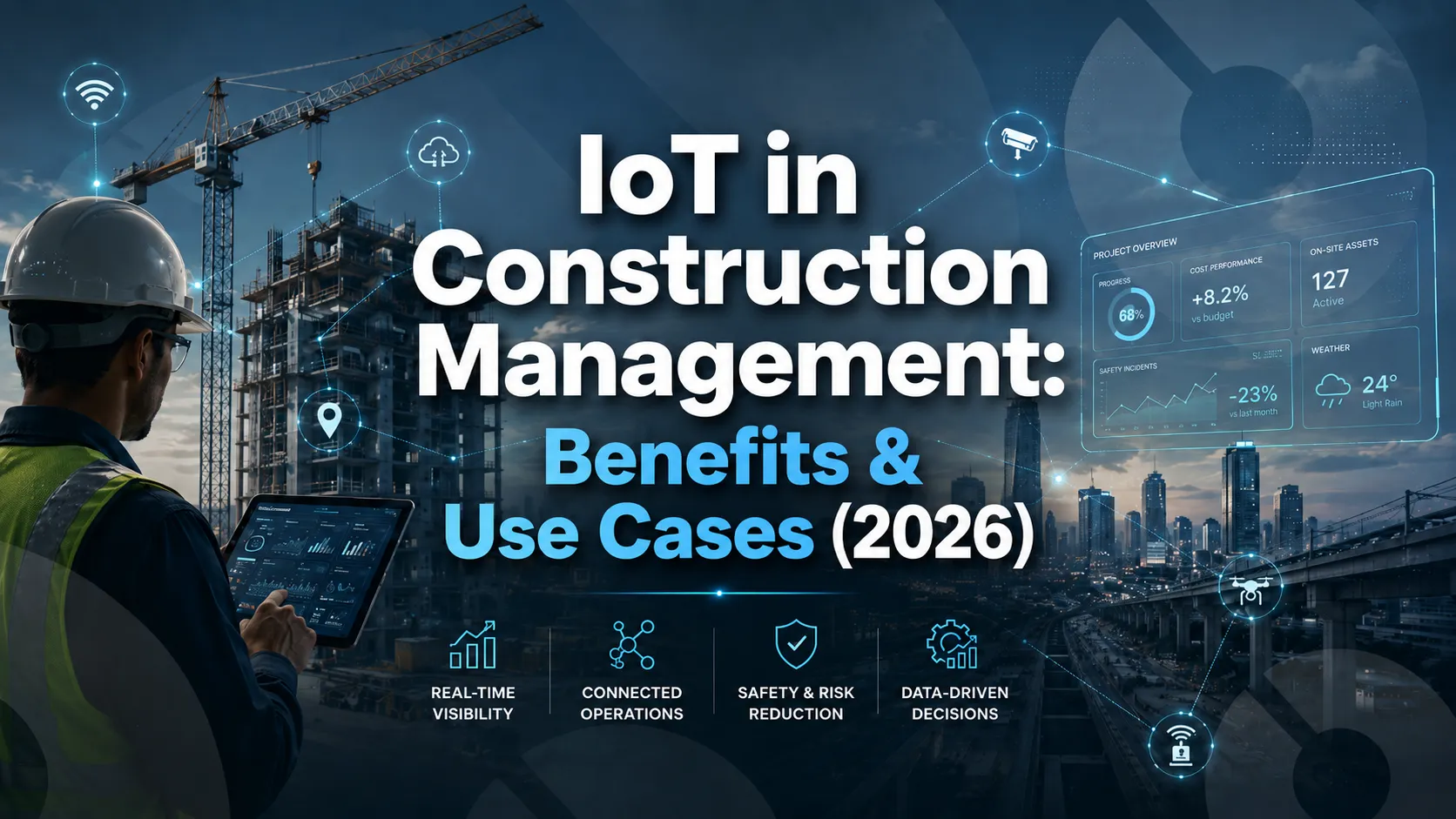
Construction projects are becoming more complex, data-driven and time-sensitive. Traditional methods - manual reporting, delayed updates and fragmented systems - are no longer enough to keep projects on track.
That’s where IoT in construction project management comes in.
The Internet of Things (IoT) is changing how construction teams collect data, monitor progress and make decisions in real time. Instead of reacting to problems after they happen, teams can now detect risks early and act proactively.
This guide explains how IoT is used in construction, what benefits it brings and how to apply it effectively across projects.
What Is IoT in Construction?
IoT in construction refers to the use of connected devices, sensors and systems that collect and transmit real-time data from construction sites, equipment and assets.
In construction project management, IoT enables teams to:
- monitor site activity and conditions in real time
- track equipment usage and performance
- improve safety and compliance
- connect field data with project management systems
In practice, IoT turns construction projects into data-driven environments where decisions are based on live information, not assumptions.
How IoT Is Used in Construction Project Management
The application of IoT in construction industry workflows is expanding quickly. It connects physical jobsite activity with digital systems used by project managers and stakeholders.
1. Real-Time Site Monitoring
IoT sensors placed across construction sites can track:
- temperature, humidity and environmental conditions
- worker activity and movement
- site access and security
This allows teams to respond immediately to changes instead of relying on delayed reports.
2. Construction Equipment Tracking
IoT construction equipment tracking is one of the most widely adopted use cases.
Teams can monitor:
- equipment location and utilization
- fuel consumption and efficiency
- maintenance needs and performance
This reduces downtime and improves asset management across projects.
3. Safety and Compliance Monitoring
Construction site IoT solutions improve safety by:
- detecting hazardous conditions
- monitoring worker exposure to risks
- tracking compliance with safety protocols
Real-time alerts help prevent incidents before they escalate.
4. Progress Tracking and Reporting
IoT devices can capture:
- work completed on-site
- equipment activity
- material usage
This data feeds into project management systems, giving teams a more accurate picture of progress.
5. Integration with Project Management Systems
The most valuable use of IoT in construction project management is integration.
IoT data can connect with:
- scheduling tools
- cost tracking systems
- reporting dashboards
This creates a continuous flow of information from field to office.
Benefits of IoT in Construction
The benefits of IoT in construction go beyond automation. They directly impact project performance.
Improved Decision-Making
Real-time data allows teams to:
- identify issues earlier
- make faster decisions
- reduce reliance on manual reporting
Increased Productivity
By tracking equipment and workflows, IoT helps:
- optimize resource usage
- reduce idle time
- improve coordination across teams
Better Cost Control
IoT provides visibility into:
- equipment usage
- material consumption
- operational efficiency
This helps reduce waste and control project costs.
Enhanced Safety
Continuous monitoring improves:
- hazard detection
- compliance tracking
- incident prevention
Greater Transparency
Stakeholders gain access to:
- real-time project data
- accurate progress updates
- reliable reporting
IoT in Civil Engineering Projects
IoT is particularly valuable in large-scale civil engineering projects, where complexity is high.
Use cases include:
- monitoring structural integrity of bridges and infrastructure
- tracking environmental conditions on large sites
- managing heavy equipment across multiple locations
In these environments, IoT enables better coordination and long-term asset management.
Common Challenges with IoT in Construction
Despite its benefits, IoT adoption comes with challenges.
Data Overload
Collecting data is easy. Making sense of it is harder.
Without proper systems, teams can struggle to turn data into actionable insights.
Integration Issues
IoT devices must connect with existing construction software.
If systems are not integrated, data remains siloed and loses value.
Upfront Costs
Implementing IoT solutions requires investment in:
- hardware (sensors, devices)
- software platforms
- setup and integration
Change Management
Teams need training and process adjustments to fully benefit from IoT.
Best Practices for Using IoT in Construction
To get real value from IoT, construction teams should:
- start with clear use cases (equipment tracking, safety, etc.)
- integrate IoT data with project management systems
- focus on actionable insights, not just data collection
- ensure teams understand and use the data
- scale gradually across projects
How IoT Fits Into Modern Construction Technology
IoT is not a standalone solution. It is part of a broader ecosystem that includes:
- construction project management software
- cost tracking and budgeting tools
- scheduling systems
- reporting and analytics platforms
The real value comes from connecting IoT data with these systems.
When Do You Need IoT in Construction?
IoT becomes valuable when:
- projects are large or complex
- equipment usage is high
- safety risks need close monitoring
- real-time visibility is critical
For smaller projects, the impact may be limited but for growing operations, it becomes a competitive advantage.
What to Look for in IoT Solutions for Construction Industry
When evaluating IoT solutions for construction industry use, focus on:
- integration with project management platforms
- real-time data accessibility
- ease of use for field teams
- scalability across projects
- reliability in jobsite conditions
How IoT Improves Construction Project Management
IoT enhances construction project management by:
- reducing delays through real-time updates
- improving cost control with accurate data
- increasing accountability across teams
- enabling proactive risk management
Instead of reacting to problems, teams can predict and prevent them.
Final Thoughts
Construction projects are becoming more data-driven, and IoT is a key part of that shift. But data alone is not enough. To get real value, IoT insights need to connect with your workflows, budgets and project management systems.
Platforms like INGENIOUS.BUILD help bridge that gap by combining real-time project data with structured workflows and financial visibility.
If you want to see how connected construction management works in practice, book a demo and explore how your projects can operate with greater clarity and control.
FAQ
What is IoT in construction?
IoT in construction refers to connected devices and sensors that collect real-time data from construction sites, equipment and operations.
How is IoT used in construction project management?
It is used to monitor site conditions, track equipment, improve safety and provide real-time data for decision-making.
What are the benefits of IoT in construction?
Key benefits include improved productivity, better cost control, enhanced safety and real-time visibility.
Is IoT widely used in construction?
Adoption is growing, especially in large and complex projects where real-time data provides significant value.
What is the future of IoT in construction?
IoT is expected to become a standard part of construction technology, especially as it integrates with AI, automation and project management platforms.