|

MENU


.svg)
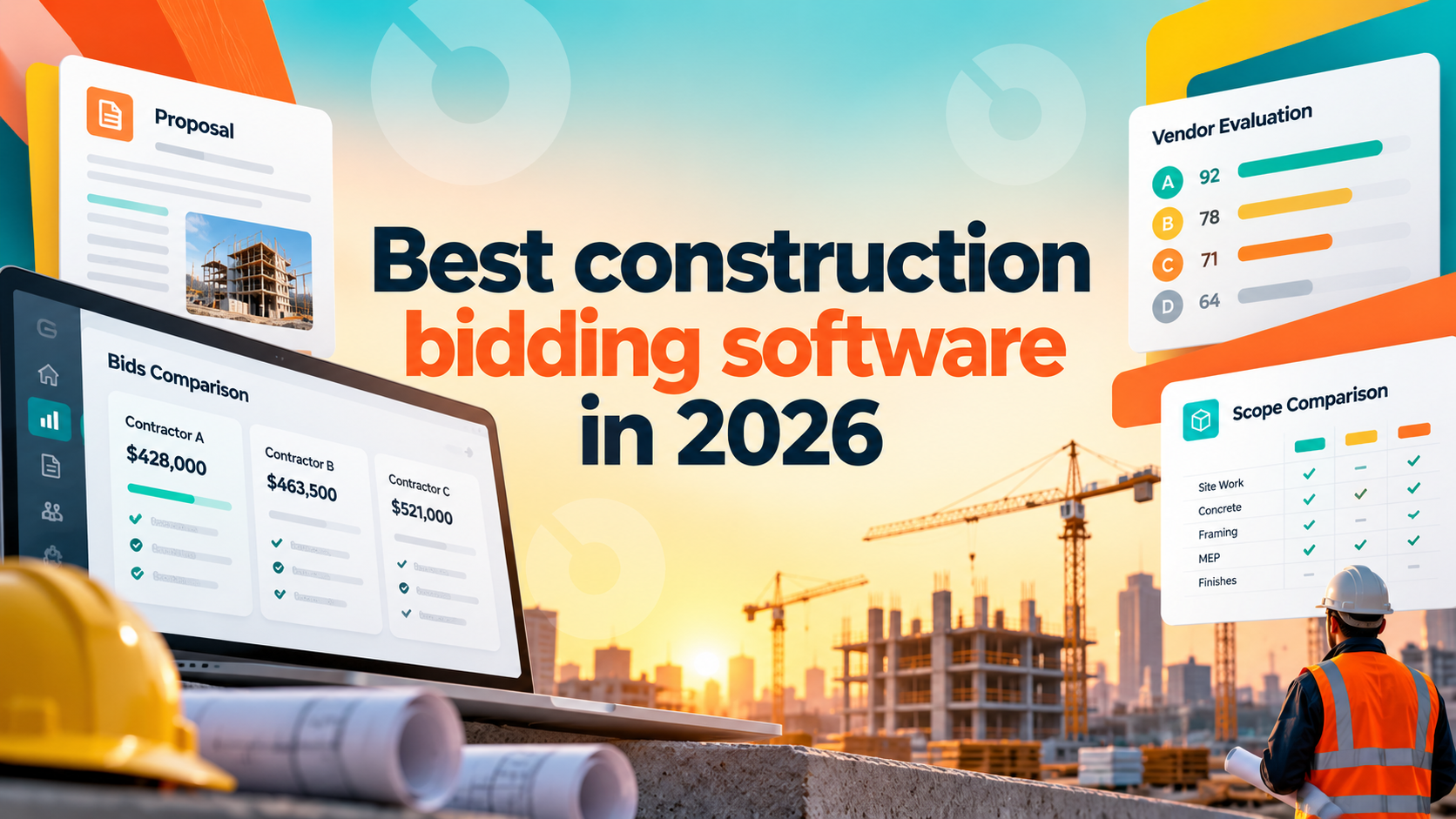
Construction bidding software splits into two problems that don't always get solved by the same tool: getting bid invitations out to a qualified sub network (distribution), and actually comparing what comes back on a fair, apples-to-apples basis (leveling). Most of the well-known platforms in this category are strongest on one side of that split. This guide covers the top options in 2026, what each is actually built for, and where the category still has real gaps.
Best for: large GCs in the Autodesk ecosystem needing a broad subcontractor network and risk analytics.
Best for: GCs with an established subcontractor network who want strong ITB distribution and prequalification.
Best for: teams already running Procore who want bidding in the same ecosystem as the rest of their project data.
Best for: owners and GCs who want bidding connected directly to budgets and contracts, not handed off between separate systems.
INGENIOUS.BUILD includes bid packages and RFPs and proposals within the same Project Financials module used for budgets, contracts, and change orders — so an awarded bid becomes a budget line and contract record automatically, without a manual handoff between a bidding tool and a financial system.
Best for: subcontractors sourcing new bid opportunities, and GCs running low bid volume who want a free entry point.
This is the most important distinction to make before choosing a platform, and it's easy to miss. Distribution — getting bid invitations out to a qualified sub list and tracking responses — is a mature, well-solved problem. BuildingConnected and SmartBid, in particular, handle it well and are widely adopted specifically for that reason.
Leveling and analysis — normalizing scope across bids, flagging gaps, and making sure an award decision is based on a scope-complete comparison — is a less mature part of the market across most platforms. This matters because it's also where margin actually gets protected or lost: a subcontract awarded to a scope-incomplete bid typically surfaces as a change order or a back-charge later, once the gap is discovered during buyout. If your team is spending significant time on manual leveling and follow-up after bids come in, that's the specific capability worth testing hardest during evaluation — not just how smoothly invitations go out.
Here's what the leveling gap described above looks like in practice. Five subs bid a mechanical package. Four include ductwork insulation in their base price; one doesn't, but nobody catches it during a manual comparison because the bottom-line numbers all look competitive. The lowest bid — the one missing insulation — gets awarded.
The gap surfaces at buyout, or worse, mid-installation, and by then there are only three ways to resolve it: a change order that erases the cost advantage that made the bid attractive in the first place, a back-charge dispute with the subcontractor, or the GC absorbing the cost to keep the schedule moving. None of those outcomes are as cheap as catching the gap during leveling, before the award was made — which is exactly why leveling depth, not just distribution reach, is worth testing hard during evaluation.
For low bid volume, PlanHub's free tier is a real, usable starting point rather than a stripped-down trial. It works well for basic plan distribution and invitation tracking. The limitation shows up predictably as volume grows — teams running more than roughly 15 active bid packages tend to outgrow what the free tier can track cleanly, at which point a paid platform with deeper leveling and reporting becomes worth the cost.
Prequalification is easy to reduce to "is this sub insured," but the platforms that do it well track more than a compliance checkbox. Worth confirming what any platform actually verifies:
Platforms like BuildingConnected's TradeTapp and SmartBid's prequalification tools both go beyond a basic checklist here, which matters most for GCs bringing in subs outside their established relationships — the ones with a longstanding sub list have often already vetted this informally over years of working together.
A few direct questions tend to reveal more than a product demo:
Vague answers on the leveling and budget-connection questions specifically are worth treating as a real signal — those are the two areas where platforms differ most and where marketing language tends to overstate actual capability.
Most construction bidding software is genuinely good at getting invitations out and tracking responses — that part of the category is mature. Where platforms still differ meaningfully is bid leveling depth and whether an awarded bid connects directly to the rest of your project's financial data or requires a manual handoff. Enterprise GCs already in the Autodesk or Procore ecosystems generally do best extending those platforms; owners and GCs who want bidding and budgeting in one connected system are the best fit for INGENIOUS.BUILD.
Book a demo today to see bidding connected to the rest of your project financials.
It depends on what you're optimizing for: BuildingConnected for enterprise-scale sub network reach, SmartBid for prequalification and ITB tracking, Procore Preconstruction for teams already on Procore, and INGENIOUS.BUILD for bidding connected directly to budgets and contracts.
BuildingConnected generally suits larger GCs wanting deep risk analytics and a bigger sub network; SmartBid tends to fit small-to-mid-sized contractors already using Procore or similar tools who want a stronger out-of-box mobile experience.
PlanHub offers a genuinely usable free tier for plan distribution and ITB tracking, with a practical ceiling once bid volume grows past roughly 15 active projects.
It varies by platform. Procore Preconstruction and INGENIOUS.BUILD both connect awarded bids directly into project financials; several standalone bid-distribution tools require exporting and re-entering that data into a separate system.
Bid leveling and analysis — normalizing scope and flagging gaps across bids — is less mature across the category than bid distribution, which is why manual leveling still consumes significant time on many teams even with software in place.

INGENIOUS.BUILD
.svg)
.svg)



Company Type

Product Solutions
Information
.svg)
Speak to a Product Specialist
Streamline your Development & Construction projects with our cutting-edge project management software.
Discover why people are switching to INGENIOUS today!
By submitting this form, you agree with our Privacy Policy.