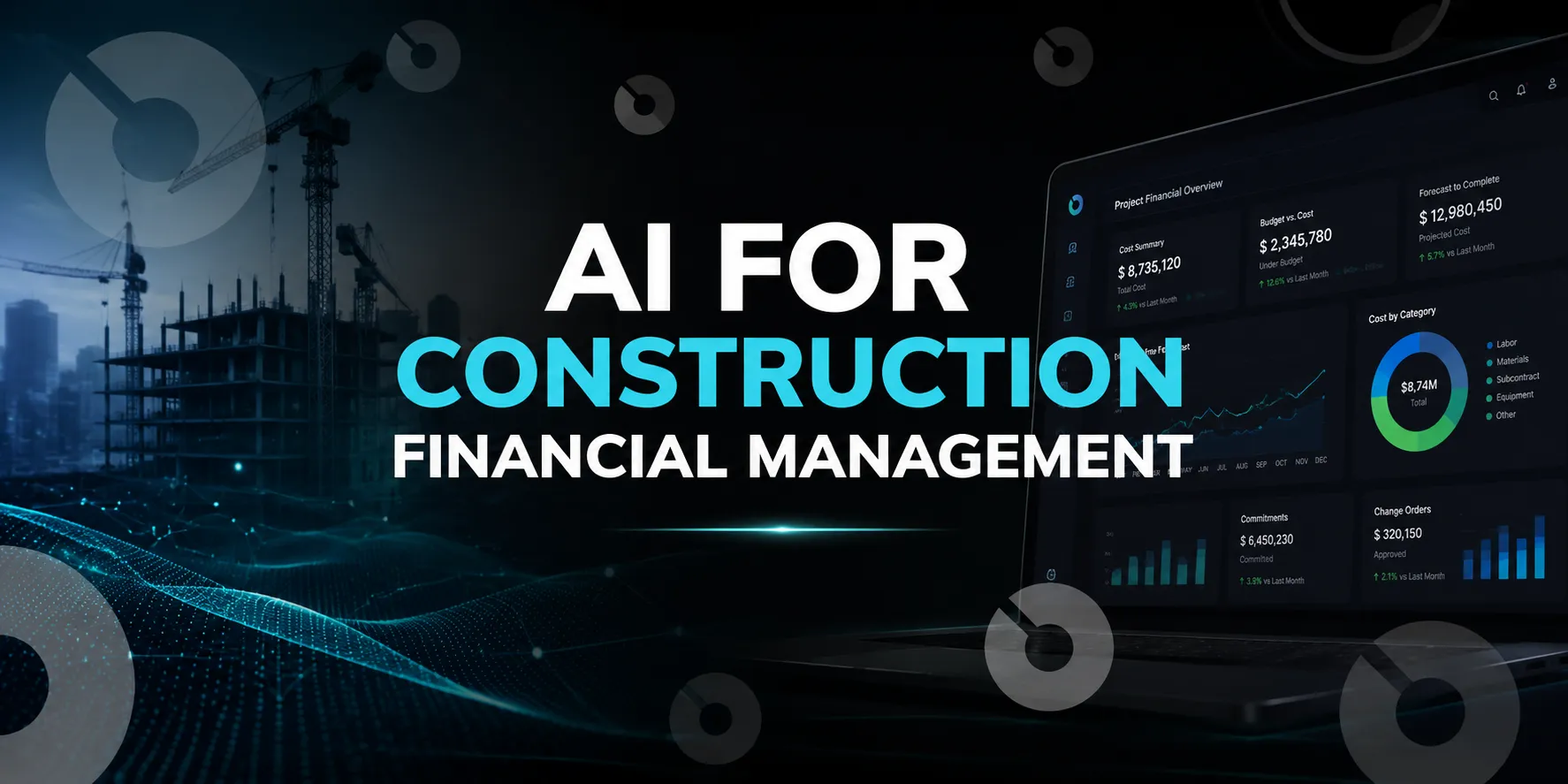
Informative
How to Use AI for Construction Reporting: Daily Progress Updates and Project Visibility
See how AI helps construction teams automate reports, track progress, surface risks, and improve project visibility with less manual work.
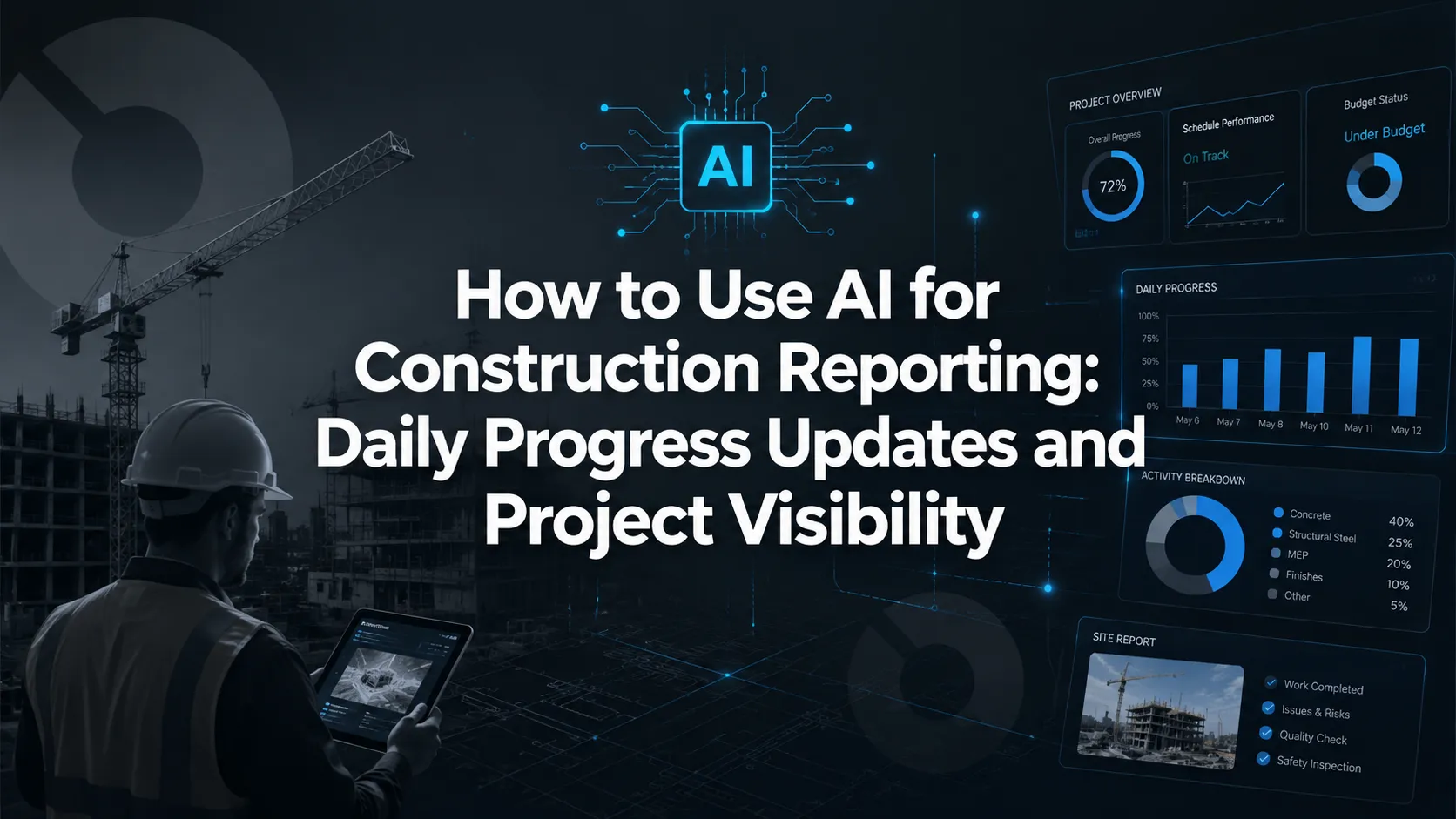
Daily logs, progress updates, safety reports, executive summaries, owner updates, meeting minutes and portfolio reviews all require information from multiple stakeholders, systems and workflows. On many projects, reporting is still a largely manual process involving spreadsheets, emails, PDFs and hours of administrative work every week.
The challenge is not a lack of data. Most construction projects already generate enormous amounts of information through RFIs, submittals, schedules, field reports, inspections, procurement updates and project documentation.
The challenge is turning that information into useful project insights. This is where AI is beginning to change construction reporting.
Rather than manually collecting, organizing and summarizing project information, teams can use AI to automate reporting workflows, generate progress updates, identify emerging risks and improve visibility across projects.
In this guide, we'll explore how construction companies are using AI for reporting, progress tracking, safety documentation and project visibility, along with the benefits, limitations and best practices for successful adoption.
Quick Answer
AI for construction reporting helps project teams automate daily reports, generate progress updates, identify project risks, summarize meetings, and improve visibility across schedules, budgets, RFIs, and field activities. Rather than replacing project managers, AI reduces administrative work and helps teams turn project data into actionable insights faster.
Why Construction Reporting Is Broken
Construction projects generate enormous amounts of information every day.
Teams constantly create:
- daily reports
- field reports
- safety observations
- progress updates
- meeting minutes
- RFI logs
- submittal records
- schedule updates
- procurement reports
- executive summaries
Despite advances in construction technology, reporting remains highly manual on many projects.
Project managers and superintendents often spend hours every week:
- gathering updates from multiple stakeholders
- consolidating information from different systems
- preparing executive reports
- documenting project progress
- tracking unresolved issues
The result is delayed visibility, inconsistent reporting, and significant administrative overhead.
This is one of the main reasons AI adoption is accelerating across construction reporting workflows.
How AI Is Used in Construction Reporting
AI helps construction teams process large amounts of project information and transform it into useful reports. The most common applications include:
- automated daily activity reports
- weekly construction progress updates
- executive reporting
- construction safety reporting
- project status summaries
- risk identification
- portfolio reporting
The goal is not simply producing reports faster. The goal is helping stakeholders understand project conditions sooner and make better decisions.
Top AI Use Cases for Construction Reporting
Construction teams are increasingly using AI to support:
- daily construction reports
- weekly progress updates
- OAC meeting summaries
- executive project reporting
- owner reporting
- safety reporting
- inspection summaries
- project risk reporting
- portfolio reporting
- contractor performance reporting
Most organizations start with reporting because it delivers immediate productivity gains without requiring major workflow changes.
AI for Automated Daily Construction Reports
Daily reports are one of the most time-consuming reporting workflows in construction.
Field teams typically document:
- completed work
- labor counts
- equipment usage
- site conditions
- weather impacts
- safety observations
- issues requiring attention
AI can help automate daily activity reports by organizing information from field updates, site observations and project documentation into a structured report format.
Benefits include:
- reduced administrative workload
- more consistent reporting
- improved documentation quality
- faster communication between field and office teams
For many contractors, automated daily reports are the first practical AI use case they adopt.
How to Automate Weekly Construction Progress Updates
Weekly reporting often requires collecting information from multiple project stakeholders.
Project managers must understand:
- completed work
- upcoming activities
- schedule performance
- budget status
- procurement risks
- unresolved issues
AI can help generate weekly construction progress updates by analyzing project data across multiple workflows and summarizing the most important developments.
Instead of spending hours preparing updates, teams can focus on reviewing and refining reports before distribution.
AI Progress Tracking and Construction Monitoring
One of the fastest-growing applications of AI in construction is progress tracking. AI-powered progress tracking systems can analyze:
- site photos
- drone imagery
- field reports
- schedules
- project documentation
to compare planned progress against actual project conditions.
AI solutions for automatic construction progress tracking help teams:
- identify delays earlier
- improve schedule visibility
- monitor work completion
- track project performance
This improves decision-making and reduces reliance on manual progress assessments.
AI Models for Construction Tracking
Modern AI models can process information from multiple project sources simultaneously.
Examples include:
- progress photos
- inspection reports
- field observations
- schedules
- procurement records
- project documentation
These models help identify patterns, risks, and project conditions that may be difficult to detect manually.
As project complexity increases, AI-assisted construction tracking becomes increasingly valuable.
AI for OAC Meeting Minutes and Action Items
Owner-Architect-Contractor meetings generate critical project decisions, but documenting them consistently can be time-consuming.
AI can help construction teams:
- summarize meeting discussions
- identify action items
- assign responsibilities
- track unresolved issues
- generate meeting minutes
This reduces administrative work while improving accountability across project stakeholders.
AI for Construction Safety Reporting
Safety reporting is another area where AI can reduce administrative burden.
Construction teams often manage:
- safety observations
- incident reports
- compliance documentation
- corrective actions
- inspection records
AI can help organize safety information, generate summaries, identify recurring issues and improve visibility into project safety performance.
This is particularly valuable for safety directors managing multiple projects simultaneously.
AI Tools for Construction Safety Compliance Reports
Compliance reporting often requires consolidating information from multiple sources.
AI tools can assist by:
- organizing inspection records
- tracking corrective actions
- summarizing observations
- identifying unresolved issues
- generating compliance-ready reports
While AI does not replace safety professionals, it helps them manage information more efficiently.
AI for Executive Construction Reporting
Owners, developers and executives typically do not need hundreds of project updates.
They need clear answers to questions such as:
- Are we on schedule?
- Are we on budget?
- What risks require attention?
- Which projects need intervention?
AI can help generate executive summaries that focus on project health, major risks, key decisions and upcoming milestones.
This allows leadership teams to gain visibility without reviewing large volumes of operational data.
Best AI Use Cases for Construction Reporting
Organizations are seeing the greatest value from AI in reporting workflows such as:
Daily Reports
Automating field updates and site activity documentation.
Progress Reporting
Summarizing project status and work completed.
Meeting Summaries
Capturing decisions, action items and follow-ups.
Safety Reporting
Organizing safety observations and compliance records.
Executive Reporting
Providing leadership with project-level and portfolio-level visibility.
Portfolio Reporting
Aggregating information across multiple projects.
AI Reporting vs Traditional Construction Reporting
Traditional construction reporting is often reactive.
Information is gathered manually, reports are assembled periodically and project leaders receive updates after issues have already emerged.
AI-assisted reporting helps teams move toward real-time visibility.
Instead of spending time collecting information, teams can focus on understanding what the information means and how to respond.
The result is:
- faster reporting
- better consistency
- improved decision-making
- earlier risk identification
How AI Generates Construction Reports
Most AI reporting workflows follow a similar process:
- Collect project information from schedules, reports, RFIs, submittals, and field updates.
- Organize information by project workflow.
- Identify key developments, risks, and decisions.
- Generate structured reports for different audiences.
- Allow project teams to review and finalize outputs.
AI accelerates report creation, but human review remains essential.
AI Adoption Roadmap for Construction Reporting
Most organizations adopt AI reporting in stages:
Stage 1
Meeting summaries and daily reports.
Stage 2
Weekly updates and executive reporting.
Stage 3
Project-wide risk and performance reporting.
Stage 4
Portfolio-level reporting and predictive insights.
Most construction companies today operate between stages 1 and 2.
Why Connected Construction Data Matters
AI reporting is only as effective as the project information available to it.
Many construction companies still manage:
- schedules in one platform
- budgets in another
- approvals through email
- field updates elsewhere
- project documents across multiple systems
This fragmentation limits AI's ability to generate meaningful insights.
Connected construction management platforms allow AI to understand relationships between project workflows, creating more accurate reports and stronger operational visibility.
The more connected the project data, the more valuable AI reporting becomes.
What AI Cannot Replace in Construction Reporting
AI can dramatically reduce the effort required to create reports. However, it cannot replace:
- project management expertise
- field judgment
- stakeholder relationships
- construction experience
The best results come when AI supports construction professionals rather than replacing them.
AI generates information.
People make decisions.
The Future of AI in Construction Reporting
Construction reporting is moving toward continuous visibility rather than periodic reporting cycles.
As AI continues to evolve, project teams will increasingly use it to:
- automate reporting workflows
- identify risks earlier
- improve progress tracking
- surface operational insights
- improve stakeholder communication
Organizations with connected project data will be best positioned to benefit from these capabilities.
How INGENIOUS.BUILD Supports AI-Powered Reporting
Effective AI reporting requires connected project information.
INGENIOUS.BUILD centralizes:
- schedules
- budgets
- RFIs
- submittals
- meeting minutes
- approvals
- project documentation
- reporting workflows
inside a single project environment.
This creates the foundation for AI-powered reporting, project visibility, risk identification and stakeholder communication.
Instead of pulling information from disconnected systems, teams can generate insights from a shared source of truth. Book a demo to see how it works!
FAQ
How is AI used in construction reporting?
AI is used to automate daily reports, generate progress updates, summarize meetings, identify project risks, organize documentation and improve project visibility.
Can AI generate construction progress reports?
Yes. AI can analyze project updates, schedules, field reports and documentation to generate structured progress reports and executive summaries.
What is AI-powered progress tracking?
AI-powered progress tracking uses project data, photos, field reports and schedules to compare actual progress against planned work and identify potential delays.
Can AI automate daily construction reports?
Yes. AI can organize field updates, labor information, equipment usage, weather conditions and site observations into consistent daily reports.
What are the benefits of AI in construction reporting?
The main benefits include reduced administrative work, faster reporting, improved consistency, better project visibility and earlier identification of project risks.