Informative
New Data Center Technologies: How the Data Center Transformation Market Is Evolving in 2026
Explore the data center transformation of 2026—from AI-ready infrastructure and liquid cooling to modular builds and smarter project delivery.
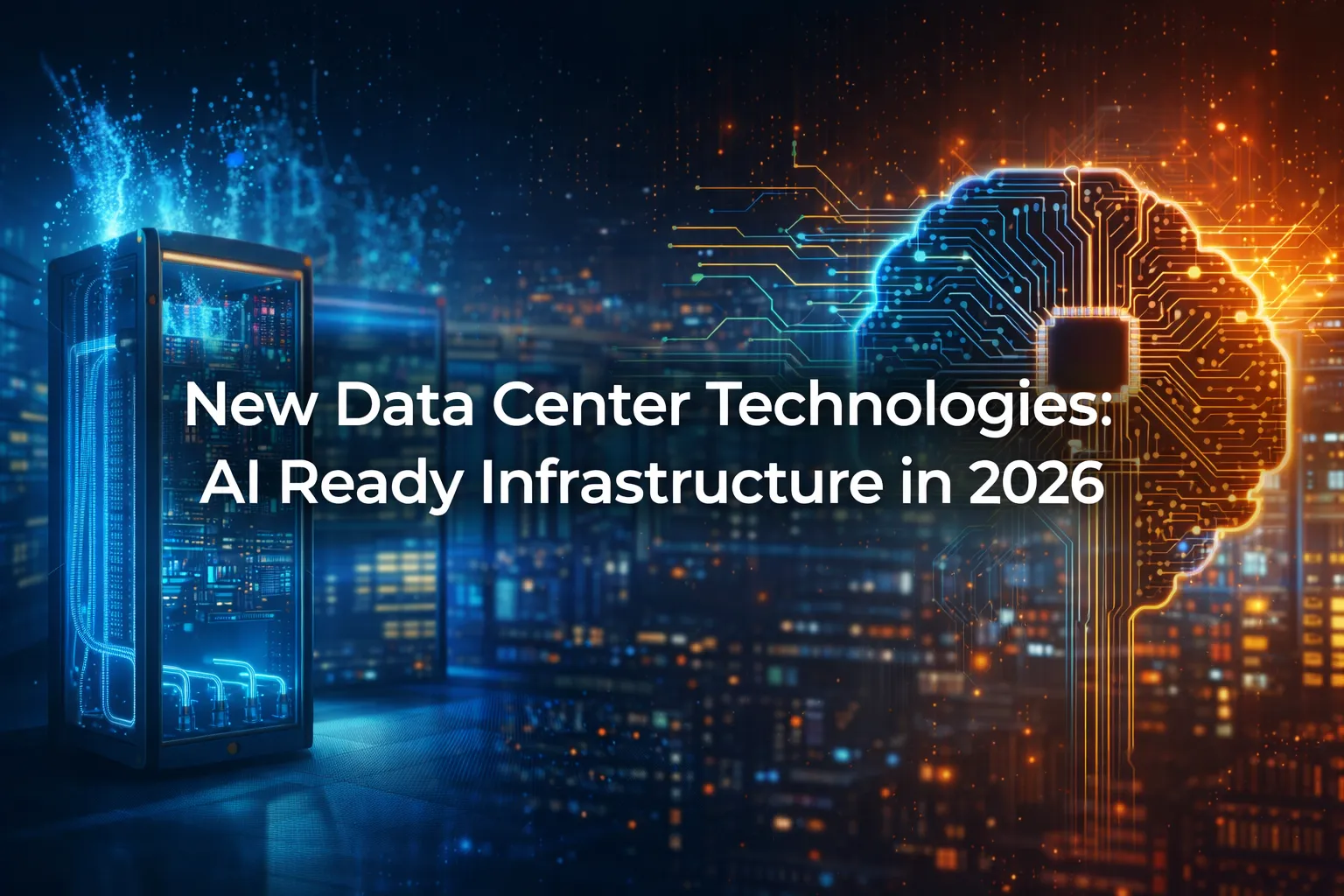
The data center industry is undergoing one of the most significant transformations in its history. Driven by artificial intelligence, cloud demand and rising infrastructure complexity, data centers today look very different from those built even five to ten years ago.
New data center technologies are reshaping how facilities are designed, built and operated. At the same time, the data center transformation market is expanding rapidly, as owners and operators adapt to higher power density, tighter reliability requirements and faster delivery timelines.
This guide breaks down the latest trends in data center technology, explains the emerging technologies shaping modern facilities and explores what it actually means to build and manage AI-ready data centers in 2026.
What Is Driving the Data Center Transformation Market?
The transformation of the data center market is not driven by a single innovation. Instead, it is the result of several forces converging at once:
- Explosive growth in AI and machine learning workloads
- Increased power and cooling requirements
- Greater emphasis on uptime, redundancy and resiliency
- Rising construction and operational complexity
- Pressure to deliver facilities faster, at larger scale
As a result, data centers are no longer treated as static infrastructure. They are increasingly viewed as high-performance, mission-critical systems that must be adaptable, scalable and tightly controlled throughout their lifecycle.
New Data Center Technologies Shaping Modern Facilities
Higher-Density Power and Cooling Systems
One of the most visible changes in latest data center technology is the move toward higher-density power environments. AI workloads demand far more compute per square foot, which directly affects electrical design, cooling strategies and facility layout.
Emerging approaches include:
- Liquid cooling and hybrid cooling systems
- Advanced power distribution architectures
- Modular electrical infrastructure
These technologies allow facilities to support AI and high-performance computing while maintaining reliability.
Modular and Prefabricated Data Center Components
To meet aggressive timelines, many organizations are turning to modular construction methods. Prefabricated data center components reduce on-site construction time and help standardize quality across builds.
This shift changes not only how data centers are built, but also how projects are planned, coordinated and delivered.
Automation and Intelligent Monitoring
Automation is playing a larger role in modern data centers, from operational monitoring to predictive maintenance. Sensors, analytics platforms and AI-driven monitoring tools help operators identify risks earlier and optimize performance over time.
However, automation also increases system interdependencies, making coordination during design and construction even more critical.
Emerging Technologies in Data Center Design and Operations
Beyond core infrastructure, several emerging technologies in data center environments are influencing how projects are managed:
- AI-assisted capacity planning
- Advanced digital twins
- Integrated building management systems
- Real-time performance analytics
These tools provide deeper visibility but also introduce new layers of data and decision-making that must be managed consistently across teams.
What Makes a Data Center “AI-Ready” in 2026?
The term AI-ready is often used loosely. In practice, AI-ready data center solutions go far beyond adding more GPUs.
An AI-ready data center typically includes:
- Infrastructure designed for high power density
- Cooling systems capable of handling sustained AI workloads
- Flexible layouts that support rapid scaling
- Robust redundancy and failover strategies
- Strong coordination between design, construction and operations
This is why many teams evaluating top AI-ready data center solutions in 2026 focus not just on technology vendors, but on how effectively complex projects are delivered.
The Role of Project Delivery in Data Center Transformation
As data centers become more complex and more tier types appear, the challenge is no longer limited to selecting the right technologies. The bigger risk lies in how those technologies are implemented.
Modern data center projects involve:
- Multiple specialized contractors
- Tight coordination between design, engineering and construction
- Strict documentation and approval requirements
- High financial and operational risk
Without strong project controls, even the best technology choices can fail to deliver expected outcomes.
This is where platforms like INGENIOUS.BUILD play an important role. INGENIOUS.BUILD helps owners and delivery teams manage complex data center projects by providing a centralized system for project management, construction administration and reporting — supporting coordination across stakeholders and reducing execution risk.
How Teams Evaluate AI-Ready Data Center Solutions
When teams search for the best company for AI-ready data solutions, they are often really asking a broader question - Who can help us deliver and manage these facilities reliably at scale?
Evaluation criteria increasingly include:
- Ability to support complex, multi-phase projects
- Governance, documentation and auditability
- Integration across design, construction and operations
- Portfolio-level visibility and reporting
Technology alone is no longer enough. Execution matters just as much.
Where the Data Center Transformation Market Is Heading
Looking ahead, the data center transformation market is expected to continue evolving in several directions:
- Larger, more complex facilities
- Greater reliance on AI and automation
- Increased regulatory and compliance requirements
- Stronger focus on lifecycle management, not just build-out
Organizations that succeed will be those that treat data centers as long-term systems, supported by both advanced technologies and disciplined project delivery practices.
Frequently Asked Questions
What are new data center technologies?
New data center technologies include high-density power systems, advanced cooling methods, modular construction, automation and AI-driven monitoring tools designed to support modern workloads.
What are the latest trends in data center technology?
Key trends include AI-ready infrastructure, liquid cooling, modular builds, automation and greater integration between design, construction management and operations.
What is the data center transformation market?
The data center transformation market refers to the shift toward more advanced, scalable and resilient data centers driven by AI, cloud demand and increasing infrastructure complexity.
What makes a data center AI-ready?
AI-ready data centers are designed to handle high power density, advanced cooling requirements, rapid scaling and strict reliability standards required by AI workloads.
How do construction and project management affect data center success?
As data centers become more complex, strong project management and construction administration are essential to coordinate stakeholders, manage risk and ensure technologies are implemented effectively.
Final Thoughts
The future of data centers is defined not just by new technologies, but by how well those technologies are delivered and managed. As AI and advanced workloads reshape infrastructure demands, the importance of disciplined project execution continues to grow.
For organizations navigating the data center transformation market, success increasingly depends on combining cutting-edge technology with strong project controls and coordination, ensuring that innovation translates into reliable, operational facilities.