Lean Construction in 2026: Principles, Practices & Software
Lean construction in 2026 goes beyond philosophy. Discover how principles, procurement alignment and modern software turn lean into real operational advantage.
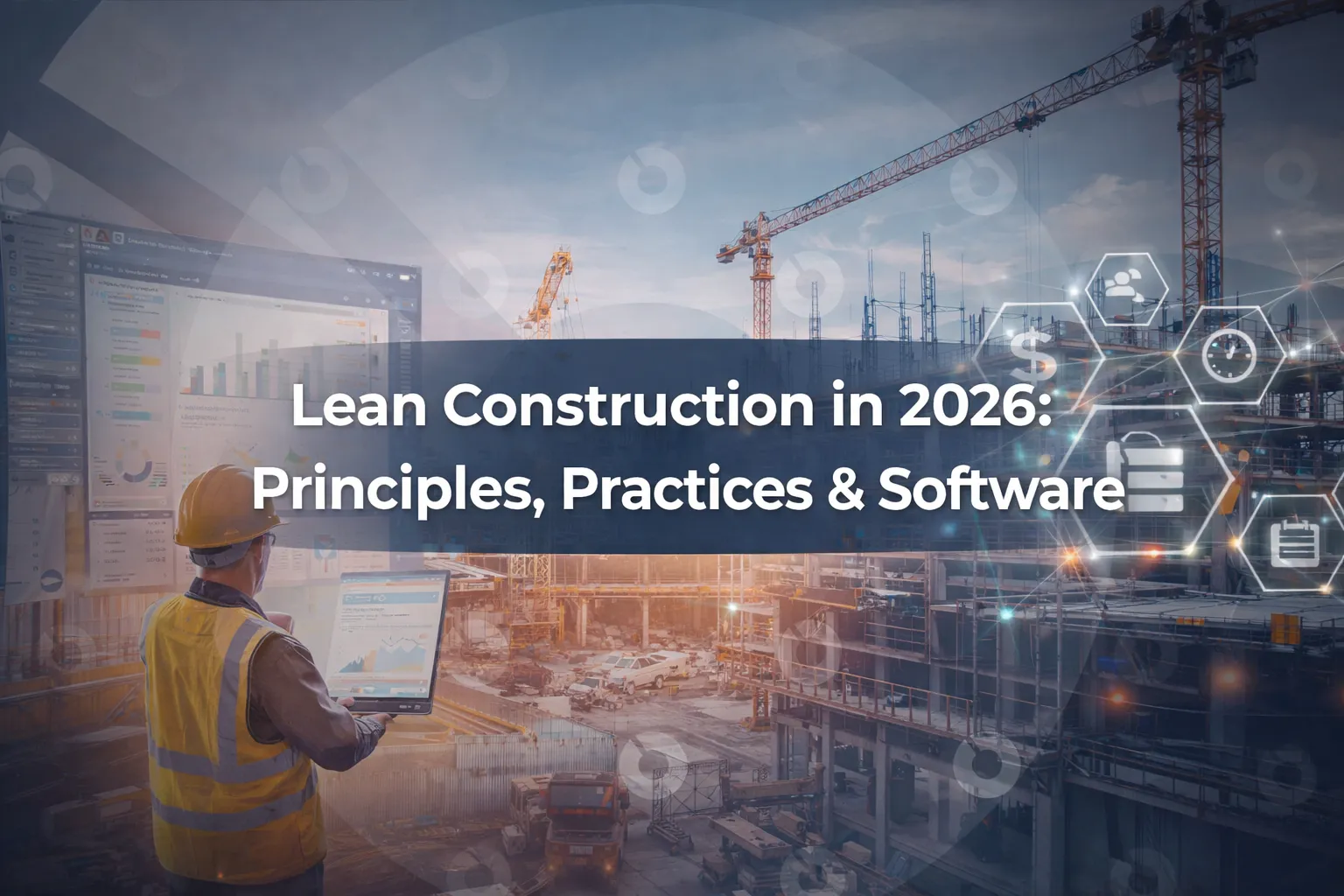
Lean construction has been part of industry conversations for years. And yet, many projects that claim to follow lean practices in construction still struggle with the same issues: reactive change orders, procurement delays, siloed decision-making and budget overruns.
The gap isn’t in the philosophy. It’s in the execution.
In 2026, lean construction is no longer just a methodology discussion. It’s an operational systems discussion. Firms that succeed with lean building practices treat it as infrastructure.
This guide explores what lean construction really means, how lean project delivery works in modern construction and why lean construction software is increasingly central to making it stick.
What Is Lean in Construction?
Lean construction is a project delivery methodology that focuses on maximizing value and minimizing waste throughout the entire lifecycle of a construction project.
The lean construction methodology is adapted from lean manufacturing principles, particularly the Toyota Production System. However, unlike manufacturing, where processes are repetitive, construction projects are temporary, complex and highly variable. Each project involves different stakeholders, contracts, site conditions and risk profiles.
Because of this, lean in construction is not about repetition. It is about improving flow, coordination and decision-making across a project-driven environment.
In the lean construction industry, waste typically appears as:
- Delays caused by slow approvals
- Rework due to poor coordination
- Misaligned procurement and scheduling
- Budget overruns and cost surprises
- Unclear ownership of decisions
Lean construction aims to reduce these inefficiencies by increasing transparency, aligning stakeholders earlier and improving workflow predictability.
It is not simply a cost-cutting strategy. It is a systems-based approach to removing friction before it compounds into schedule delays, disputes or financial loss.
Lean Planning Construction: Where Theory Meets Reality
Lean planning in construction often centers around pull planning and collaborative scheduling frameworks like the Last Planner System.
The idea is simple: instead of pushing work downstream regardless of readiness, teams coordinate backward from milestones, aligning trades and identifying constraints early.
In practice, this requires transparency.
If procurement isn’t aligned with scheduling, lean planning breaks. If cost data isn’t visible in real time, lean becomes reactive. If change approvals are delayed or undocumented, flow collapses.
Lean planning construction is not just about meetings and sticky notes. It depends on reliable data.
The more complex the project, the more critical that infrastructure becomes.
Lean Practices in Construction That Actually Deliver Results
Over time, certain lean best practices in construction have proven durable:
- Early stakeholder involvement reduces late-stage redesign
- Transparent cost tracking prevents downstream disputes
- Structured change management avoids scope creep chaos
- Integrated procurement planning reduces schedule risk
- Continuous feedback loops strengthen future performance
But here’s the uncomfortable truth:
Many organizations adopt lean terminology without changing their systems. They run lean workshops — but still manage budgets in spreadsheets. They promote collaboration — but approvals sit in inboxes. They encourage pull planning — but procurement is disconnected from finance.
Lean construction fails when it’s layered onto fragmented tools. It works when the underlying workflows are structured and visible.
Lean Project Delivery and Integrated Practices in Modern Construction
Lean project delivery emphasizes integration: owners, contractors, designers and procurement teams working in coordinated alignment.
This often intersects with integrated project delivery (IPD) models and shared-risk contracts.
In modern construction environments, lean and project management are inseparable. Schedule control, cost governance and procurement timing must move together.
When financial systems operate independently from project management systems, integration weakens. Data lags. Visibility shrinks. Decisions slow down.
In 2026, lean construction industry leaders increasingly recognize that software architecture shapes workflow behavior.
Systems either enable integration or undermine it.
The Role of Procurement Software in Lean Construction Practices
The role of procurement software in lean construction practices is often underestimated. Lean construction methodology depends on synchronized workflows, especially when it comes to materials, contracts and financial commitments. If procurement is disconnected from scheduling and budgeting, lean planning quickly breaks down.
Without structured procurement tracking, teams lose visibility into:
- Vendor timelines and delivery commitments
- Contract values and purchase order status
- Budget alignment and cost exposure
- Scope changes that impact downstream trades
Procurement software supports lean practices by linking financial commitments directly to project schedules and budgets. When purchase orders, subcontract agreements, and change orders are tied to cost codes and timelines in real time, teams can identify constraints early instead of reacting to disruptions later.
Lean Construction Software: What Actually Makes It Lean
There’s growing interest in lean construction software, lean construction management software and lean construction project management software. But software doesn’t become “lean” because it says so.
Lean construction software is defined by how well it supports flow — specifically, how effectively it reduces friction between budgeting, procurement, approvals and execution.
In practical terms, software used for lean construction planning should provide real-time cost visibility, structured approval workflows and clear links between procurement, contracts and schedules. Documentation should be centralized. Financial commitments should be traceable. Leadership should be able to see risk before it escalates.
If teams are exporting data into spreadsheets to reconcile budgets manually, that’s not lean. If project managers are chasing approvals across inboxes, that’s not lean. If procurement commitments aren’t visible against live budgets, that’s not lean.
Lean construction methodology depends on predictable, transparent decision flow. As projects grow more complex, that level of coordination requires digital infrastructure designed for governance, traceability and cross-functional alignment.
Assessment of Lean Construction Practices in the Industry
Honest assessment of lean construction practices in the construction industry reveals a wide maturity gap. Some organizations embed lean construction principles into executive governance, procurement strategy and software architecture. In these firms, lean is not a workshop initiative — it shapes how decisions are made, approved and tracked.
Others apply lean practices narrowly, often limiting them to scheduling techniques or collaborative planning sessions. The language of lean is present, but the operational infrastructure remains unchanged.
The difference becomes visible under pressure. Projects that meaningfully implement lean building practices tend to show:
- Greater budget stability over the project lifecycle
- Fewer escalated disputes related to scope or cost
- Stronger alignment between procurement and scheduling
- Clearer cross-functional visibility across finance, operations, and leadership
By contrast, organizations that adopt lean superficially often revert to reactive management when constraints tighten. Approvals stall. Procurement misaligns. Budget exposure becomes visible only after the fact.
Key Assessment Criteria for Lean Construction Maturity
When evaluating lean construction practices, whether internally or across the industry, several criteria consistently indicate maturity:
1. Financial Transparency
Are budgets, commitments and change orders visible in real time or reconciled retrospectively?
2. Procurement Alignment
Is procurement integrated into lean planning construction efforts or treated as a downstream administrative task?
3. Governance Structure
Are approvals structured and traceable or dependent on informal communication?
4. System Integration
Do project management, accounting and procurement systems operate cohesively or require manual reconciliation?
5. Executive Engagement
Is lean embedded in leadership decision-making or delegated solely to project teams?
Lean construction methodology succeeds when these elements are aligned. When they are fragmented, lean becomes a process overlay rather than an operational foundation.
The firms leading the lean construction industry are not necessarily the ones that talk about lean the most, they are the ones that design their systems around it.
Lean and Effective Construction Management
Effective construction management isn’t defined by how fluently a team uses lean terminology. It’s defined by how consistently the organization eliminates waste before it compounds into delay, dispute or budget volatility.
That means:
- Financial oversight happens in real time, not during month-end reconciliation
- Change visibility occurs before escalation, not after cost exposure
- Procurement aligns with schedule milestones, not reactively after constraints appear
- Portfolio risk is visible early, not discovered during executive reporting
Lean construction consultants can help introduce lean construction methodology and planning frameworks. But methodology alone does not sustain results.
Sustained impact depends on internal governance, system design and how information moves across finance, procurement and project management.
Practical Tips for Strengthening Lean Construction Management
Improving lean practices in construction requires more than adopting terminology or running planning sessions. It requires tightening the systems that support decision-making.
Here are practical steps that consistently improve lean execution:
1. Make Financial Exposure Visible in Real Time
Lean construction breaks down when cost visibility lags behind execution. Leadership should be able to see committed costs, pending change orders and budget exposure at any point, not just during monthly reporting. Real-time financial visibility reduces reactive decision-making.
2. Standardize and Structure Approval Workflows
Lean planning construction depends on timely decisions. If approvals move through emails or informal channels, bottlenecks form quickly. Implement structured, traceable workflows for contracts, change orders and procurement approvals to prevent hidden delays.
3. Align Procurement with Scheduling Early
Procurement should be integrated into lean project delivery, not treated as a downstream function. Material commitments, subcontract agreements and vendor timelines must be visible against project milestones to prevent flow disruption.
4. Reduce Manual Reconciliation
If teams are exporting data into spreadsheets to reconcile budgets, commitments, or schedules, waste is already embedded in the process. Lean and project management only align when systems reduce reconciliation work.
5. Establish a Single Source of Truth Across Functions
Finance, operations, and executive leadership must work from consistent data. Cross-functional transparency ensures that issues are identified early instead of escalating across departments.
6. Measure Flow, Not Just Output
Lean construction management is about improving workflow predictability. Track how long approvals take, how frequently procurement changes impact schedule and how often cost adjustments occur. Visibility into process flow reveals where friction lives.
Leveraging Construction Software to Operationalize Lean
As projects grow more complex, lean construction increasingly depends on digital infrastructure, not just collaborative intent.
Lean construction software and lean construction management software play a critical role in turning lean construction methodology into repeatable execution. Without structured systems, even the best lean planning efforts eventually break under financial pressure or procurement misalignment.
In practical terms, software used for lean construction planning should:
- Connect budgets, contracts and procurement commitments in real time
- Provide structured, traceable change management workflows
- Offer centralized, version-controlled documentation
- Align procurement timelines with project schedules
- Deliver portfolio-level visibility for executive oversight
When construction software links financial governance with project management, lean principles become embedded into daily operations instead of operating as a parallel initiative.
Several platforms approach this differently:
- INGENIOUS.BUILD emphasizes financial oversight, contract traceability and portfolio-level visibility — particularly valuable for Owners and Developers implementing lean building practices across multiple projects.
- Procore supports field collaboration and trade coordination, which can complement lean planning construction efforts at the jobsite level.
- Autodesk Construction Cloud strengthens document control and design coordination, supporting lean project delivery in design-build environments.
- CMiC integrates accounting and ERP functions, which can reinforce financial alignment in lean systems for accounting-driven firms.
The key is not which platform claims to support lean. It’s whether the system reduces reconciliation work and increases decision transparency. Without integration, teams revert to manual spreadsheets, disconnected approvals, and reactive reporting — reintroducing the very waste lean construction aims to eliminate.
Building Lean Systems, Not Lean Slogans
If your organization is pursuing lean practices but still experiencing budget volatility, procurement misalignment or approval bottlenecks, the issue may not be philosophy. It may be fragmentation.
Modern platforms like INGENIOUS support lean construction practices by linking budgets, procurement, contracts and approvals into a unified oversight structure, enabling transparency and structured governance across projects..
Frequently asked questions
What is lean construction?
Lean construction is a project delivery methodology that maximizes value and minimizes waste across a project's lifecycle. It is adapted from lean manufacturing and the Toyota Production System, but because construction projects are temporary and variable, it focuses on improving flow, coordination and decision-making.
What counts as waste in lean construction?
Waste typically shows up as delays from slow approvals, rework due to poor coordination, misaligned procurement and scheduling, budget overruns and cost surprises, and unclear ownership of decisions. Lean aims to remove that friction before it compounds into schedule delays, disputes or financial loss.
Why do lean construction initiatives fail?
Many organizations adopt lean terminology without changing their systems. They run lean workshops but still manage budgets in spreadsheets, leave approvals in inboxes and keep procurement disconnected from finance. Lean fails when layered onto fragmented tools and works when workflows are structured and visible.
What makes construction software support lean practices?
Software supports lean when it reduces friction between budgeting, procurement, approvals and execution. That means connecting budgets, contracts and procurement commitments in real time, providing traceable change workflows, centralizing version-controlled documents, aligning procurement with schedules and giving executives portfolio-level visibility.