Informative
Cost of Green Construction: Do Green Buildings Really Cost More?
Do green buildings really cost more? Explore upfront vs lifecycle costs, real savings, and how sustainable construction delivers long-term value—not just greener optics.
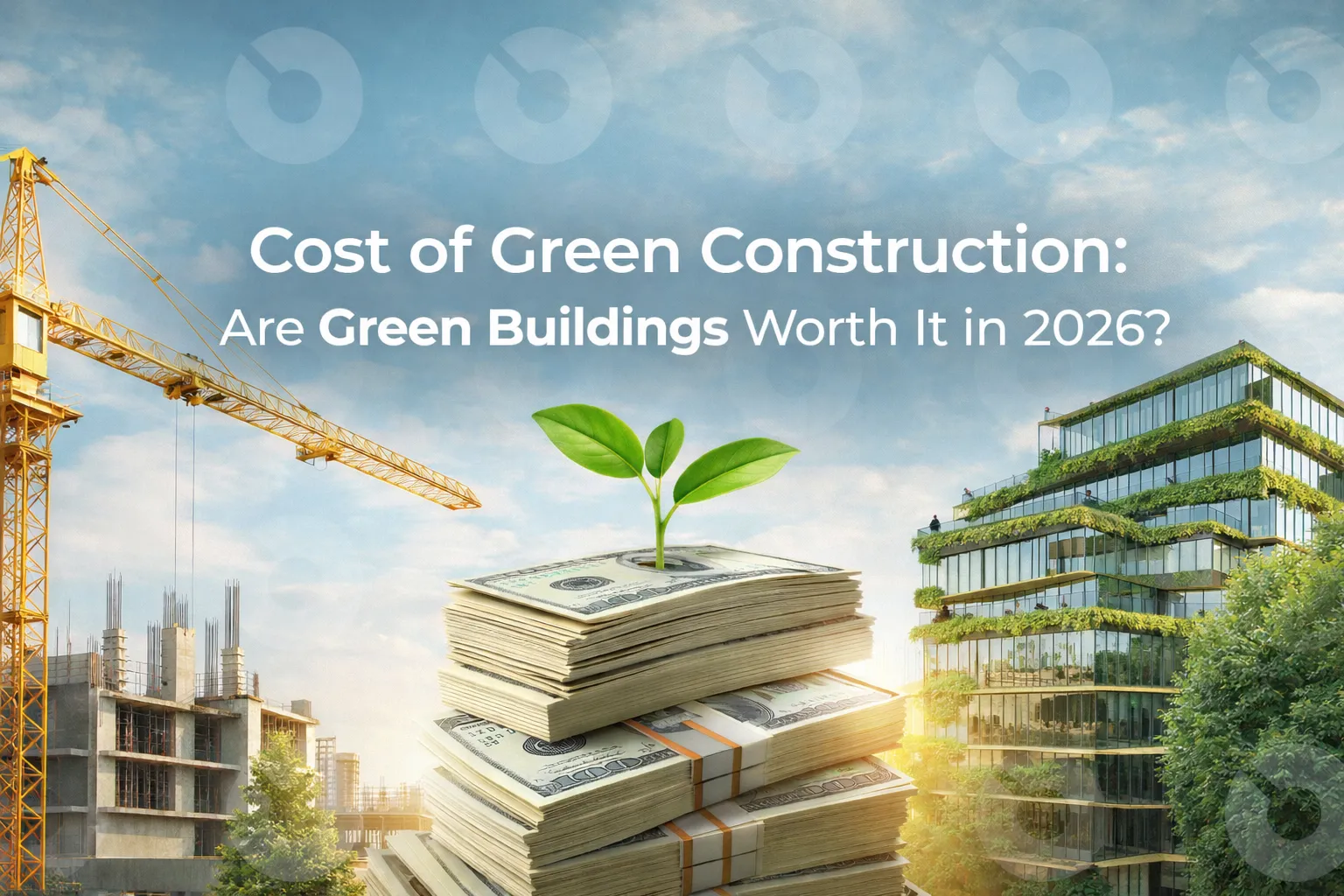
Sustainable construction is no longer a niche concept. For many owners, reps and contractors, it has become a baseline expectation. At the same time, rising material prices, labor shortages and tighter financing conditions have made cost control more critical than ever.
This is where a common tension appears: Do green buildings cost more - and if so, is the investment worth it?
This guide breaks down the true cost of green construction, the cost benefits of sustainable construction over time and how modern teams balance environmental goals with financial reality.
What Is Green Construction?
Green construction is an approach that considers the entire lifecycle of a building — from design and materials to construction, operation and eventual reuse or demolition.
In practice, green construction focuses on:
- reducing environmental impact
- improving energy and resource efficiency
- lowering long-term operating costs
- supporting healthier, more resilient buildings
Understanding this broader definition is essential when evaluating the cost of sustainability in construction.
Do Green Buildings Cost More Than Traditional Buildings?
The short answer: sometimes upfront, not necessarily over time. Green buildings can cost more initially due to:
- higher-performance materials or systems
- additional design and engineering work
- certification and compliance requirements
However, focusing only on upfront construction cost misses the bigger picture. When teams ask “why do green buildings cost more than traditional buildings?”, the more important question is:
What do those additional costs actually buy you?
The Real Cost of Green Construction: Upfront vs Lifecycle
The cost of sustainable construction is best understood in two parts.
1. Upfront construction costs
These may be higher depending on:
- sustainable building materials selected
- energy systems and building envelope design
- local availability of eco-friendly construction solutions
2. Lifecycle costs
This is where green buildings often outperform traditional ones:
- lower energy and water consumption
- reduced maintenance and replacement costs
- longer asset lifespan
- better resilience to regulatory and market changes
For many projects, lifecycle savings outweigh higher initial costs, especially for commercial, institutional and infrastructure assets.
Real Costs of Green Construction
When evaluated through a full lifecycle lens, green construction delivers measurable financial advantages that go far beyond environmental compliance.
Industry studies consistently show that green buildings can reduce operating costs by 15-30% over a 20-30 year period, primarily through lower energy and water consumption. Improved building envelopes and energy-efficient systems also help reduce exposure to energy price volatility, making long-term operating costs more predictable. In many markets, high-performing sustainable assets command rental premiums of 5-10% and demonstrate stronger long-term value retention. For institutional owners, access to green financing and more favorable insurance terms can further offset higher upfront costs.
These savings, however, are not automatic. Many cost overruns associated with green construction happen not because sustainability is expensive, but because sustainability-related decisions are poorly coordinated during delivery. Late design changes, disconnected cost tracking or unclear approvals can quickly erode the expected return.
This is where strong project management becomes critical. Well-structured project management platforms - such as INGENIOUS.BUILD - help teams manage sustainability, cost and delivery as a single, connected process. By centralizing budgets, approvals, documentation and reporting, teams gain real-time visibility into how sustainable design choices affect cost and schedule, allowing them to course-correct early instead of reacting late.
When sustainability goals are supported by strong project management and cost controls, green construction shifts from a perceived cost premium to a long-term value and risk-reduction strategy. That is why many large owners no longer view sustainability as optional, but as a core component of asset performance and portfolio resilience.
Sustainable Building Materials and Their Cost Impact
Material selection is one of the most visible cost drivers in green construction, and it’s often where cost concerns surface first. However, the financial impact of sustainable materials is more nuanced than simple upfront pricing.
Common green construction materials include low-carbon concrete alternatives, recycled or high-strength steel, mass timber and engineered wood systems, high-performance insulation and low-VOC finishes. While some of these materials can increase upfront costs by 2–7%, they often deliver measurable savings over the building’s lifecycle.
For example, high-performance insulation and envelope systems can reduce energy consumption by 20-40%, directly lowering operating expenses. Mass timber and engineered wood can shorten construction timelines by up to 25%, reducing labor costs and financing exposure. Recycled steel and durable low-carbon materials often require less maintenance and replacement, helping extend asset lifespan and reduce long-term capital expenditures.
Importantly, the development of low-cost sustainable eco materials for construction has accelerated in recent years. As manufacturing scales and supply chains mature, many environmentally friendly building materials are approaching cost parity with traditional options, especially when total lifecycle cost is considered.
In practice, the higher purchase price of sustainable materials is frequently offset by improved durability, reduced maintenance and stronger long-term performance - shifting the conversation from “material cost” to overall asset value.
Green Building Design: Where Costs Are Won or Lost
Design decisions often influence project cost more than material choices. Many sustainability gains come from early design strategies — such as passive solar orientation, natural ventilation, daylight optimization and compact building forms — that can reduce energy demand by 15–30% without significantly increasing construction cost.
Cost overruns typically occur when sustainability goals are introduced late or poorly coordinated across design and engineering teams. When embedded early and managed as part of overall project delivery, green design becomes a cost-control lever rather than a financial risk.
Environmental Advantages of Building Green
When people ask “what are some environmental advantages of building green?”, the answers often connect directly to financial outcomes.
Environmentally friendly buildings typically offer:
- reduced carbon emissions
- lower water usage
- improved indoor air quality
- reduced waste during construction
These benefits increasingly translate into regulatory advantages, tenant demand, and long-term asset stability.
Why Some Green Projects Still Go Over Budget
Not all cost overruns are caused by sustainability itself. Common issues include:
- late sustainability decisions
- fragmented project data
- poor coordination between design, cost, and approvals
- lack of visibility into changes
This is where process and tooling matter as much as material choices.
Where INGENIOUS.BUILD Fits
Green construction requires better coordination, not just better materials. INGENIOUS.BUILD helps teams manage the complexity that sustainability introduces by centralizing:
- project management
- construction administration
- cost visibility and reporting
This makes it easier to evaluate sustainability decisions in context — understanding how design choices, material changes and approvals affect cost and risk in real time.
Rather than treating sustainability as a separate initiative, teams can manage it as part of everyday project delivery.
FAQ: Green Construction
Do green buildings really cost more?
They can cost more upfront, but often cost less over their full lifecycle.
What is the biggest cost benefit of green construction?
Lower operating and maintenance costs over time.
Are eco-friendly building materials always more expensive?
Not always. Many are becoming cost-competitive as adoption increases.
Is green construction worth it for commercial projects?
For many commercial and institutional projects, sustainability improves long-term value and reduces risk.
How can teams control the cost of sustainability in construction?
By making green decisions early, using lifecycle cost analysis and maintaining strong project controls.
Final Thoughts
Green construction is no longer just an environmental decision — it’s a financial and risk management decision.
While the cost of green construction can be higher upfront, the long-term advantages of green construction in terms of cost effectiveness, resilience and asset value are increasingly difficult to ignore.
The most successful projects treat sustainability not as an add-on, but as a core part of design, delivery and decision-making.
Schedule a Quick Demo