|

MENU


.svg)
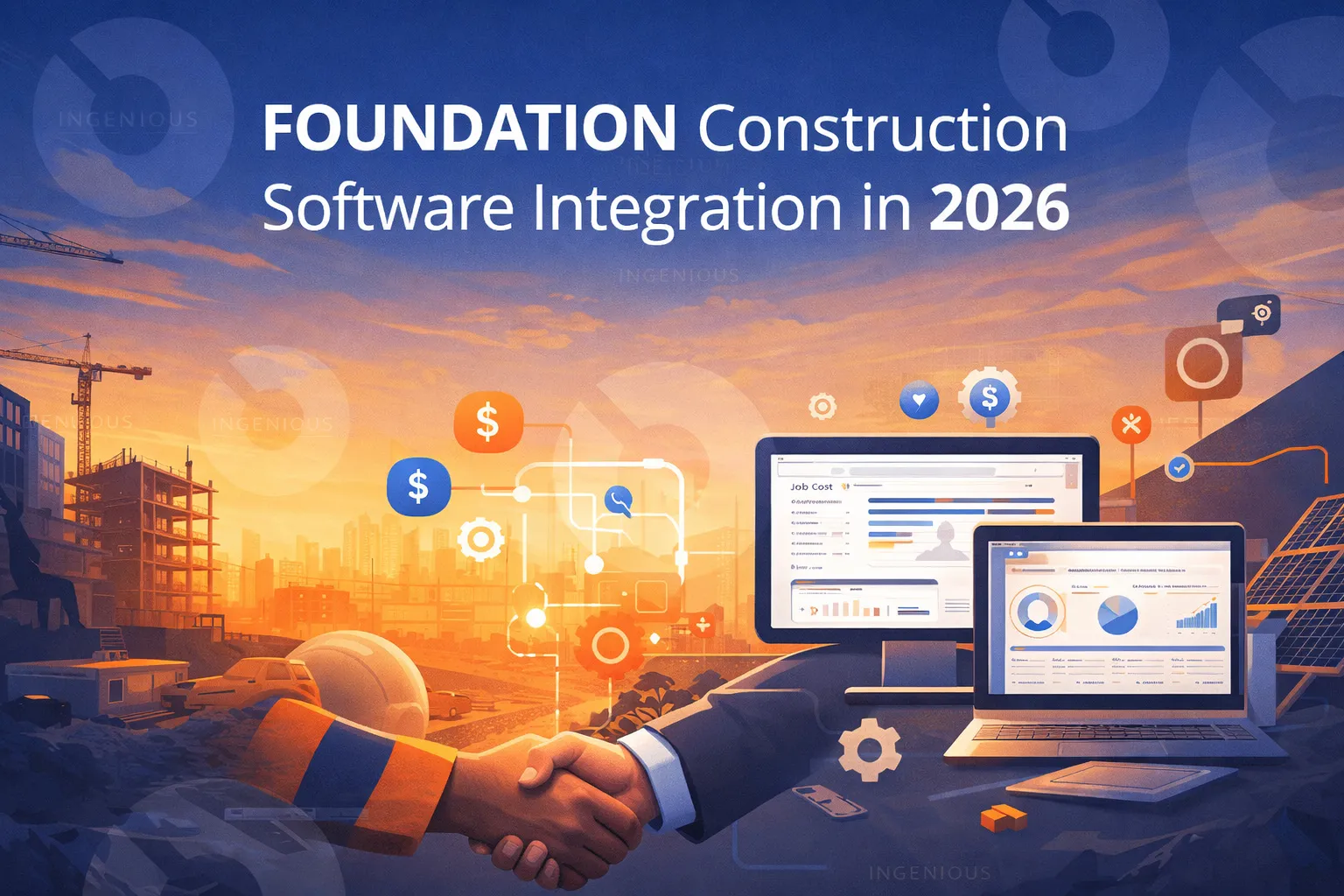
If you’re evaluating FOUNDATION construction software, you’re likely looking for a reliable accounting system built specifically for the construction industry.
FOUNDATION has been around for decades and is widely used by contractors who need strong financial controls, detailed job costing, payroll management and construction-specific reporting. Unlike generic accounting tools, it’s designed around the realities of running construction projects — where tracking costs, managing subcontractors and maintaining compliance are daily priorities.
At the same time, choosing construction accounting software isn’t just about features. Companies often want to understand how FOUNDATION compares with systems like Sage 300 or QuickBooks, how much it costs to implement, and whether it integrates well with modern construction management tools.
In this guide, we’ll walk through what FOUNDATION construction software actually does, how contractors typically use it, what its core strengths are and where it may fall short. We’ll also look at pricing considerations, common integrations and how it compares with other construction software platforms in 2026.
FOUNDATION construction software is a construction accounting and ERP platform built specifically for contractors.
Unlike generic accounting tools, FOUNDATION is designed around the financial workflows construction companies rely on, including job cost accounting, payroll compliance, equipment tracking and project-based reporting.
At its core, FOUNDATION combines:
This makes FOUNDATION particularly popular with mid-sized construction companies that want deeper accounting functionality than QuickBooks can provide.
However, FOUNDATION is primarily an accounting-first system, meaning many companies pair it with separate tools for field collaboration, document management or project coordination.
Most contractors use FOUNDATION as their financial backbone. Typical workflows include:
For construction companies with complex cost structures, this level of financial control is a major advantage.
However, day-to-day construction administration - such as RFIs, submittals, document management or field collaboration - is often handled in separate systems. This is why many firms look for construction management software that integrates with FOUNDATION.
FOUNDATION offers a wide set of accounting-focused capabilities designed specifically for contractors.
Key features include:
Track labor, materials, equipment and subcontractor costs across projects.
Manage union payroll, prevailing wage requirements and compliance reporting.
Handle vendor payments, invoicing and billing across multiple projects.
Allocate equipment usage and expenses directly to job costs.
Generate project profitability reports, WIP reports and financial statements.
For many construction firms, this accounting depth is the primary reason they adopt FOUNDATION over generic accounting tools.
FOUNDATION construction software pricing is not publicly listed and costs vary depending on company size and configuration.
Pricing typically depends on:
Because FOUNDATION is a full construction accounting platform, the total cost of ownership may include:
For larger contractors, implementation can take several months depending on system complexity.
QuickBooks is often the starting point for small contractors. But as companies grow, QuickBooks frequently reaches its limits.
QuickBooks strengths
FOUNDATION advantages
For growing construction firms, FOUNDATION often replaces QuickBooks once financial complexity increases. However, QuickBooks Online may still be used by smaller teams that prioritize simplicity over accounting depth.
Another common comparison is Sage 300 vs FOUNDATION construction software. Both are construction-focused accounting systems, but they differ in approach.
Sage 300 Construction
FOUNDATION
For many mid-sized firms, the decision comes down to complexity vs flexibility. Sage 300 offers deeper customization, while FOUNDATION is often simpler to deploy.
FOUNDATION is primarily an accounting platform, so most construction firms pair it with other tools to cover project execution, collaboration and reporting. In practice, FOUNDATION often acts as the financial backbone of the tech stack, while other platforms handle field operations and project coordination.
Some of the most common integrations include:
Many contractors integrate Procore with FOUNDATION to connect field workflows - like RFIs, submittals and document management - with accounting and job cost data. This allows project teams to manage site activity in Procore while financial data flows back into FOUNDATION for reporting and payroll.
Estimating tools are often connected to FOUNDATION to transfer bid estimates into project budgets. This helps maintain continuity between preconstruction and accounting once a project moves into execution.
Labor tracking platforms are frequently integrated with FOUNDATION to sync hours, payroll data and job cost allocations. This reduces manual entry and improves payroll accuracy.
Some firms connect FOUNDATION to analytics platforms or dashboards to generate executive reports, track profitability and monitor project performance across multiple jobs.
Organizations managing complex developments or multiple projects sometimes connect to construction management platforms like INGENIOUS.BUILD. In these setups, FOUNDATION manages accounting and payroll, while INGENIOUS.BUILD provides portfolio visibility, project coordination and structured financial oversight across projects.
When evaluating construction software that integrates with FOUNDATION, compatibility alone isn’t enough. The real question is how well financial data flows between systems. If integrations are poorly configured, teams often end up exporting spreadsheets, reconciling numbers manually or maintaining duplicate records across platforms. Strong integrations should reduce that friction.
Across industry reviews, contractors typically highlight several strengths and weaknesses.
Common strengths
Common challenges
For accounting-driven contractors, FOUNDATION is often seen as reliable but not always comprehensive for full project coordination.
FOUNDATION is construction accounting software used for job cost tracking, payroll management, financial reporting, and project profitability analysis. It’s designed specifically for contractors who need stronger accounting controls than general tools like QuickBooks.
FOUNDATION offers more advanced construction-specific features, including job costing, payroll compliance, and equipment tracking. QuickBooks is simpler and cheaper but often becomes limiting as construction firms grow.
FOUNDATION pricing is not publicly listed and varies based on company size, modules, and implementation scope. Most companies request a custom quote and should consider implementation, training and support when evaluating total cost.
Yes. Many contractors integrate Procore with FOUNDATION to connect field workflows, like RFIs and submittals, with accounting and job cost reporting.
FOUNDATION commonly integrates with tools like Procore, estimating platforms, time tracking systems and project oversight software such as INGENIOUS.BUILD to improve visibility across projects.
FOUNDATION remains one of the most widely used construction accounting platforms, particularly for contractors that need strong job cost tracking, payroll management, and financial reporting.
But accounting is only one piece of the construction technology stack. Many organizations pair FOUNDATION with project management and oversight platforms that provide better visibility into project execution, collaboration, and portfolio performance.
Platforms like INGENIOUS.BUILD, for example, are often used alongside accounting systems to give owners, developers, and project teams clearer insight into budgets, contracts, and capital exposure across multiple projects.
If you’re evaluating how modern construction platforms can improve project oversight, financial traceability, and portfolio visibility, book a demo with INGENIOUS.BUILD to see how it works alongside existing accounting systems.

INGENIOUS.BUILD
.svg)
.svg)


Company Type

Product Solutions
Information
.svg)
Speak to a Product Specialist
Streamline your Development & Construction projects with our cutting-edge project management software.
Discover why people are switching to INGENIOUS today!
By submitting this form, you agree with our Privacy Policy.