|

MENU


.svg)
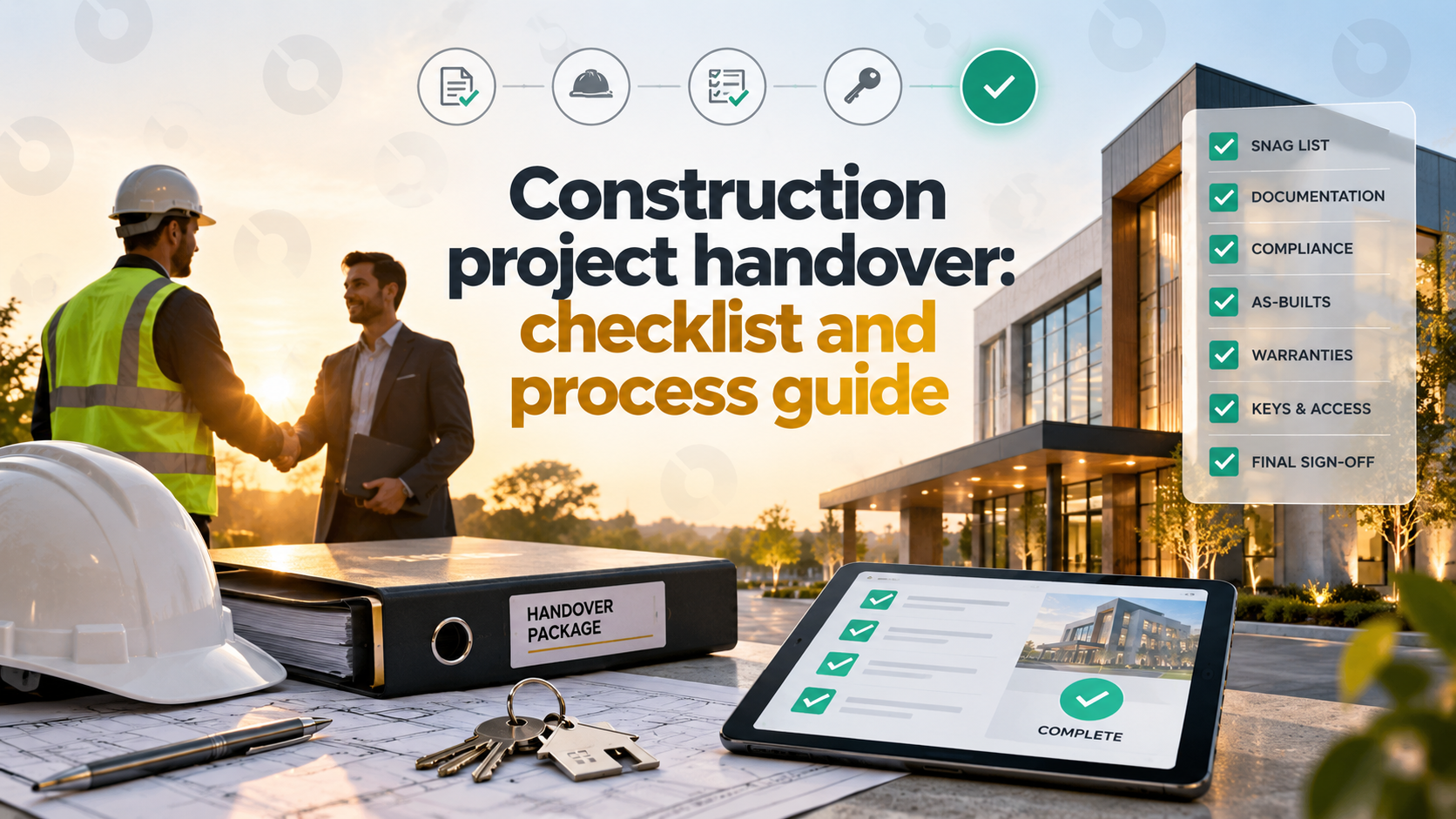
A construction handover is where a lot of projects either finish strong or generate the disputes and callbacks that follow a client for months. It's the formal moment a completed building transfers from the contractor to the owner — and it's easy to under-prepare for, because everyone involved is usually eager to close the project out and move on. This guide covers what a proper handover procedure looks like, what belongs on the checklist, and how to avoid the post-handover issues that show up when it's rushed.
This is a different moment from the preconstruction-to-construction handoff, which happens at the start of a project rather than the end — worth knowing if you landed here looking for that instead.
A construction handover is the formal point at which a contractor transfers a completed project to the owner or operator, marking the end of the construction phase and the start of the building's operational life. It involves final inspections, resolution of outstanding punch list items, and delivery of the documentation the owner needs to legally occupy and operate the building — certificates of occupancy, as-built drawings, warranties, and O&M manuals.
Done well, a handover is a structured, documented process completed before the contractor demobilizes. Done poorly, it's a rushed signoff that leaves the owner discovering documentation gaps and unresolved defects after the contractor has already moved crews to the next job.
This is worth clarifying directly, because the term genuinely gets used both ways. Most commonly, "site handover" refers to the same thing as a construction handover — the completed project transferring from contractor to owner. But in some contracts, particularly in the General Conditions or Preliminaries sections, "site handover" or "handing over the site" refers to the earlier moment when the client grants the contractor possession of the site to begin work — the opposite direction, at the opposite end of the project.
If you're reading a contract and see "site handover" referenced, check which direction it's describing before assuming it means project completion — the term alone doesn't tell you.
A typical handover procedure moves through a consistent sequence, even though the depth and formality vary by project size:
A complete handover checklist covers more than a final walkthrough — it should include:
Handover involves several parties, and confusion over who owns which task is a common source of delay on its own.
The contractor compiles the documentation package, verifies punch list closure, coordinates final inspections, and remains responsible for defects during the liability period once handover is complete.
The architect or engineer of record typically confirms the work matches the design intent during final inspection and often certifies substantial completion as part of the formal sign-off process.
The owner or owner's representative reviews and formally accepts the documentation package, confirms punch list resolution independently rather than taking the contractor's word for it, and coordinates any regulatory approvals needed for occupancy.
Facilities or operations staff should be involved before handover is finalized, not after — they're the ones who need the O&M training and documentation to actually run the building, and their absence from the process is a common reason training gets skipped entirely.
Post-handover issues rarely come from problems that were unknown — they usually come from problems that were known but not resolved before signoff, or documentation that was promised but never actually delivered.
Defects surface after occupancy that were on the punch list but never verified as resolved. A punch list item marked "complete" without a follow-up inspection is a common source of this — verification matters as much as the initial fix.
Documentation is incomplete but handover happens anyway. Under pressure to close out and demobilize, teams sometimes hand over with a promise to "send the rest later." That documentation often arrives late, incomplete, or not at all once the project team has moved on.
Nobody trained the building operators on the actual systems. A complete O&M manual doesn't help if nobody walked the facilities team through how the systems actually operate day to day.
Ambiguity over defects liability period responsibilities. If the process and timeline for reporting and resolving defects after handover isn't clear to both sides, the first defect that surfaces becomes a dispute about process before it becomes a repair.
A typical rushed handover: The contractor is eager to demobilize and move crews to the next job. The punch list is marked complete based on the super's sign-off, without a follow-up verification walkthrough. The documentation package is assembled the week of handover, with two warranty documents still "coming soon" from subcontractors. Three weeks after occupancy, the facilities team discovers a mechanical system issue that was actually still on the punch list, and nobody can find record of whether it was fixed or just marked done.
The same handover, standardized: Punch list items are verified closed with a follow-up inspection before the handover meeting is even scheduled. Documentation is compiled incrementally throughout the project rather than assembled in the final week, so nothing is "coming soon" at signoff. Facilities staff attend a training session before handover, not after. When a minor issue surfaces three weeks later, the defects liability process is already documented and both sides know exactly how it gets reported and resolved.
The difference isn't extra work — it's when the work happens. Verifying punch list closure and compiling documentation incrementally throughout the project takes roughly the same total effort as doing it all in a rushed final week, but it eliminates the post-handover disputes that come from discovering gaps after the contractor has already moved on.
A structured agenda that keeps a handover meeting focused on verification, not just presentation:
For a team managing more than one active project, handover quality shouldn't depend on which PM happens to be running closeout that month. Standardizing means using the same checklist, the same documentation requirements, and the same verification process — punch list closure confirmed, not assumed — on every project.
This matters for the same reason standardizing the earlier preconstruction handoff matters at the program level: consistency is what makes it possible to spot and fix a recurring gap across a portfolio, rather than discovering the same documentation problem project after project without ever addressing the process itself.
INGENIOUS.BUILD's Construction Administration module includes closeout as part of the same connected system used for punch lists, inspections, and quality tracking throughout the project — so the documentation a handover requires isn't compiled from scratch at the end, it's already been accumulating in one place since the punch list and inspection process began.
Because punch list closure, inspection records, and documentation all live in the same system, teams can verify resolution before a handover meeting rather than discovering gaps during it. Teams using INGENIOUS.BUILD see 10x fewer change-order disputes, a pattern that extends naturally to fewer handover and post-handover disputes as well, since the same connected documentation trail supports both.
Book a personalized demo to see closeout and handover documentation connected to the rest of your project record.
A construction handover is a real milestone, not an administrative formality — it's the point where defects liability periods start, where the owner's ability to operate the building depends on documentation actually being complete, and where a rushed process tends to resurface as a dispute weeks or months later. A standardized checklist, verified punch list closure, and a complete documentation package before signoff prevent almost all of the common post-handover problems. The projects that handle this well treat it as seriously as any other phase of construction, not as the finish line where attention to detail is allowed to drop.
It's the formal transfer of a completed building from the contractor to the owner, including final inspections, punch list resolution, and delivery of documentation like as-built drawings, warranties, and O&M manuals.
A handover happens at project completion, transferring the finished building to the owner. A handoff happens at project start, transferring preconstruction planning to the execution team — a different moment entirely.
It can mean either. Most commonly it refers to project completion, same as a construction handover, but some contracts use it specifically for the earlier moment the client grants the contractor possession of the site to begin work.
Certificate of occupancy, as-built drawings, O&M manuals, organized warranty documentation, a verified closed punch list, keys and access credentials, final lien waivers, and operator training sessions.
Most commonly, punch list items marked complete without verification, documentation promised but delivered late or incompletely, and unclear expectations about the defects liability period process.
It starts at formal handover and sign-off, not when construction work informally "feels" finished — which is part of why getting the handover documentation and timing right matters financially and legally.

INGENIOUS.BUILD
.svg)
.svg)



Company Type

Product Solutions
Information
.svg)
Speak to a Product Specialist
Streamline your Development & Construction projects with our cutting-edge project management software.
Discover why people are switching to INGENIOUS today!
By submitting this form, you agree with our Privacy Policy.