Informative
Construction Project Collaboration: Why It Breaks and How to Fix It
Why construction project collaboration breaks down and how smarter systems, real-time visibility and connected workflows keep teams aligned and projects on track.
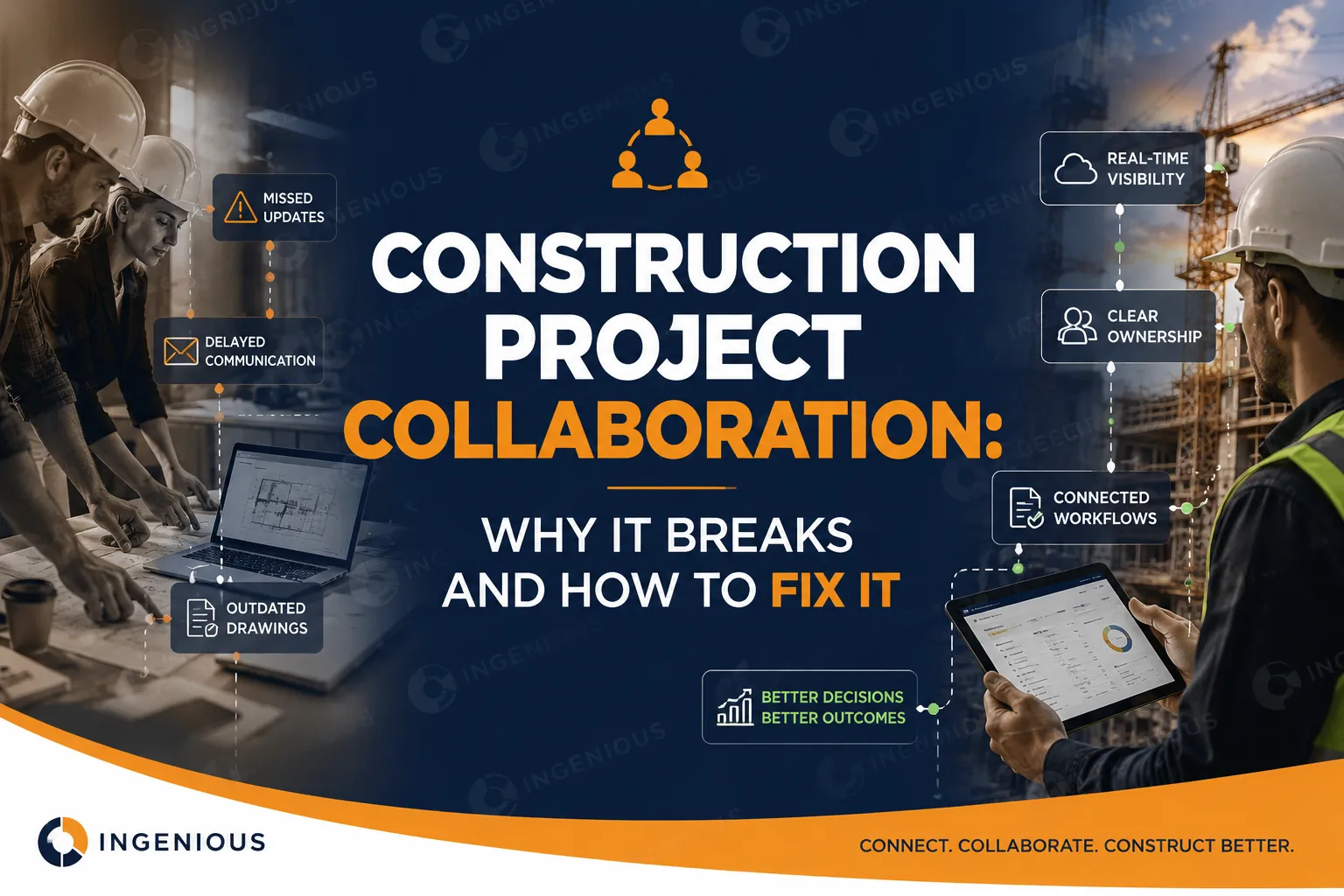
Collaboration is one of the most talked-about topics in construction and one of the most consistently broken.
Every project depends on alignment between architects, engineers, general contractors, subcontractors and owners. In theory, everyone is working toward the same goal. In practice, they’re often working from different information, at different speeds, inside different systems.
Most teams are still operating across a mix of disconnected tools, delayed communication, fragmented documentation and unclear ownership of decisions. Nothing feels completely broken on its own - but together, it creates constant friction.
The result is predictable. Deadlines slip. Small misunderstandings turn into rework. Budgets drift. And relationships between teams start to strain under pressure.
The real problem is that construction project collaboration is structurally difficult, and most teams are still relying on tools and processes that were never designed to handle that complexity.
This guide breaks down what’s actually going wrong beneath the surface, how architects and construction teams collaborate in real-world projects and what high-performing teams do differently to stay aligned. Most importantly, it shows how better systems and workflows can turn collaboration from a constant challenge into a competitive advantage.
What Is Construction Project Collaboration?
Construction project collaboration is the process of coordinating communication, decisions, documentation and workflows across all stakeholders involved in a construction project from design through completion.
Effective collaboration ensures that:
- everyone is working from the latest information
- decisions are visible and documented
- responsibilities are clearly assigned
- issues are resolved quickly
- project timelines and budgets stay aligned
In practice, it means reducing the gaps between field, office and design teams.
Why Collaboration in Construction Projects Breaks Down
Most collaboration issues are not caused by people, they are caused by systems. Here are the most common failure points.
1. Information is spread across too many tools
Teams often rely on:
- email threads
- spreadsheets
- file storage systems
- messaging apps
- meeting notes
There is no single source of truth.
That leads to:
- outdated information being used
- duplicated work
- missed updates
2. Communication is delayed instead of real-time
Construction decisions are often time-sensitive. But communication still happens through:
- long email chains
- weekly meetings
- manual reporting
By the time issues are surfaced, they are already impacting the project.
3. Responsibilities are unclear
In collaborative working environments, lack of clarity leads to:
- missed deadlines
- duplicated effort
- unresolved issues
If ownership is not visible, follow-up becomes manual.
4. Documentation is not structured
RFIs, submittals, approvals and revisions are often tracked in inconsistent ways.
This creates:
- lost context
- slow approvals
- risk during disputes
5. Field and office operate separately
One of the biggest collaboration gaps is between:
- what is happening on-site
- what the office thinks is happening
Without real-time visibility, decisions are made based on incomplete information.
Role of Collaboration in Construction Project Success
Collaboration in construction isn’t a “soft” concept, it’s a core driver of project performance.
When teams are aligned, information flows quickly, decisions are made with context and issues are addressed before they escalate. When they’re not, even well-planned projects begin to drift.
Strong collaboration directly influences:
- how reliably a project stays on schedule
- how well costs are controlled and forecasted
- the quality of execution across trades
- safety outcomes on site
- the overall experience for owners and stakeholders
On projects where collaboration is working well, you’ll usually notice a few patterns. Issues get resolved quickly because the right people are looped in early. Change orders are fewer and better documented. Schedules hold more consistently because dependencies are visible. And communication with owners feels structured rather than reactive.
On the other hand, poor collaboration is one of the most common, and most underestimated, reasons projects struggle. Delays, rework and budget overruns often trace back not to a single failure, but to small breakdowns in coordination that compound over time.
In that sense, collaboration isn’t just about working together. It’s about creating the conditions for projects to stay predictable, even as complexity increases.
How Architects and Construction Teams Collaborate on a Project
One of the most critical collaboration relationships is between architects and contractors. This collaboration typically happens through:
Design coordination
Architects work with engineers and consultants to finalize plans.
RFIs (Requests for Information)
Contractors submit RFIs to clarify design intent.
Submittals
Contractors submit materials and systems for approval.
Site meetings and coordination calls
Teams review progress, issues and upcoming work.
Change management
Design adjustments and site conditions require ongoing coordination.
Construction administration
Architects review, respond and document throughout the build.
The challenge is that these workflows often exist across multiple systems, creating friction.
How to Improve Collaboration in Construction Projects
Improving collaboration is not about adding more meetings. It is about improving systems and visibility.
1. Centralize project information
All project data should live in one construction administration system. This includes:
- documents
- drawings
- RFIs
- submittals
- meeting notes
- action items
A single source of truth reduces confusion and errors.
2. Make communication visible and trackable
Instead of relying on inboxes, teams should use systems where:
- communication is tied to tasks
- decisions are documented
- updates are visible to all stakeholders
3. Define ownership clearly
Every task, issue and approval should have:
- an owner
- a deadline
- a status
This removes ambiguity and improves accountability.
4. Connect field and office workflows
Field updates should feed directly into project systems. This ensures:
- real-time visibility
- faster issue resolution
- better decision-making
5. Standardize workflows across projects
Consistency matters. Teams should not reinvent processes for every project. Standard workflows for RFIs, submittals and reporting improve efficiency.
6. Reduce dependency on manual follow-up
If collaboration depends on someone remembering to follow up, it will break. Systems should:
- notify stakeholders automatically
- track status updates
- surface delays early
The Impact of Cloud-Based Collaboration on Construction Projects
Cloud-based collaboration has fundamentally changed how construction teams work, especially across distributed projects and multiple stakeholders.
Instead of relying on static files, manual updates and back-and-forth communication, teams can now operate in a shared, live environment where information is continuously updated and accessible.
This shift enables:
- real-time updates across locations, so teams don’t wait on reports or meetings
- shared access to drawings, documents and project data from any device
- faster approvals, because decisions are visible and trackable
- smoother coordination between architects, contractors and owners
Instead of sending files back and forth and hoping everyone is aligned, teams work within the same system, using the same data. That eliminates version confusion, reduces delays and makes it much easier to catch issues early.
As projects become more complex and timelines tighter, cloud-based collaboration is no longer just a convenience, it’s what allows teams to stay coordinated at scale.
Essential Features of a Construction Project Collaboration Platform
Not all collaboration tools actually improve collaboration. Many just centralize messages but still leave teams chasing updates, switching between systems and manually connecting information.
If you’re evaluating construction project management software, focus on features that reduce friction in real workflows, not just add another communication layer.
Here’s what actually matters:
- Centralized document and drawing management
All project information (drawings, specs, revisions and files) should live in one place, with clear version control. If teams are still asking “which file is the latest?”, the system isn’t doing its job.
- Real-time updates and notifications
Delays often come from waiting on information. A strong platform surfaces updates instantly, so teams can act not react.
- Built-in RFI and submittal workflows
These are core collaboration processes in construction. Look for tools that structure requests, assign ownership, track status and keep a full history without relying on email.
- Task and issue tracking tied to context
Tasks shouldn’t exist in isolation. The best systems connect them to drawings, documents or discussions so teams understand why something needs to be done, not just what.
- Meeting minutes and action tracking
Decisions made in meetings should translate directly into tracked actions, with owners and deadlines. Otherwise, important details get lost between calls.
- Clear ownership and permissions
Collaboration works best when everyone knows their role. Role-based access ensures the right people see the right information, without creating confusion or overload.
- Mobile access that actually works in the field
Field teams need fast, reliable access to information on-site. If the tool isn’t easy to use on a phone or tablet, adoption will break down quickly.
- Connected workflows across budgets, schedules and approvals
This is where most tools fall short. Collaboration should not be separate from execution.
When communication is directly linked to budgets, timelines and decisions, teams can understand impact, not just updates.
Real Examples: When Collaboration Fails
Collaboration rarely fails in one obvious moment. On struggling projects, you’ll often see the same patterns play out:
A crew builds from an outdated drawing because the latest revision wasn’t clearly flagged or shared. The mistake isn’t caught immediately, and by the time it is, rework is already required.
An RFI sits in someone’s inbox longer than expected. Work slows down, or worse, continues based on assumptions - leading to errors that could have been avoided with a timely response.
Different stakeholders believe different things are approved. The architect, contractor and owner are all working from slightly different understandings, which creates friction and delays.
Project status looks fine on the surface, but underlying issues aren’t visible early enough. By the time they show up in reports or meetings, options to fix them are limited.
Decisions are discussed in meetings or calls but not properly recorded. Weeks later, when questions come up, no one has a clear reference point and accountability becomes unclear.
None of these situations are unusual. In fact, they’re common.
What makes them dangerous is that they don’t feel like major failures in the moment. But together, they create a system where information can’t be trusted, coordination slows down and teams spend more time correcting mistakes than preventing them.
That’s what collaboration failure really looks like in construction - not a single breakdown, but a chain of small misalignments that quietly derail the project.
How Digital Platforms Improve Construction Collaboration
Most collaboration problems in construction don’t come from lack of communication, they come from how that communication is managed.
Digital platforms designed for construction project collaboration fix this by changing where and how work happens. Instead of information being scattered across emails, files and conversations, everything moves into a shared environment where teams can see, track and act on it in real time.
At a practical level, these platforms improve collaboration by:
- creating a single workspace where all project information lives
- connecting workflows across architects, contractors, and owners
- making communication visible instead of buried in inboxes
- assigning clear ownership to tasks, issues, and decisions
- tracking deadlines so nothing gets lost or delayed
- giving all stakeholders real-time visibility into project status
The key difference is that communication is no longer separate from execution, it becomes part of it.
Platforms like INGENIOUS.BUILD are built around this idea. Instead of managing RFIs, submittals, meeting notes, action items, budgets and schedules in separate tools, they bring everything into one connected system.
This reduces fragmentation, speeds up decision-making, and helps teams stay aligned without constant follow-up.
Final Thoughts
Collaboration in construction projects does not fail because teams are not communicating. It fails because the systems they use are not designed for how construction actually works.
Improving collaboration requires:
- better visibility
- clearer accountability
- structured workflows
- connected tools
As projects become more complex and timelines tighter, strong collaboration becomes a competitive advantage.
Teams that invest in better systems deliver faster, communicate more clearly, and reduce risk. If your projects are experiencing delays, miscommunication, or coordination issues, it is often not a people problem. It is a system problem.
INGENIOUS.BUILD helps construction teams centralize collaboration and create real-time visibility across projects. Book a demo to see how better collaboration works in practice!
FAQ
What is collaboration in construction projects?
It is the process of coordinating communication, decisions and workflows across all stakeholders involved in a construction project.
Why is collaboration important in construction?
Strong collaboration improves timelines, reduces costs, minimizes rework and increases project success rates.
How can collaboration in construction projects be improved?
By centralizing information, using structured workflows, improving visibility and adopting digital collaboration platforms.
What tools are used for construction project collaboration?
Tools include construction management platforms, document management systems, communication tools and collaboration software designed specifically for construction workflows.
How do architects and contractors collaborate?
Through RFIs, submittals, meetings and shared documentation systems that support communication and decision-making throughout the project lifecycle.