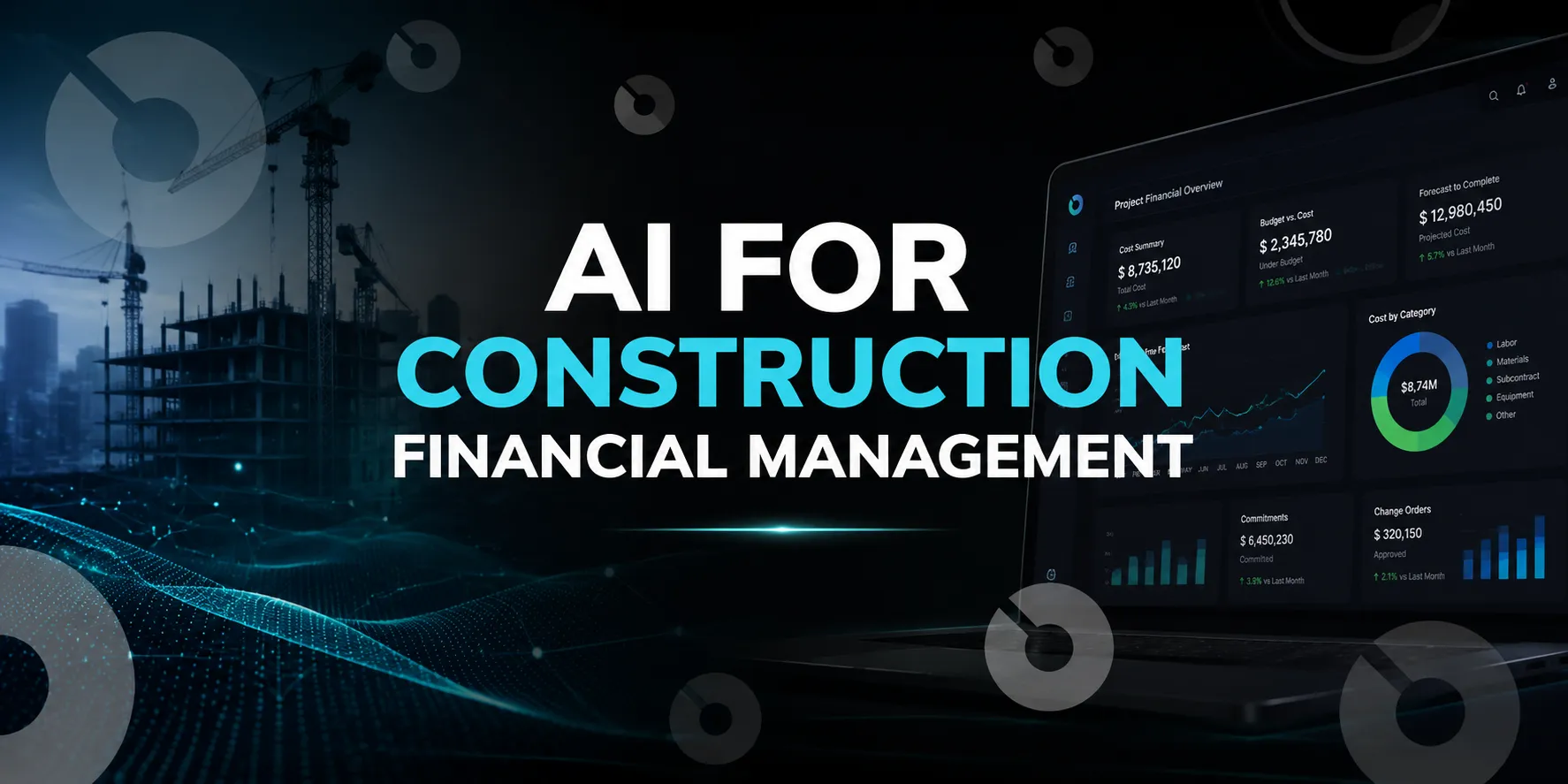
Informative
Best Capital Planning Software in 2026: Tools for Budgeting, Forecasting & Portfolio Control
Compare the best capital planning software of 2026. Explore tools for budgeting, forecasting, portfolio control and linking strategy to execution.
Capital planning is no longer a spreadsheet exercise. For enterprise owners, real estate developers, healthcare systems, universities and infrastructure operators, capital planning has become a strategic discipline. It determines which projects move forward, how funding is allocated and how organizations protect long-term asset value.
As portfolios grow and projects become more complex, teams increasingly look for capital planning software to replace disconnected spreadsheets and manual approvals.
This guide explains:
- What capital planning software actually does
- How it differs from capital project management tools
- Which features matter most in 2026
- How to evaluate the best capital planning software for your organization
What Is Capital Planning Software?
Capital planning software is a digital platform used to evaluate, prioritize, approve, fund and monitor capital investments across an organization. It supports the full capital planning process — from early-stage budgeting and scenario modeling to portfolio-level oversight before projects move into execution.
It typically supports:
- Multi-year capital budgeting
- Portfolio prioritization
- Scenario modeling
- Forecasting and funding allocation
- Asset lifecycle planning
- Executive reporting
Unlike construction project management tools, capital planning tools focus on investment decisions and financial strategy, not day-to-day project coordination.
If project management governs how work is delivered, capital planning governs which work gets funded and why.
Why Spreadsheets Fail at Capital Planning
Many organizations still rely on spreadsheets for capital budget management. However, this works only at a small scale.
Common issues include:
- No single source of truth
- Version control problems
- Limited scenario modeling
- Weak portfolio visibility
- Manual consolidation for executive reporting
Once multiple departments submit requests, spreadsheets turn into reconciliation exercises rather than planning tools.
Capital planning software replaces static budgets with structured workflows and financial governance.
What the Best Capital Planning Software Should Include in 2026
When evaluating capital planning software, focus on capabilities that support strategic decision-making — not just data storage.
1. Multi-Year Capital Budgeting
Strong capital budgeting software should allow you to:
- Plan 3–10 year capital roadmaps
- Track planned vs approved vs funded budgets
- Model cash flow over time
- Identify funding gaps early
This is critical for organizations managing long-term asset portfolios.
2. Scenario Modeling & Forecasting
Modern capital planning tools must support:
- “What-if” funding scenarios
- Delayed project modeling
- Cost escalation forecasting
- Sensitivity analysis
Executive teams increasingly ask: “If we delay this program by one year, what happens to cash flow and portfolio risk?”
Software should answer that instantly.
3. Asset-Level Visibility
Capital asset planning software should connect investments to:
- Facilities condition data
- Maintenance history
- Asset lifecycle stage
- Risk ratings
This allows decisions based on performance data — not just urgency.
4. Approval Workflows & Governance
In 2026, governance is non-negotiable. The best capital budget management software includes:
- Structured approval workflows
- Audit trails
- Role-based permissions
- Portfolio-level oversight
Without governance, capital planning becomes political instead of strategic.
5. Portfolio Reporting for Executives
Executives don’t want 40 spreadsheets. Instead, they want:
- Portfolio dashboards
- Funding distribution views
- ROI projections
- Capital exposure by asset class
- Real-time variance tracking
Capital planning software must make financial visibility effortless.
Capital Planning Software vs Capital Project Management Software
This is one of the most common questions people ask:
“Is capital planning software the same as capital project management software?”. No.
Capital planning software:
- Evaluates and approves investments
- Focuses on budgeting and prioritization
- Operates at portfolio level
Capital project management software:
- Executes approved projects
- Tracks schedule and cost performance
- Manages RFIs, submittals, contracts
The strongest organizations connect both, which is where strategic advantage emerges.
How to Choose the Best Capital Planning Software
When comparing capital planning tools, evaluate across four dimensions:
1. Portfolio Complexity
- How many projects do you manage annually?
- Are they independent or interdependent?
2. Governance Requirements
- Do approvals require multi-level oversight?
- Is audit traceability critical?
3. Forecasting Sophistication
Do you need simple annual budgeting or multi-year modeling with scenario analysis?
4. Integration with Execution Systems
Can approved budgets flow into capital project management tools without re-entry?
If planning and execution remain disconnected, manual reconciliation returns.
Who Typically Needs Capital Planning Software?
High-fit organizations include:
- Real estate development firms managing multiple capital programs
- Healthcare systems with ongoing facilities upgrades
- Universities managing long-term campus plans
- Infrastructure owners overseeing asset renewal
- Enterprise organizations with centralized capital allocation
In each case, the issue is rarely budgeting alone. It’s coordination between strategy, finance, and delivery.
5 Best Capital Planning Software Tools in 2026
When evaluating the best capital planning software, it’s important to recognize that not all tools solve the same problem. Some focus on financial modeling, others on portfolio oversight and some bridge strategy with execution.
Here are five widely used platforms and what they’re best suited for.
1. INGENIOUS.BUILD – Best for Connecting Capital Planning to Project Execution
INGENIOUS.BUILD is designed for organizations that need capital planning and project management to live in the same ecosystem.
It supports:
- Capital budget approvals
- Multi-project portfolio oversight
- Cost tracking and variance monitoring
- Governance and approval workflows
- Real-time visibility into execution after approval
What makes it different is that it bridges capital planning and delivery. Approved budgets don’t disappear into spreadsheets, they move directly into live project controls.
Best for: Owners, developers, enterprise capital programs, and teams managing multi-site investments.
2. Planview – Best for Enterprise Capital Portfolio Governance
Planview is often used by large enterprises managing complex capital portfolios across multiple departments.
Strengths:
- Advanced scenario modeling
- Enterprise portfolio prioritization
- Strategic alignment tools
- Long-range capital forecasting
However, it may require additional systems to manage construction-level execution.
Best for: Large enterprises focused on high-level strategic capital allocation.
3. e-Builder (Trimble) – Best for Public Sector & Program Management
e-Builder is commonly used for public infrastructure and government capital improvement programs.
Strengths:
- CIP (Capital Improvement Program) management
- Structured approval processes
- Program-level reporting
- Compliance-focused workflows
It’s strong in governance but can feel heavy for private-sector developers.
Best for: Public agencies and institutional capital programs.
4. Oracle Primavera – Best for Complex Global Capital Programs
Oracle’s capital planning and program management tools are built for large-scale, global enterprises.
Strengths:
- Deep financial controls
- Multi-program management
- Strong ERP integrations
- Highly customizable workflows
The tradeoff is complexity and longer implementation timelines.
Best for: Global enterprises with extensive IT and governance infrastructure.
5. Smartsheet – Best Lightweight Capital Planning Tool
Smartsheet is sometimes used as a flexible capital planning tool when organizations aren’t ready for a full system.
Strengths:
- Easy to deploy
- Flexible budgeting templates
- Basic portfolio tracking
However, it often relies on manual processes and can become spreadsheet-heavy at scale.
Best for: Smaller teams or early-stage capital planning needs.
What Is the “Best” Capital Planning Software
There isn’t a universal “best” solution. The right capital planning software depends on:
- Whether you need strategy-only or strategy + execution
- The size and complexity of your capital portfolio
- Your governance and approval structure
- Your tolerance for system complexity and onboarding time
For teams managing construction-heavy capital investments, the most important question is:
Does your capital planning system connect directly to project delivery or does it stop at approval?
That distinction determines whether capital planning remains theoretical or becomes operational.
FAQ: Capital Planning Software
What is the best capital planning software in 2026?
The best capital planning software depends on portfolio size, governance needs and integration requirements. Look for tools that support multi-year budgeting, scenario modeling, approval workflows and that connect to project execution systems.
What is the difference between capital budgeting software and capital planning software?
Capital budgeting software focuses specifically on financial allocation and funding decisions. Capital planning software typically includes budgeting but also supports asset prioritization, portfolio governance and long-term forecasting.
Is capital planning software only for large enterprises?
No. While large enterprises benefit most, mid-sized organizations managing multiple capital projects also gain significant control and visibility advantages.
Can capital planning software replace spreadsheets completely?
Yes, for structured budgeting, approvals and reporting. Some teams may still use spreadsheets for ad-hoc analysis, but the system of record should be centralized.
Does capital planning software integrate with project management tools?
The best platforms either integrate with or include capital project management capabilities. Disconnected systems often lead to budget drift during execution.
Final Thoughts
Capital planning is no longer just about allocating funds. It’s about protecting asset value, managing risk and aligning strategy with execution.
Organizations that treat capital planning as a strategic discipline, supported by proper software, gain:
- Earlier risk visibility
- Better portfolio prioritization
- Stronger financial control
- Fewer execution surprises
The best capital planning software in 2026 doesn’t just organize budgets. It creates clarity between financial intent and project reality. And that clarity is what ultimately protects capital. Get a demo of INGENIOUS.BUILD capital planning software!