Informative
Types of Construction Software: Guide for Modern Construction Teams (2026)
A clear 2026 guide to construction software types—project management, scheduling, estimating, accounting, safety and more—and how modern teams connect them without silos.
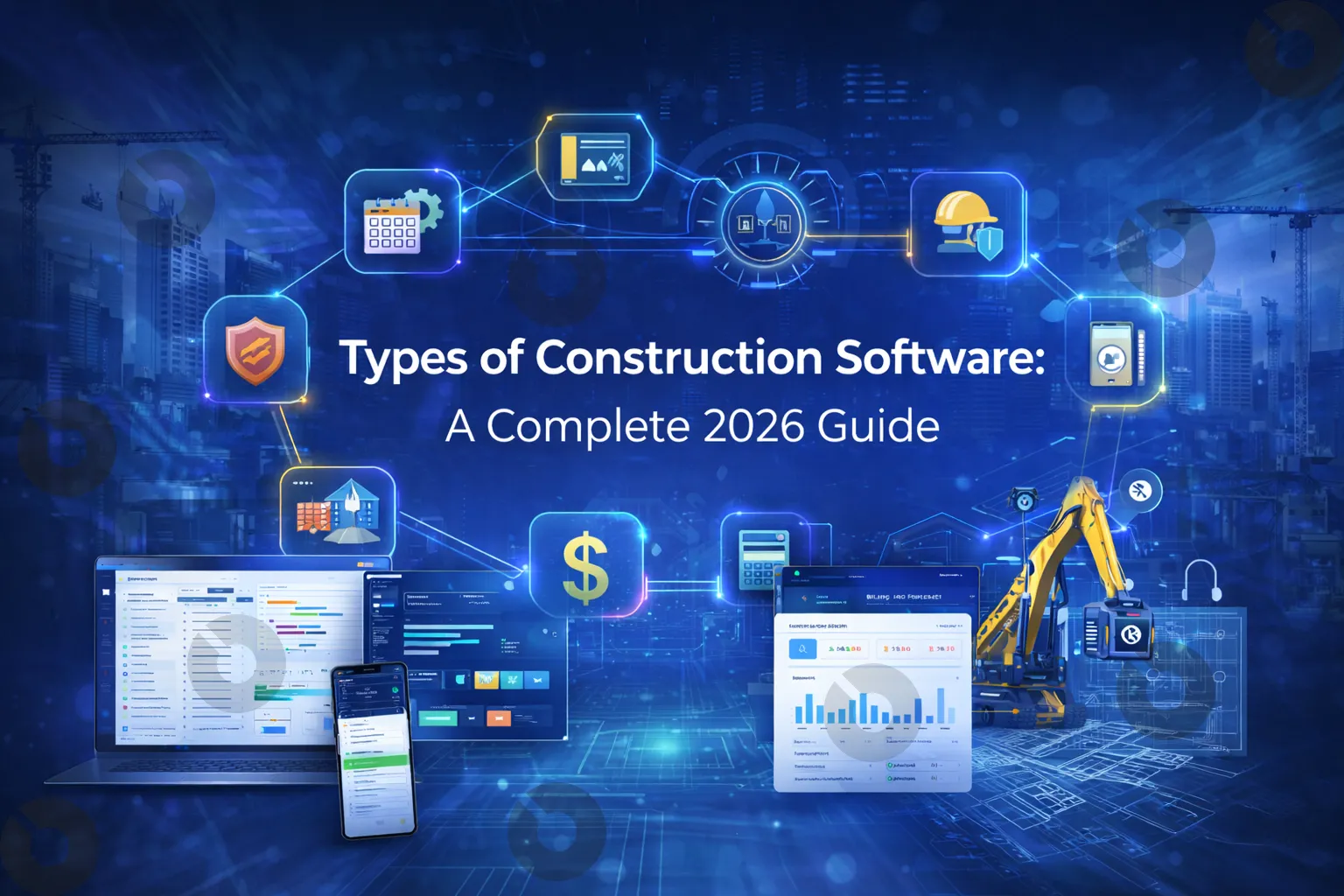
Construction projects today rely on far more than a single piece of software. From planning and design to execution, safety, finance and reporting, construction teams operate across a complex ecosystem of digital tools.
This is why questions like “What are the different types of construction software?” or “Which construction software do we actually need?” come up so often.
In this guide, we break down the main types of construction software, explain what each category is used for, how they differ and how modern construction teams bring these tools together - without creating fragmented workflows or data silos.
Construction Software Types: High-Level Overview
At a high level, construction software can be grouped into several functional categories:
- Construction Project Management Software
- Construction Administration & Controls Software
- Construction Scheduling Software
- Construction Estimating Software
- Construction Accounting & Financial Software
- Design Software for Construction
- Construction Safety Software
- Construction Telematics & Equipment Software
Each category solves a different problem. Most construction teams use multiple types of construction software at the same time, which is where integration and orchestration become critical.
Construction Project Management Software
What Is Construction Project Management Software?
Construction project management software helps teams plan, coordinate and track work across a construction project. It focuses on execution: people, tasks, documents, communication and progress.
Unlike scheduling or accounting tools, project management software sits at the center of day-to-day collaboration.
Construction Project Management Software Types
Construction project management software generally falls into a few broad categories, based on who the software is designed for and the complexity of projects it supports.
Some tools focus on basic task coordination and team collaboration, helping small or less complex projects track work, share documents and communicate updates. These platforms often work well for single projects with limited stakeholder overlap.
Other solutions are built around specific roles, such as owners, general contractors or construction managers. In these cases, the software reflects the priorities of that stakeholder - for example, owner oversight, contractor execution or trade coordination.
More advanced construction project management systems are designed for enterprise and multi-project environments. These platforms emphasize governance, standardized workflows, portfolio-level reporting and consistency across multiple projects and teams.
Construction Administration Software
What Is Construction Management Software?
While often confused with project management, construction management software focuses on administrative and control processes, such as:
- RFIs
- Submittals
- Change orders
- Meeting minutes
- Approvals and audit trails
These workflows are essential for governance, risk management and contractual clarity.
Types of Construction Management Software
Construction management software focuses on the administrative and control processes that govern how a construction project is formally managed. These systems typically handle workflows such as RFIs, submittals, change orders, meeting minutes, approvals and audit trails.
In modern construction platforms, construction management software and construction project management software are often combined into a single environment. This reduces handoffs between systems, minimizes manual data reconciliation, and creates a more reliable system of record for both execution and administration.
Construction Scheduling Software
What is construction scheduling software?
Construction scheduling software is used to plan, sequence and manage project timelines, helping teams define task dependencies, critical paths, milestones and resource allocation throughout a construction project.
Types of Construction Scheduling Software
Construction scheduling software is used to plan timelines, dependencies and resource allocation. Common approaches include:
- Gantt-based scheduling tools
- Critical path scheduling systems
- Resource-driven schedulers
Scheduling tools are highly specialized and often used by planners or schedulers rather than the entire project team.
How Scheduling Fits Into the Software Stack
Scheduling software is not a replacement for project management software. Instead, most teams integrate scheduling tools with their construction project management software to ensure timelines align with real-world execution.
Construction Estimating Software
What is construction estimating software?
Construction estimating software is used to calculate and manage project cost estimates, including materials, labor, equipment and subcontractor pricing, during pre-construction and throughout the project lifecycle.
Different Types of Construction Estimating Software
Construction estimating software supports cost estimation before and during a project. Common types include:
- Conceptual or early-stage estimating tools
- Trade-level detailed estimating software
- Pre-construction cost modeling systems
Estimating tools are often used during bidding and planning, but their data remains relevant throughout project delivery.
Construction Accounting & Financial Software
What is construction accounting software?
Construction financial software manages the financial operations of construction projects, including job costing, revenue recognition, payroll, invoicing and integration with enterprise resource planning (ERP) systems.
Types of Construction Accounting Software
Construction accounting software focuses on financial control and compliance, including:
- Job costing
- Revenue recognition
- Payroll and procurement
- ERP systems for construction
These tools are essential for finance teams but often operate separately from project execution systems.
Accounting vs Project Financial Control
A common challenge is the gap between accounting systems and project-level cost visibility. Many teams connect accounting tools with construction management platforms to reduce manual reconciliation and improve financial transparency.
Design Software for Construction
What is design software for construction?
Design software for construction is used to create, coordinate and manage design information, including drawings, models and specifications, during the planning and delivery of construction projects.
Different Types of Design Software for Construction
Design tools support planning and coordination before and during construction. Typical categories include:
- CAD software
- BIM platforms
- Design coordination and visualization tools
These systems manage design data, not construction execution - but their outputs heavily influence project outcomes.
Construction Safety Software
What is construction safety software?
Construction safety software supports the management of safety programs and compliance, including inspections, incident reporting, corrective actions and safety documentation.
Types of Construction Safety Software
Construction safety software helps teams manage:
- Safety inspections
- Incident reporting
- Compliance documentation
- Risk tracking
Safety systems often operate independently but provide valuable insights that affect project risk and reporting.
Construction Telematics & Equipment Software
What is construction telematics and equipment software?
Construction telematics and equipment software collects and analyzes data from construction equipment and assets, such as location, usage, maintenance and performance.
What Are the Different Types of Construction Telematics Software Available?
Telematics and equipment software focuses on physical assets rather than documents or workflows. Common use cases include:
- Equipment location tracking
- Usage and maintenance monitoring
- GPS and IoT-based data collection
This data is increasingly used to inform project planning and cost control, even if it lives outside core project management systems.
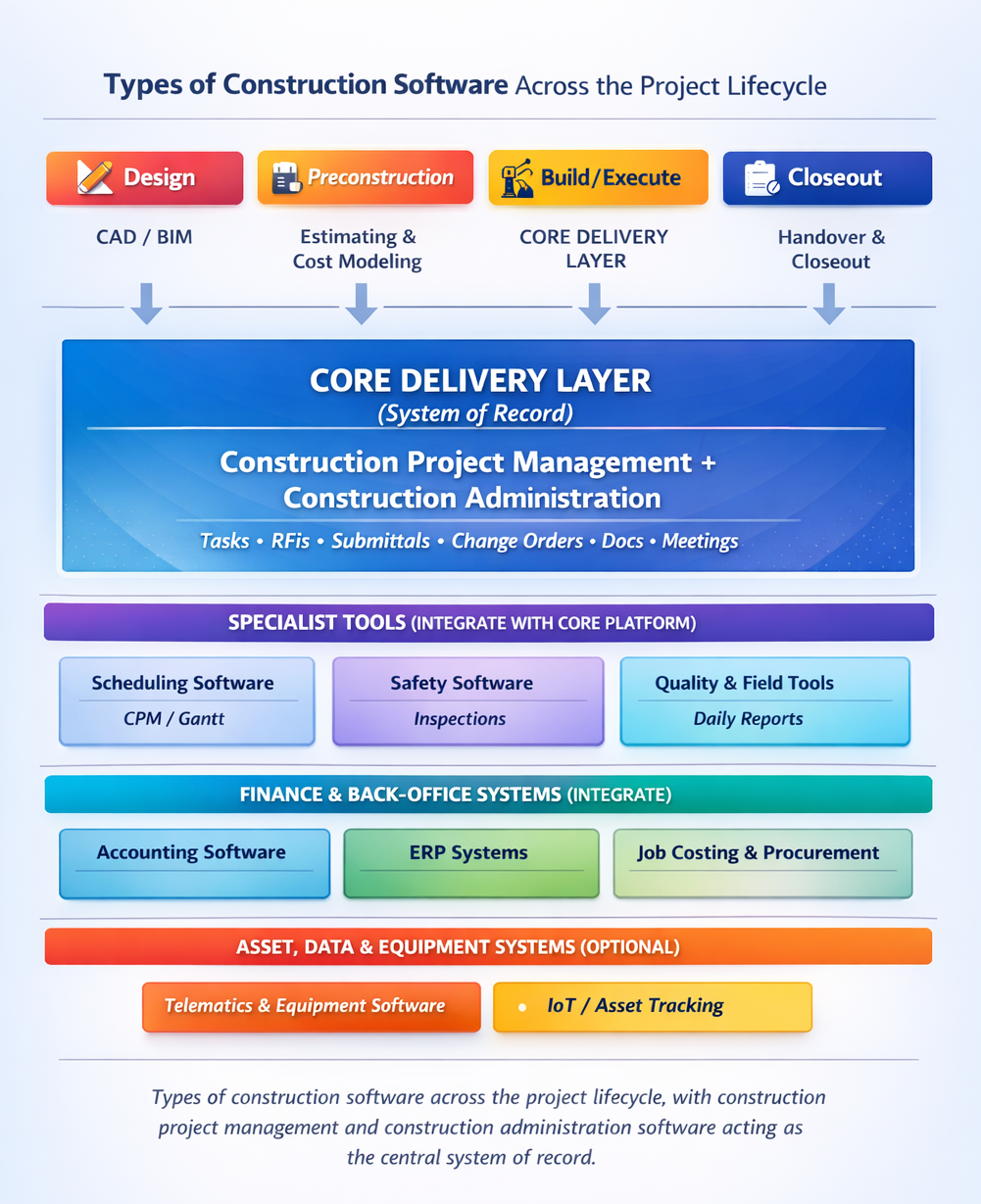
construction_software_types
Types of Construction Software Packages: From Tools to Systems
Many construction companies begin by adopting individual software tools to solve specific problems, such as scheduling, estimating, document control or accounting. Over time, this approach often results in fragmented software stacks, where critical project data is spread across disconnected systems.
As project complexity increases, modern construction organizations increasingly look for construction software packages that act as a central coordination layer. These systems connect construction project management, construction administration, reporting and integrations with specialized tools, creating a more consistent and reliable flow of information.
Rather than attempting to replace every existing system, the goal for many teams is orchestration rather than full consolidation - bringing key workflows together while allowing specialized software to continue doing what it does best.
How Modern Platforms Bring Construction Software Together
This is where platforms like INGENIOUS.BUILD fit naturally.
INGENIOUS.BUILD acts as a central project and construction administration layer, helping teams:
- Manage complex project workflows
- Standardize construction administration
- Maintain clear audit trails
- Integrate with scheduling, accounting and other specialized systems
- Improve visibility across projects and portfolios
The platform does not try to replace every tool, but instead connects the most critical workflows into a single, consistent system.
How to Choose the Right Types of Construction Software
When evaluating different construction software types, teams should consider:
- Project complexity and scale
- Stakeholder structure (owners, GCs, trades)
- Reporting and governance requirements
- Integration readiness
- Long-term growth plans
The “best” setup is rarely the one with the most tools - it’s the one where systems work together with minimal friction.
Frequently Asked Questions
What are the main types of construction software?
The main types include project management, construction management (administration), scheduling, estimating, accounting, design, safety and telematics software.
What is the difference between construction project management software and construction management software?
Project management software focuses on execution and collaboration, while construction management software focuses on administrative controls like RFIs, submittals and approvals.
Do construction companies need all types of construction software?
Not always. The right mix depends on project size, complexity and internal processes.
Can one platform replace all construction software?
In most cases, no. Modern platforms aim to connect and orchestrate systems rather than replace every specialized tool.
How do enterprise teams manage multiple construction software systems?
Enterprise teams often use a central platform to standardize workflows and integrate specialized tools where needed.
Final Thoughts
Construction software is no longer about choosing a single tool. It’s about understanding how different types of construction software work together and building a system that supports real project execution.
As projects grow more complex, teams increasingly look for platforms that connect project management, construction administration and reporting - while integrating with specialized tools where they add the most value.
For many organizations, that shift marks the difference between managing software and actually managing construction.