Informative
Public Sector Construction Management Software in 2026
Explore public sector construction management software in 2026, including governance, compliance, audit trails, funding oversight, and capital program visibility for U.S. agencies.
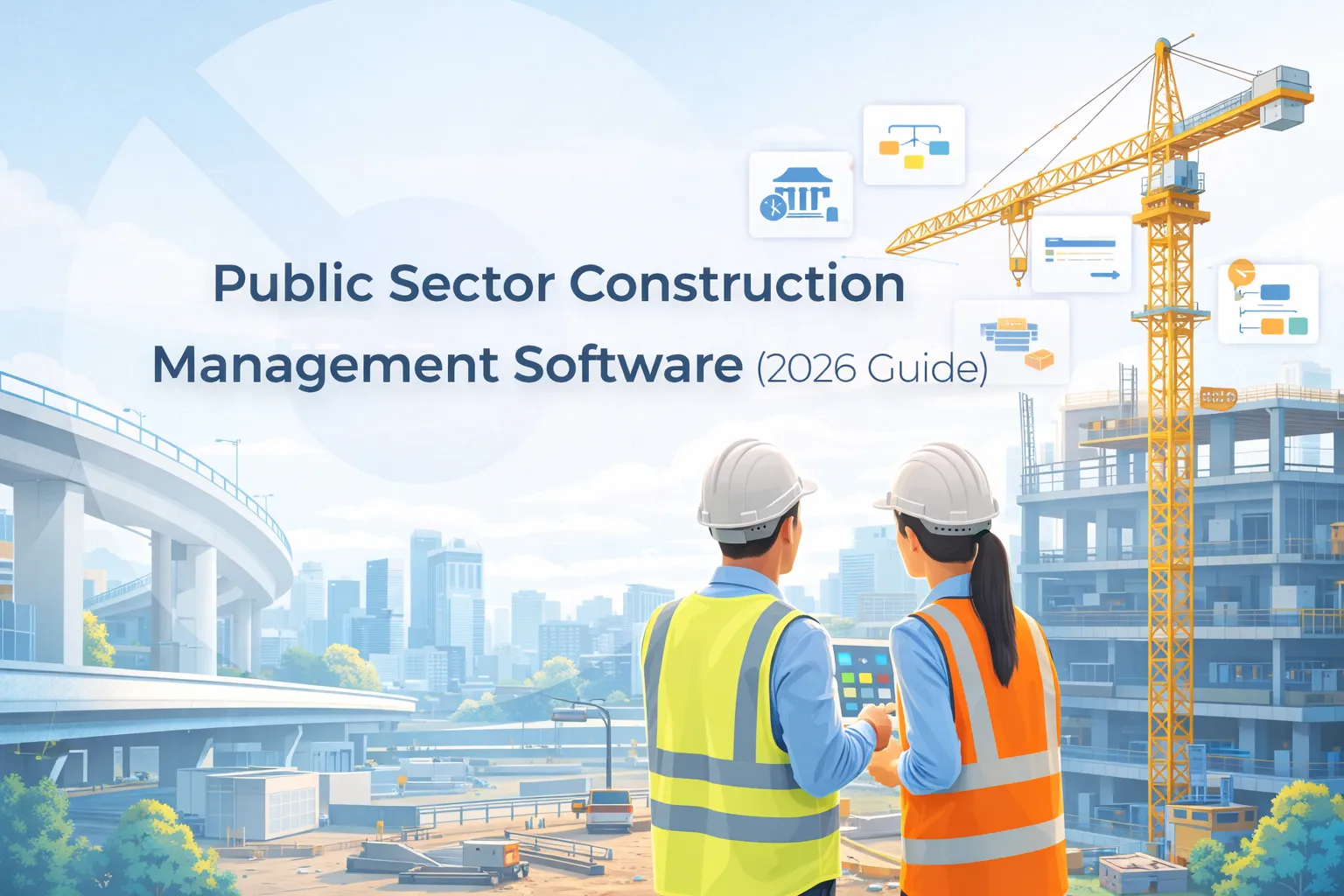
Public construction projects are different. Unlike private development, public sector construction is governed by procurement law, transparency requirements, compliance audits, funding constraints and multi-layered stakeholder oversight.
Whether you're managing capital improvement programs, infrastructure upgrades, school construction or transportation projects, choosing the right public sector construction management software is not just a technology decision - it’s a governance decision.
This guide explains:
- What public sector construction means
- Public sector requirements for construction management in the U.S.
- How government construction management software differs from private tools
- What features public agencies should prioritize
- Which platforms are best suited for public projects
What Is Public Sector Construction in Construction Management?
Before evaluating software, it’s important to clearly define public sector construction in construction management.
Public sector construction refers to construction projects that are funded, owned, or overseen by government entities at the federal, state, or local level. These projects are typically financed through taxpayer funds, public bonds, or government grants and are subject to strict legal and regulatory oversight.
In the United States, public sector construction commonly includes projects managed by:
- Federal agencies (e.g., defense, transportation, infrastructure departments)
- State governments
- Counties and municipalities
- Public school districts
- Transportation authorities
- Public universities and colleges
- Infrastructure and public works agencies
Unlike private development, public construction projects must comply with formal procurement laws and transparency requirements.
Key Characteristics of Public Sector Construction
Public sector construction projects are typically:
- Funded by taxpayer dollars, bonds, or federal/state grants
- Governed by competitive procurement and bidding regulations
- Required to follow structured RFP and contractor selection processes
- Subject to public records laws and transparency standards
- Audited for financial, procedural, and compliance accuracy
What Public Sector Construction Management Must Prioritize
Because these projects operate under public scrutiny, construction management in the public sector must emphasize:
- Complete documentation traceability
- Public accountability and defensible decision-making
- Audit readiness at all stages of the project lifecycle
- Structured and role-based approval workflows
- Compliance with federal, state, and local regulations
- Clear alignment between funding sources and cost allocations
In public construction, the stakes are not only financial — they are also legal, political and reputational. Every decision, budget revision and approval may be subject to audit or public review.
Public Sector Requirements for Construction Management in the USA
Government construction projects operate under strict legal frameworks. Key U.S. public sector construction requirements include:
Competitive Procurement & Documentation
Agencies must demonstrate:
- Fair bidding processes
- Transparent contractor selection
- Proper documentation of award decisions
Construction management software must maintain complete document histories.
Auditability & Compliance
Public projects may be subject to:
- State audits
- Federal grant oversight
- Inspector General reviews
- Bond compliance reviews
Systems must provide:
- Full audit trails
- Timestamped approvals
- Role-based permissions
- Immutable document logs
Funding Oversight & Budget Control
Public projects often involve:
- Capital improvement programs (CIPs)
- Multi-year funding allocations
- Bond-funded initiatives
- Grant-funded phases
Agencies require:
- Real-time budget tracking
- Committed vs. allocated funding visibility
- Change order tracking tied to funding sources
Public Transparency
Unlike private projects, public construction data may be subject to:
- Freedom of Information Act (FOIA) requests
- Public board reviews
- Media scrutiny
Construction software for public agencies must centralize documentation to ensure defensible reporting.
Why Public Sector Construction Management Is More Complex
Public sector construction management is fundamentally different from private development. While both involve budgeting, scheduling, and coordination, public projects operate within a much stricter governance framework.
In the private sector, construction projects are typically:
- Investor-driven
- Focused on return on investment (ROI)
- Governed internally
- Able to move through flexible approval processes
- Measured primarily by profitability and delivery speed
In contrast, public sector construction projects are:
- Funded by taxpayers, public bonds, or government grants
- Governed by procurement laws and regulatory oversight
- Subject to structured, documented approval workflows
- Measured by compliance, transparency, and responsible use of public funds
- Reviewed by auditors, oversight bodies, and sometimes the public
The difference is not just procedural, it is structural.
Public agencies must balance cost control with legal compliance, documentation transparency, and defensible decision-making. Every contract award, change order, funding allocation, and budget revision may be scrutinized by:
- State or federal auditors
- Oversight committees
- Bond authorities
- Inspectors general
- The public through records requests
This creates additional layers of complexity that private developers do not face. Public agencies are not only delivering buildings or infrastructure, they are managing public trust. As a result, public sector construction management software must support governance, auditability and funding accountability.
What to Look for in Government Construction Management Software
When evaluating construction management software for government, agencies should prioritize:
Structured Approval Workflows
Every change order, budget revision, and submittal must follow formal review paths.
Complete Audit Trails
Every action must be timestamped and traceable.
Capital Program Visibility
Agencies managing multiple projects need portfolio dashboards, not just job-level reporting.
Funding Source Tracking
Systems must align costs with specific bond allocations or grant sources.
Secure Cloud Infrastructure
Government contractor management software must meet modern cybersecurity standards, including:
- Role-based access control
- Encrypted data storage
- Multi-factor authentication
Public Records Readiness
Centralized document management simplifies compliance and public reporting.
Best Public Sector Construction Management Software in 2026
Below are platforms commonly evaluated by public agencies and government contractors.
Best for: Public agencies and capital program oversight.
Strengths:
- Portfolio-level dashboards for capital improvement programs
- Structured approval workflows
- Real-time cost tracking
- Committed vs forecasted exposure visibility
- Audit-ready document control
INGENIOUS.BUILD is particularly suited for agencies managing multiple projects under formal governance structures.
Best for: Large general contractors working on public projects.
Strengths:
- Broad industry adoption
- Strong field collaboration
- Extensive integrations
Limitations:
- May require internal administrative resources
- Less portfolio-focused without customization
Best for: Infrastructure-heavy public builds.
Strengths:
- Strong BIM integration
- Large-scale project coordination
- Government familiarity
Limitations:
- Less focused on executive capital oversight
Best for: Large federal or infrastructure programs.
Strengths:
- Structured document control
- Strong compliance orientation
Limitations:
- Higher complexity
- Longer implementation
Government Contractor Management Software vs Public Agency Software
Government Contractor Management Software
Used by:
- Contractors bidding on public projects
- Engineering firms
- Specialty trades
Focus:
- Compliance with public documentation standards
- Certified payroll tracking
- Subcontractor coordination
Public Sector Construction Software
Used by:
- Owners (agencies)
- Capital program managers
- Public works departments
Focus:
- Oversight and governance
- Portfolio-level reporting
- Funding allocation tracking
Understanding this distinction is critical when evaluating tools.
When Should a Public Agency Upgrade Its Construction Management System?
Common triggers include:
- Manual capital program reporting
- Budget overruns discovered late
- Difficulty responding to audit requests
- Fragmented documentation across departments
- Growing CIP portfolios
- Increased regulatory scrutiny
If reporting takes longer than decision-making, the system is limiting oversight.
FAQ: Public Sector Construction Management Software
What is public sector construction management?
It refers to managing construction projects funded or owned by government entities, requiring strict compliance, documentation and transparency.
What makes construction software suitable for government agencies?
Audit trails, approval workflows, funding source tracking and secure cloud infrastructure.
Is public sector construction software different from private construction software?
Yes. Public projects require stronger governance, compliance tracking and portfolio-level oversight.
What are U.S. public sector requirements for construction management?
Agencies must follow procurement laws, maintain documentation transparency, support auditability, and manage bond/grant funding accountability.
Can cloud software meet government security requirements?
Yes, when built with encrypted infrastructure, access control systems and compliance-grade security standards.
Final Thoughts
Public sector construction management is not just about delivering projects on time.
It’s about:
- Protecting public funds
- Maintaining transparency
- Ensuring audit readiness
- Managing capital responsibly
The right construction management software for public agencies provides not just coordination but governance infrastructure.
If your agency is managing a growing capital improvement program or facing increasing compliance complexity, it may be time to evaluate systems built specifically for public sector oversight.
Book a demo to explore how INGENIOUS.BUILD supports structured, compliant public construction management workflows.