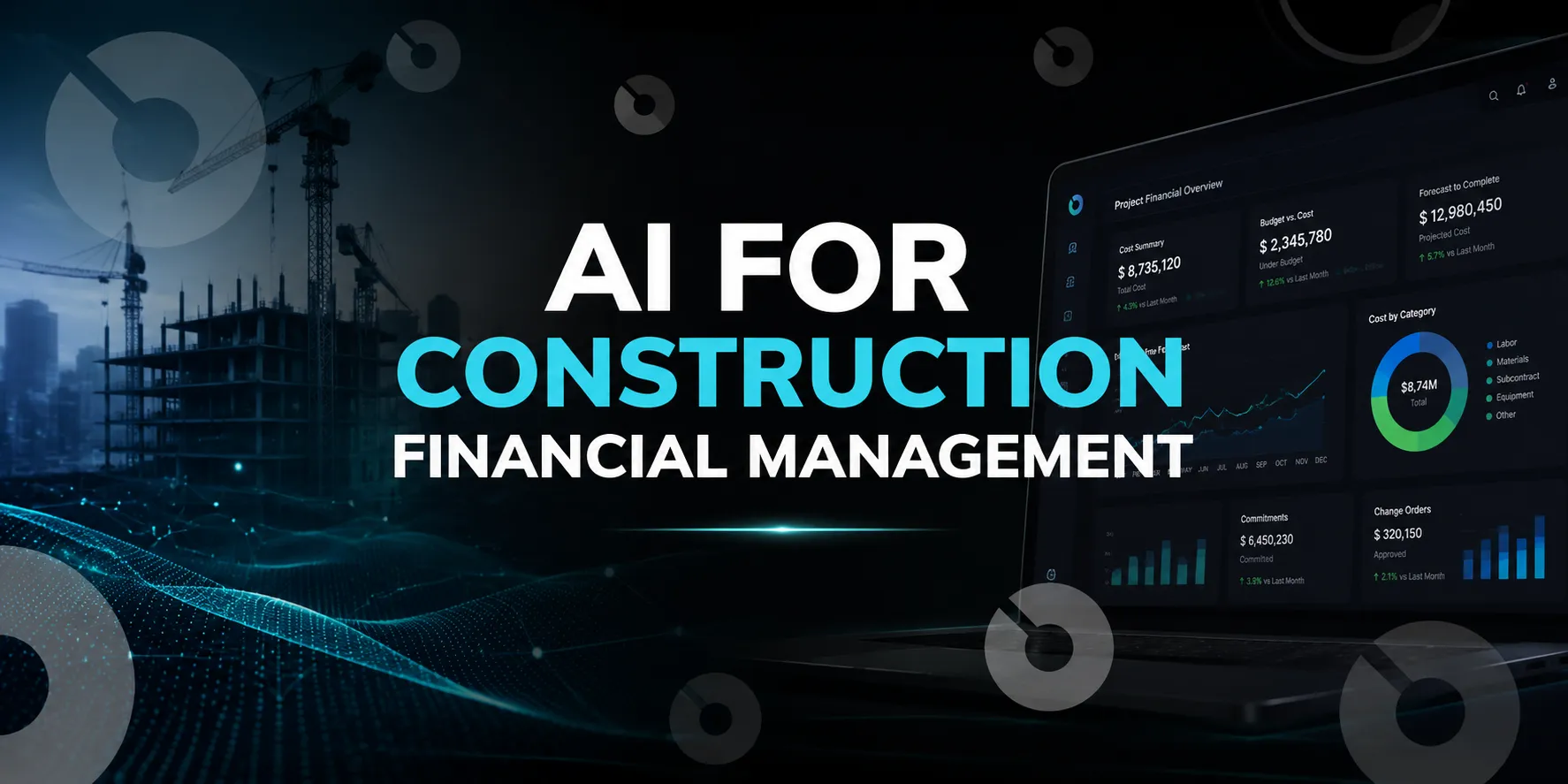
Informative
Construction Budget in 2026: How to Plan, Track and Control Costs on Every Project
Plan, track and control construction budgets in 2026. Learn cost management strategies, forecasting tips and software tools to prevent overruns and protect margins.
A construction budget is more than a spreadsheet. It’s the financial backbone of a project — the structure that determines whether a build stays profitable, solvent and predictable from pre-construction through closeout.
Yet many construction projects still experience:
- Budget overruns
- Margin erosion
- Late-stage cost surprises
- Forecasting gaps
- Change order confusion
This guide explains:
- How to build a realistic construction budget
- What a cost management plan for a construction project should include
- How construction project costing works in practice
- Where capital budgeting software helps
- How to manage construction budget performance during execution
What Is a Construction Budget?
A construction budget is a detailed financial plan that estimates and allocates costs required to complete a project. It includes:
- Labor
- Materials
- Equipment
- Subcontractor contracts
- Permits and fees
- Overhead
- Contingency
A construction budget answers two core questions:
- What will this project cost?
- How will those costs be tracked and controlled over time?
It is not static. It evolves as scope, pricing and conditions change.
How to Create a Budget for a Construction Project
Creating a budget for a construction project requires more than estimating line items. It requires structuring cost categories to match how the project will actually be executed and monitored.
Step 1: Break Down the Scope
Start with:
- Work breakdown structure (WBS)
- Trade packages
- Phases of construction
- Major cost drivers
Clear scope definition prevents hidden cost assumptions later.
Step 2: Develop Detailed Construction Project Costing
Construction project costing typically includes:
- Direct costs (labor, materials, equipment)
- Subcontractor commitments
- Indirect costs (supervision, insurance, site overhead)
- General conditions
- Design and professional fees
- Owner costs
Accurate costing requires alignment between:
- Estimating team
- Project management
- Finance
If these groups use different cost structures, variance becomes inevitable.
Step 3: Add Contingency
Every cost management plan for a construction project should include contingency.
Contingency accounts for:
- Scope gaps
- Market volatility
- Design changes
- Unforeseen site conditions
Without contingency planning, budgets become brittle.
Step 4: Align Budget Categories with Reporting Structure
This is where many teams fail. If the budget structure does not match:
- Cost codes
- Accounting structure
- Reporting requirements
Then tracking becomes manual. Construction budget management must be structured from day one.
What Is Construction Budget Management?
Construction budget management is the ongoing process of:
- Tracking actual costs
- Monitoring committed costs
- Updating forecasts
- Identifying budget variances
- Adjusting allocations
It ensures that the project does not drift financially as execution unfolds. Key components include:
- Budget vs actual tracking
- Committed vs forecasted exposure
- Change order integration
- Cash flow forecasting
- Contingency monitoring
The difference between estimating and budget management is time. Estimating predicts cost. Budget management controls it.
Common Construction Budget Problems
Even experienced teams encounter recurring challenges.
1. Underestimated Scope
Incomplete drawings or rushed pre-construction often lead to budget gaps.
2. Change Orders Not Integrated into Forecast
If change orders are approved but not reflected in financial forecasts, margin disappears quietly.
3. Committed Costs Not Reflected in Accounting
Purchase orders and subcontract agreements represent exposure, even before invoices are issued. Ignoring committed costs creates a false sense of budget health.
4. Manual Budget Tracking
Spreadsheets work at a small scale. They break under complexity. Version control, delayed updates and inconsistent reporting lead to avoidable risk.
What Should a Cost Management Plan for a Construction Project Include?
A structured cost management plan defines how budget control will operate throughout the project lifecycle.
It should include:
- Budget approval process
- Cost code structure
- Change management workflow
- Forecast update frequency
- Reporting cadence
- Contingency management rules
- Escalation procedures
Without a formal plan, budget control becomes reactive.
How Capital Budgeting Software Supports Construction Projects
Capital budgeting software and construction budget management systems help teams move beyond static spreadsheets.
Modern tools provide:
- Real-time budget dashboards
- Automated cost variance alerts
- Integrated change order tracking
- Committed vs forecasted cost visibility
- Role-based approval workflows
- Multi-project oversight
For construction teams managing multiple projects, software becomes essential for maintaining financial clarity. The goal is not more data — it is earlier insight.
Construction Budget vs Construction Project Costing
These terms are related but distinct.
Construction budget
The approved financial plan for the project.
Construction project costing
The process of measuring and allocating actual expenses against that plan.
Budget defines expectations
Costing measures performance.
Strong construction budget management connects both in real time.
When Should You Upgrade from Spreadsheet-Based Budgeting?
Consider modern construction budget software when:
- Projects exceed manageable spreadsheet size
- Multiple stakeholders need visibility
- Change orders increase in frequency
- Forecasting accuracy declines
- Executives request faster reporting
- Manual consolidation consumes time
The tipping point occurs when reporting effort exceeds decision-making value.
Practical Tips to Improve Construction Budget Accuracy
- Standardize cost codes across projects
- Update forecasts monthly at minimum
- Integrate committed costs immediately
- Tie change orders directly to budget categories
- Maintain separate contingency tracking
- Avoid parallel shadow spreadsheets
- Review variance trends, not just totals
Budget control is discipline, not just software.
FAQ: Construction Budget & Cost Management
What is included in a construction budget?
Labor, materials, equipment, subcontractors, overhead, contingency and professional fees.
What is the difference between capital budgeting and construction budgeting?
Capital budgeting evaluates whether to fund a project. Construction budgeting manages costs during execution.
How do you manage construction project costs?
Through structured budget tracking, variance monitoring, change order integration, and regular forecasting updates.
What is a cost management plan in construction?
A formal framework outlining how project costs will be tracked, approved, forecasted, and controlled.
What software is best for construction budget management?
The best solution depends on project complexity, but modern cloud-based systems offer real-time tracking and committed cost visibility.
Final Thoughts
A construction budget is not just an estimate — it is a control system. The teams that protect margin are not the ones who estimate perfectly. They are the ones who monitor relentlessly.
As project size, volatility and stakeholder expectations increase, structured construction budget management becomes less optional and more foundational.
If your team is evaluating ways to improve cost control and forecasting accuracy, exploring modern construction budget management platforms may be the next logical step - book a demo with INGENIOUS.BUILD!